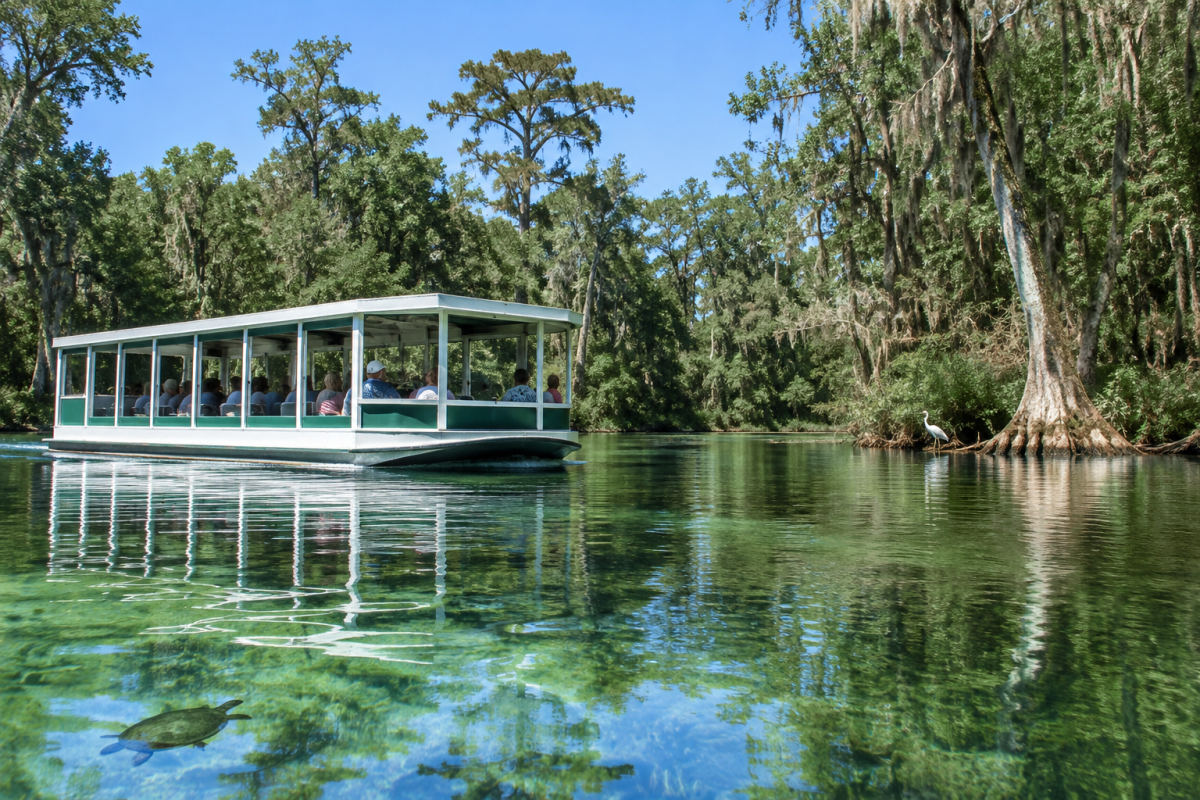
At Edward Ball Wakulla Springs State Park, the river boat tour is the easygoing centerpiece of a wildlife day: a ranger-led cruise through cypress-lined water where alligators, turtles, fish and birds are regular players. It is not a zoo-style guarantee—especially when it comes to manatees—but it is one of the most reliable ways to see the wilder side of Florida’s Big Bend without needing a kayak or a long hike.
Reserve before you drive down
River-boat tickets are currently handled by reservation, so make your booking before arriving rather than treating the cruise as a walk-up extra. Use the online booking calendar through the Lodge at Wakulla Springs’ Boat Tours page, or call 850-421-2000 for help. Choose the date and departure time shown in the booking system, then keep your confirmation handy on your phone.
For an ADA-friendly vessel, make that request during booking. The park says wheelchair-accessible boats are available on request, and the lodge notes that two vessels are ADA-friendly. Educational groups should arrange their outing separately with park staff at 850-561-7286.
Current boat-tour prices—and the separate park entry fee
- Ages 13 and up: $8
- Ages 3–12: $5
- Under age 3: free
Those prices are for the river boat tour and do not include state-park admission. At the entrance, the current fee is $6 per vehicle carrying two to eight people, $4 for a single-occupant vehicle, and $2 for each extra passenger beyond eight; pedestrians and cyclists pay $2. Check current details before you go, particularly if you are visiting on a holiday or booking a special cruise.
When boats leave
The cruise itself lasts roughly 45 to 55 minutes. The waterfront visitor area opens at 9:40 a.m., and departures later in the day can shift with demand; the lodge describes boats as leaving about every hour. In practical terms, do not build a tight day around an assumed fixed schedule—book the precise time offered online and plan to be at the waterfront with time to spare.
The last listed departure is 4:30 p.m. during Eastern Standard Time and 5 p.m. during Daylight Saving Time. On Christmas Day, the first boat does not leave until noon. Tours operate year-round when conditions cooperate, but they do not run during thunderstorms and require temperatures above 40°F. North Florida weather can turn quickly in the warmer months, so an earlier reservation is the sensible choice if the forecast looks stormy.
A smarter wildlife-viewing game plan
Book the earliest available cruise if your priority is a quieter, less hurried start. Arrive after the park opens at 8 a.m., take a slow walk near the lodge or along the park drive, then head to the dock for your reserved boat. The park specifically highlights early walking as a good time for birdsong and stillness, and late fall through spring brings migratory songbirds into the mix.
On the water, keep scanning both banks rather than staring only at the open channel. Alligators may be resting along the shoreline; turtles can appear on logs; and wading birds, anhingas and grebes often make the best photo subjects because they are visible even when larger wildlife is not. A small pair of compact binoculars can be handy for birds perched farther back in the cypress, but keep your eyes up, too—the guide may spot something behind the boat before you do.
Manatees can appear at any time of year, but the park says they are most common from October through January. That makes fall and winter particularly promising for visitors hoping to see one, though no season turns a manatee sighting into a certainty. Let the cruise be about the whole river corridor: birds, reptiles, reflections, ancient trees and the occasional surprise.
What to bring and how to stay comfortable
The boats are roofed, but sun can still reach you from the sides and reflect strongly off the water. Bring water, sunscreen, a hat and a camera or phone with plenty of storage. If you expect to swim before or after the ride, a waterproof phone pouch is a simple way to protect your confirmation, keys and photos. Wear shoes suitable for the walk from parking to the waterfront; most parking is not directly beside the dock.
Best takeaway: reserve an early available time, arrive with a little breathing room, and treat every quiet shoreline as a possible wildlife scene—at Wakulla, the sightings often happen when you are already looking.