Big Cypress National Preserve is one of the few National Park Service places where properly permitted off-road travel remains part of the backcountry experience. It is not, however, an open riding area. A successful day starts with the right vehicle, the required permit and operator credentials, and a close look at the official trail map and current closures before you leave pavement.
Start with the vehicle permit
Recreational ORV use requires an annual Big Cypress vehicle permit issued by the National Park Service. The current fee is $100 per vehicle, and permits run from January 1 through January 31 of the following year—a 13-month window that includes the January renewal period. Permits may be purchased or renewed through Recreation.gov, at the ORV office inside the Nathaniel P. Reed Visitor Center, or by phone through the ORV office.
The permit belongs to the specific registered vehicle and is not transferable to another vehicle, another owner or even another vehicle owned by the same family. The registered owner is also the person eligible to renew it. Once received, the permit sticker must be displayed in the required location: on the left rear fender for an ATV, front left side for a UTV, driver’s-side windshield or front bumper for a street-legal 4x4, driver’s side for a swamp buggy, or outside of the left rudder for an airboat.
Inspection is now a self-certification step—but enforcement inspections remain possible
Do not assume that buying a permit means every machine qualifies. Big Cypress places the responsibility on the permit holder to inspect the ORV and certify that it meets the applicable specifications when the permit is purchased. NPS staff and law enforcement can inspect a vehicle later, so measure and check carefully before applying.
- Every ORV: A working muffler is required. Tire chains, bar grips and similar devices attached to tires are prohibited. Tracked vehicles are not allowed, and campers or trailers may not use ORV trails without a special use permit.
- ATVs: Must be 4x4-capable, 55 inches wide or less and no more than 1,500 pounds dry weight. Front tires need at least 7 inches of tread face; rear tires need at least 9 inches.
- UTVs: Must be 4x4-capable, 66 inches wide or less, 2,500 pounds dry weight or less, and use tires with at least 9 inches of tread face. Rim diameter may not exceed 15 inches.
- Street-legal 4x4s: Must be 4x4-capable and currently registered, insured and legally equipped for Florida road use.
- Swamp buggies and airboats: Have separate size, tire and equipment standards, so review the current Superintendent’s Compendium line by line before permitting one.
An inspection sticker must also be displayed on the machine in the location assigned to its vehicle type. The practical takeaway: save photos and measurements from your pre-trip check, especially if your tires, wheels, exhaust or suspension have been modified.
Every driver needs operator authorization
A vehicle permit does not authorize every person in camp to take the wheel. Each ORV operator must complete the Big Cypress vehicle-operator course and carry proof of completion while operating. Each operator must also carry a valid state driver’s license or learner’s permit that authorizes operation of that type of vehicle.
Visitors who did not purchase their vehicle permit through Recreation.gov must review the required educational material, complete the Big Cypress Operator License document and keep a physical copy with them while driving. This is particularly important for additional drivers: do not presume the registered owner’s purchase or paperwork covers everyone else.
Young riders and operators have additional Florida requirements. Minors operating an ORV must be directly supervised by an adult who holds a valid Big Cypress ORV permit. Anyone under 16 operating or riding an ATV must wear a DOT-compliant helmet and eye protection; operators under 16 also need proof of the state ATV safety course when operating on public land or roads.
Trail access: use the map, gates and open primary routes only
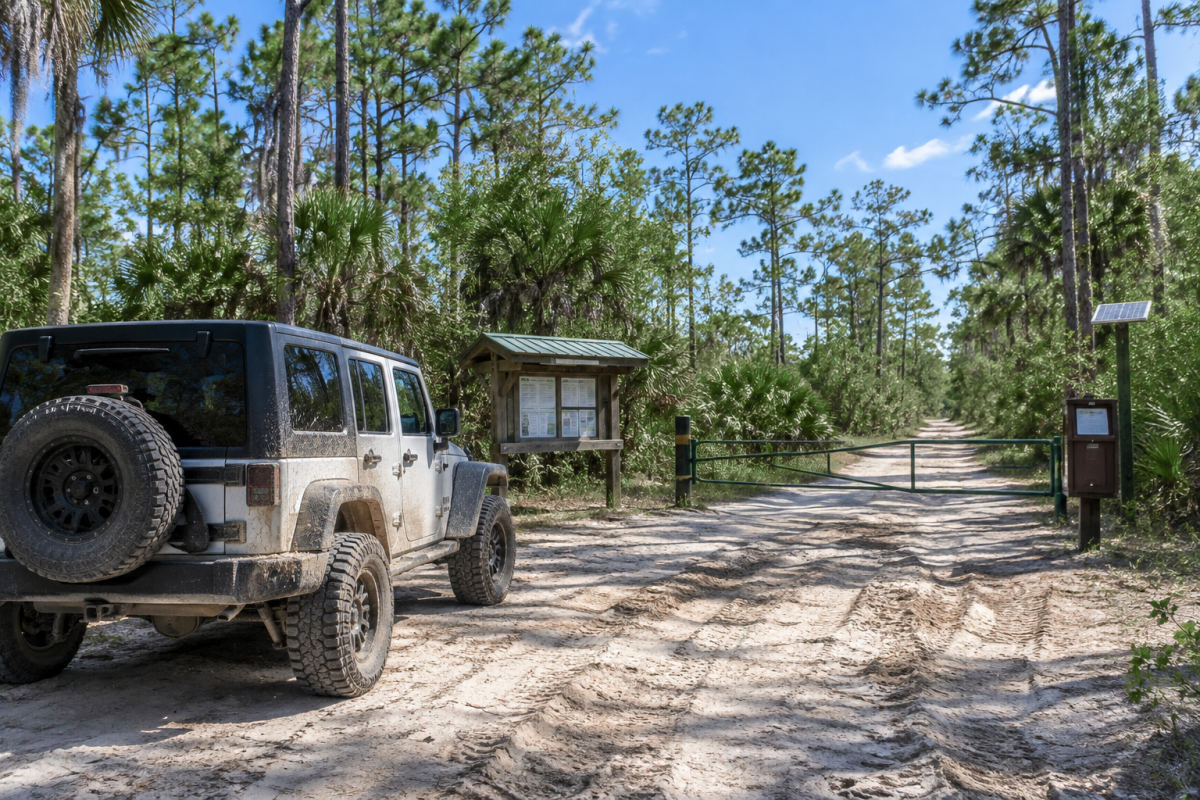
Big Cypress ORV travel is allowed only on open, designated trails and only through the designated access points shown for that management unit. Entering through an informal pull-off, driving around a gate or cutting across wet prairie is not permitted. Close and lock gates behind you, remain on the marked route, and treat the official unit map as essential equipment rather than a backup plan.
Bear Island allows swamp buggies, ATVs, qualifying street-legal 4x4s and UTVs. Turner River and Corn Dance allow swamp buggies, ATVs and UTVs; vehicle types and access points vary elsewhere, particularly in the zoned Stairsteps Unit. Recreational ORV use is prohibited in the Addition Lands, and all secondary trails are currently closed. Only designated primary trails are open for recreational access.
Hours are 5 a.m. to 10 p.m. preserve-wide. Unless a sign says otherwise, the ORV-trail speed limit is 15 mph; Zone 4 airboat trails are posted at 30 mph. Wet-season water levels, wildlife protection measures, trail damage and safety concerns can all trigger temporary closures.
Before rolling out: check the current Big Cypress closure notice and official unit map on the day of your trip, carry your driver and course documents, and make sure your vehicle’s permit and inspection stickers are plainly visible. In this landscape, staying on the authorized trail is both the rule and the best way to protect the swamp you came to see.