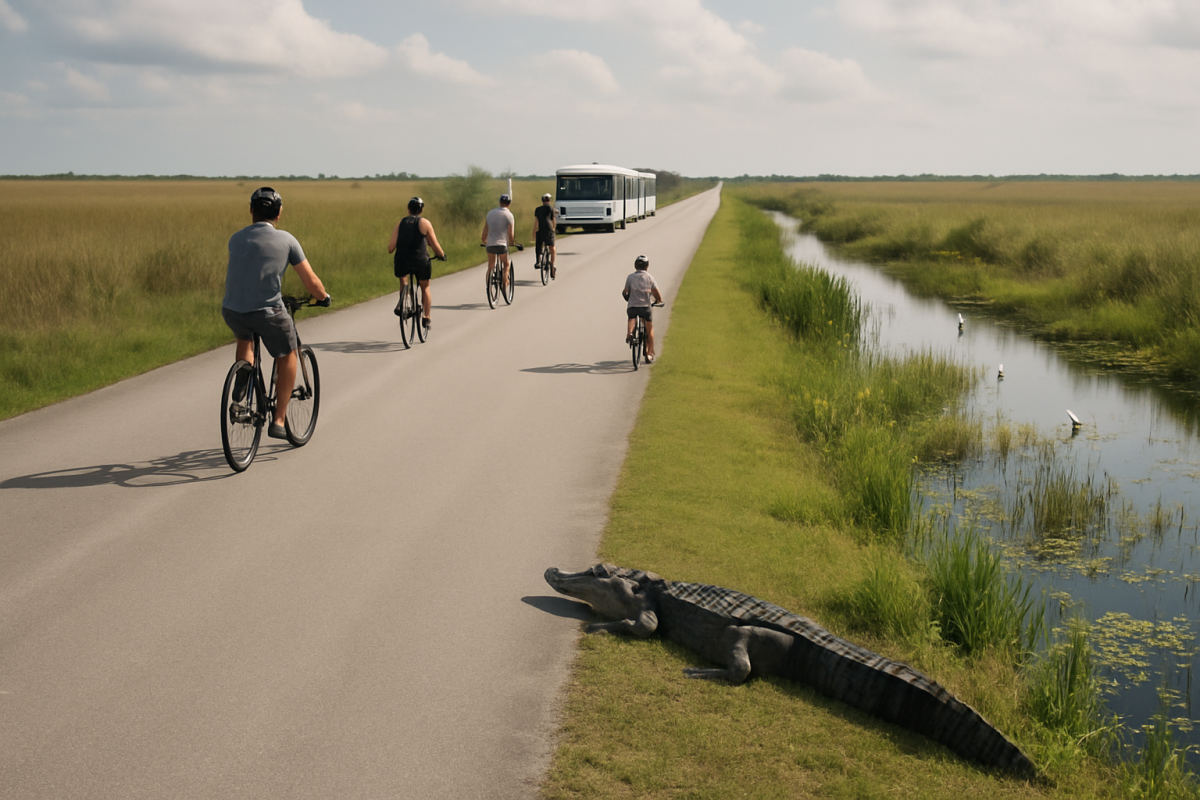
Shark Valley is one of the easiest places to see the Everglades in motion: alligators along the water, wading birds in the marsh and a wide-open sawgrass horizon from the observation tower. The central decision is simple: take the two-hour narrated tram for a relaxed overview, or bike the full 15-mile paved loop at your own pace. Either way, private cars stay in the visitor center parking area; the road to the tower is for trams, bicycles and walkers only.
Choose the tram when ease and interpretation matter
The Shark Valley Tram Tour is the better fit for first-time Everglades visitors, families with younger children, anyone who would rather not ride 15 miles in Florida heat, and travelers who want a park-trained naturalist to explain what they are seeing. The open-air tour follows the entire loop, lasts about two hours and includes time at the observation tower.
Current tram pricing is $36 for adults ages 13 to 61, $27 for seniors 62 and older, $19 for children ages 3 to 12, and free for children 2 and under. Those tickets are separate from park admission. Reservations are strongly recommended in the busy winter period, especially from November through April, when popular departure times can sell out. Plan to check in at least 30 minutes before your booked tour, and build in extra time for the entrance line and parking.
The tradeoff is pace: the tram makes a set circuit on a schedule, so it is not the choice for lingering 20 minutes with a heron or photographing every alligator along the canal. It is, however, accessible for visitors with disabilities; call the operator ahead if specific assistance is needed. Check the current departure schedule, rates and accessibility arrangements before you go, since concession operations can change.
Choose the bike for freedom, photos and a deeper day outdoors
Riding Shark Valley’s loop is wonderfully straightforward but should not be mistaken for a quick spin. The paved route is flat, roughly 15 miles round trip and typically takes two to four hours once wildlife stops and the tower are factored in. Bring your own bike for the most flexible and lowest-cost option; no bike reservation is required when you bring one. The National Park Service recommends starting counterclockwise, heading down the long, straight west side first and returning on the more winding eastern side.
Rental bikes currently cost $28 each through Shark Valley Tram Tours. Reservations are wise on winter weekends, though some bikes are held for same-day, first-come rental. Rentals begin at 8:30 a.m., are issued through 4 p.m., and all bikes must be returned by 5 p.m.; online reservations have a designated morning pickup window. E-bikes are allowed if they have operable pedals and a motor under 750 watts, but the loop’s speed limit is 15 mph. Children under 16 must wear helmets.
Biking is the better choice for active visitors, birders and photographers who value control over the day. Just be realistic about exposure: there is very little shade, and the only dependable water fountain on the route is at the tower, seven miles from the parking area. Pack ample drinking water, snacks, rain protection in warmer months and reef-conscious mineral sunscreen; a large insulated water bottle is more useful here than an extra souvenir.
Entrance fees and parking: the part that can derail the plan
For visitors arriving by private vehicle, Everglades National Park admission is currently $35 per vehicle and is good for seven consecutive days. A motorcycle pass is $30, while people entering by bicycle or on foot pay $20 per person; children 15 and younger enter free. The Shark Valley entrance is cashless. An Everglades annual pass or an America the Beautiful pass can cover entrance admission, but neither covers tram tickets or bike rentals. Non-U.S. residents age 16 and older have an additional $100 per-person fee unless admitted with an eligible annual pass, so international visitors should verify the current rules before arrival.
There is no separate Shark Valley parking charge listed beyond park admission, but space is the real cost. During peak season, parking commonly fills by 10 a.m., and the entrance may switch to one-car-in, one-car-out access. On the busiest winter weekends and holidays, waits can run more than an hour. Weekdays are easier; otherwise, arrive before 10 a.m. or after 3 p.m. If you hold tram tickets, aim to reach the area 1½ to 2 hours before departure rather than trusting your GPS arrival time. Do not plan on an easy rideshare pickup after your visit—return service can be unreliable in this remote location.
When wildlife viewing is strongest
For the fullest concentration of alligators and wading birds, aim for the dry season, generally December through April, with November often offering pleasant conditions as well. Lower water concentrates wildlife, winter brings migratory birds, temperatures are kinder for biking and mosquitoes are usually less intense. That popularity is exactly why reservations and early parking matter most then.
May through November can still be beautiful and greener, but heat, humidity, mosquitoes and regular afternoon thunderstorms raise the effort level. Higher water lets animals spread out, making wildlife sightings less predictable. Whatever the season, keep at least 15 feet from wildlife, never feed an animal and give an alligator extra room if it is beside the road.
Practical takeaway: Reserve the tram if you want the Everglades story without the physical commitment; bring or reserve a bike if unhurried wildlife watching is your priority. In either case, an early weekday arrival is Shark Valley’s best stress-saving move.