Florida bay scalloping is not a single statewide season. The rules change by stretch of coast, and the most important planning step is matching your launch point to the correct FWC harvest zone. Scallops may be taken only in designated Florida state waters, and seasons, temporary closures and bag limits can change from year to year.
Current note for 2026: As of October 14, 2026, the regular seasons have ended. Gulf County’s St. Joseph Bay area was closed for the full 2026 season after surveys found very low scallop abundance, and the Pasco Zone closed on August 6 because of a harmful-algae-related safety closure. Use the dates below as the 2026 framework, then check FWC’s current scallop page before booking a 2027 trip.
How Florida’s scallop zones work
- St. Joseph Bay and Gulf County: This zone runs from the Mexico Beach Canal in Bay County to the westernmost point of St. Vincent Island in Franklin County. It was closed to recreational scallop harvest for all of 2026.
- Franklin County through northwestern Taylor County: Think Carrabelle, Lanark and St. Marks. In 2026, the season ran July 1 through September 24. Its eastern boundary is Rock Island, near the mouth of the Fenholloway River.
- Fenholloway through Suwannee rivers: This is the Keaton Beach and Steinhatchee area, from east of Rock Island to north of Alligator Pass daybeacon No. 4 at the Suwannee River mouth. Its 2026 season ran June 15 through Labor Day.
- Levy, Citrus and Hernando counties: The Cedar Key, Crystal River and Homosassa zone runs south of Alligator Pass daybeacon No. 4 to the Hernando-Pasco county line. Its 2026 season ran July 1 through September 24.
- Pasco Zone: This includes waters south of the Hernando-Pasco county line to Anclote Key Lighthouse in northern Pinellas County, including the Anclote River. It had a seasonal closure beginning August 6, 2026.
Those landmarks matter. A county name on a marina sign is not enough to establish that you are in an open harvest area, so boaters should save the official zone map and confirm their intended grass flats before leaving the dock. You may travel directly through a closed area with scallops that were legally harvested elsewhere, but you cannot stop to collect in the closed zone.
License rules: what most visitors need
Most people scalloping need a Florida recreational saltwater fishing license. For a typical visiting family using a private boat, that means each harvester age 16 or older needs the appropriate nonresident license unless they qualify for an exemption or are covered by a properly licensed charter or vessel.
For 2026, Florida’s nonresident saltwater license prices are $17 for three days, $30 for seven days and $47 annually; the resident annual license is $17. A Florida resident may use the no-cost shoreline-only license only when wading from shore: feet must remain on the bottom, and the person cannot use a vessel to reach or leave the harvest spot. It does not cover swimming, snorkeling, scuba diving or arriving by boat. Children younger than 16 are exempt, and Florida residents 65 and older are generally exempt when carrying proof of age and residency. A captain saying “license included” is helpful, but ask whether the specific charter’s vessel license covers every person who will enter the water.
Bag limits: know the smaller early-season rule
In most open zones, the daily personal limit is 2 gallons of whole scallops in the shell or 1 pint of shucked meat. The daily vessel ceiling is 10 gallons whole or one-half gallon (4 pints) shucked, regardless of how many people are aboard. The vessel limit never increases an individual’s personal allowance.
The key exception is the Fenholloway-through-Suwannee zone during June 15-30. In that early window, the limit is just 1 gallon whole or 1 cup shucked per person, with a 5-gallon whole or 2-pint shucked vessel limit. From July 1 through Labor Day, that zone returns to the standard 2-gallon personal and 10-gallon vessel limits. There is no minimum size limit for bay scallops.
Harvest and safety basics
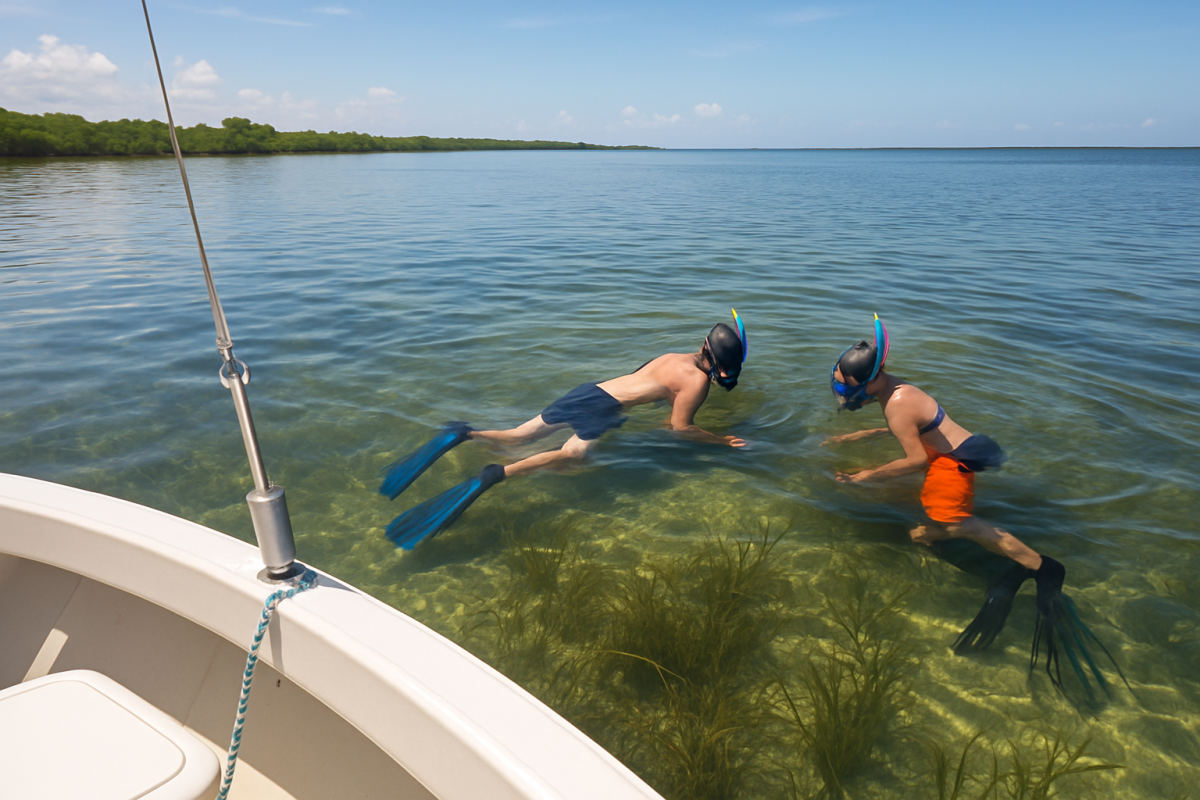
Take scallops only by hand or with a landing/dip net; commercial harvest is prohibited. A small mesh dive bag keeps your catch contained while letting sand and water drain away. If anyone is in the water with a mask and snorkel or dive gear, Florida requires a divers-down flag or buoy. Divers should stay within 300 feet of it in open water and within 100 feet in rivers, inlets and navigation channels. A visible divers-down flag is not optional gear—it is a safety essential in busy scalloping areas.
Finally, shell responsibly. In places such as Crystal River and Homosassa, do not pile shells in shallow rivers or other heavily used inshore water where they can create hazards and harm seagrass. Bring a measuring container, keep an eye on the group total, and check the current FWC zone status the morning of your trip—those three habits make a Florida scallop day much smoother.