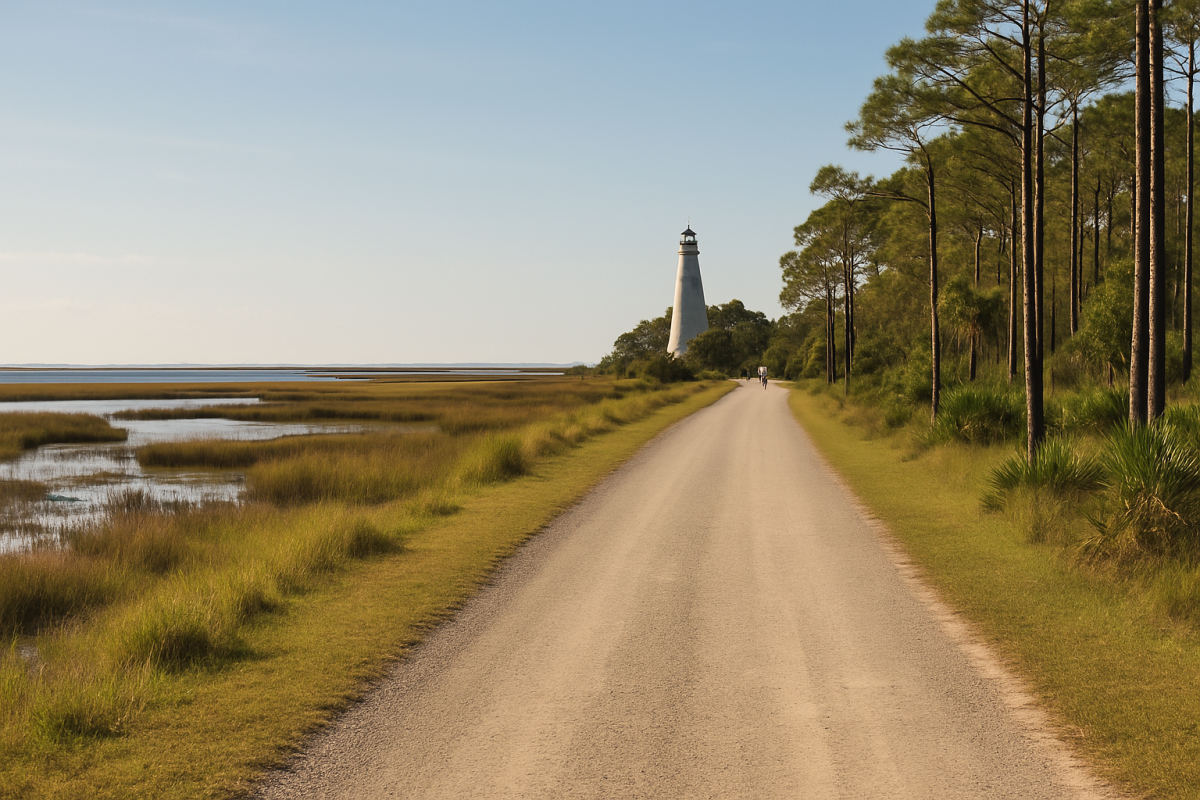
St. Marks National Wildlife Refuge is one of North Florida’s great slow-travel drives: a flat, marshy route through longleaf country and freshwater pools that ends at the historic St. Marks Lighthouse on Apalachee Bay. Lighthouse Road is the main way in, and it rewards visitors who treat it less like a rush to one landmark and more like a moving wildlife-viewing route.
Getting onto Lighthouse Road
The refuge’s St. Marks Unit is about 25 miles south of Tallahassee. From U.S. 98 in St. Marks, turn onto Lighthouse Road (County Road 59); the visitor center is roughly three miles in. Continue south past the visitor center, ponds, pull-offs and trailheads to reach the lighthouse at the road’s end.
The refuge is open year-round during daylight hours, with the Lighthouse Road gate opening at 6 a.m. The outdoor areas close at sunset, so do not plan a sunset linger unless you have enough time to drive back out before the gate closes. The visitor center itself keeps shorter hours: 8 a.m. to 4 p.m. Monday through Friday and 10 a.m. to 5 p.m. Saturday and Sunday, with federal-holiday closures. It is currently operating from the Education Building, so make that your first stop if you want a map, recent sighting tips or confirmation of conditions.
Entrance fees and what to bring
An entrance fee is required for the St. Marks Unit: $5 per vehicle, $1 for each pedestrian or bicyclist, or $25 for an annual refuge pass. America the Beautiful federal recreation passes are honored. There is no food service or overnight lodging inside the refuge, though picnic tables, drinking water and restrooms are available. Bring water, a snack and bug protection in warm months; the summer heat and biting insects are very real here. A pack of insect-repellent wipes is especially handy when you want to keep watching instead of retreating to the car.
Pets are allowed on leash, but wildlife comes first: do not feed or disturb animals, fly drones, swim, or remove plants, animals, artifacts or natural objects. Drive slowly and obey posted limits; deer, wading birds and other animals can be close to the road.
How to build a good wildlife drive
Start early, ideally shortly after the 6 a.m. gate opening, when the light is gentle and roadside activity can be better. Stop only in designated pull-offs or parking areas, scan methodically, and give yourself at least two to three hours. Binoculars are more useful than a giant camera lens for most visitors; a compact pair of compact binoculars lets you watch birds without edging too close.
- Visitor Center and Plum Orchard Pond: Begin here for a quick orientation. The pond and surrounding habitat can produce wetland birds, and spring visitors may spot purple gallinules.
- Tower Pond and Headquarters Pond: About five miles south of the visitor center, Tower Pond has parking and restrooms. Across the road, the short Headquarters Pond Trail leads to a small viewing deck. In summer, wood storks are often seen in the shallow water.
- Lighthouse Road itself: Keep scanning the roadsides and pools. July can bring white ibis, eastern kingbirds and purple martins; cool December days are productive for raptors along the road, including kestrels and red-tailed and red-shouldered hawks.
- The lighthouse end point: Walk the short Lighthouse Levee Trail beside the end parking area for open marsh-and-bay views. In May, manatees can sometimes be seen in the waters near the lighthouse. The historic keeper’s quarters are generally open Friday through Sunday, 11 a.m. to 3 p.m, but confirm that schedule before making a special trip.
Pick the season for your target species
For the broadest birding payoff, late fall through early spring is a strong choice. Waterfowl numbers typically peak from Thanksgiving into December, bald eagles are nesting in winter, and January can be particularly good for ducks in the refuge pools and Apalachee Bay. March begins spring migration, while early April can bring a lively mix of warblers, shorebirds, kites and osprey activity. October favors monarchs and other butterflies, plus northern harriers over the marshes.
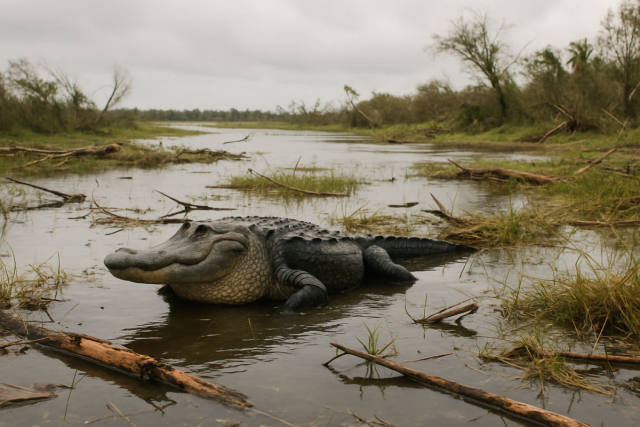
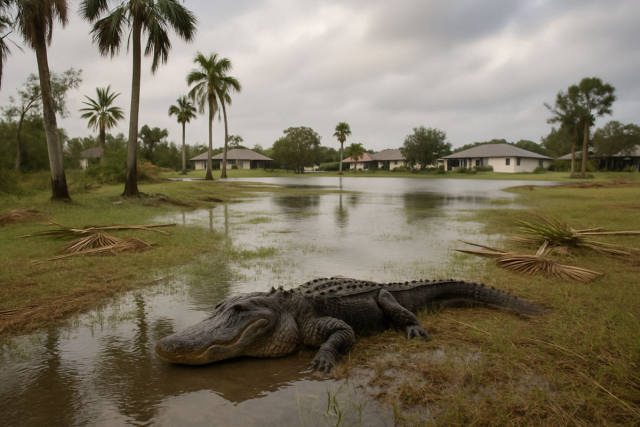
Summer is quieter in the middle of the day but still worthwhile for early risers, especially for ibis, martins, wood storks and young alligators. For mammals such as deer, otters, bobcats and bears, cool clear weather plus the first and last hours of the day offer the best odds—but an encounter is never guaranteed.
Closures: the essential reality check
Lighthouse Road is the refuge’s primary public route and is normally accessible year-round during daylight hours, not a road with a routine seasonal shutdown. Still, access beyond the pavement is more variable. Administrative roads and levees can close temporarily for prescribed burns or to protect sensitive wildlife concentrations, including around eagle nests, shorebird areas and waterfowl habitat. Other refuge units may also have hunt-related restrictions in fall and winter.
Before leaving Tallahassee or the coast, check the refuge’s current notices or call the visitor center at 850-925-6121—especially after storms, during prescribed-burn season, or if a particular trail or lighthouse open house is the centerpiece of your day. Practical takeaway: arrive early, stop often, and let the ponds and marshes—not just the lighthouse—set the pace of your visit.