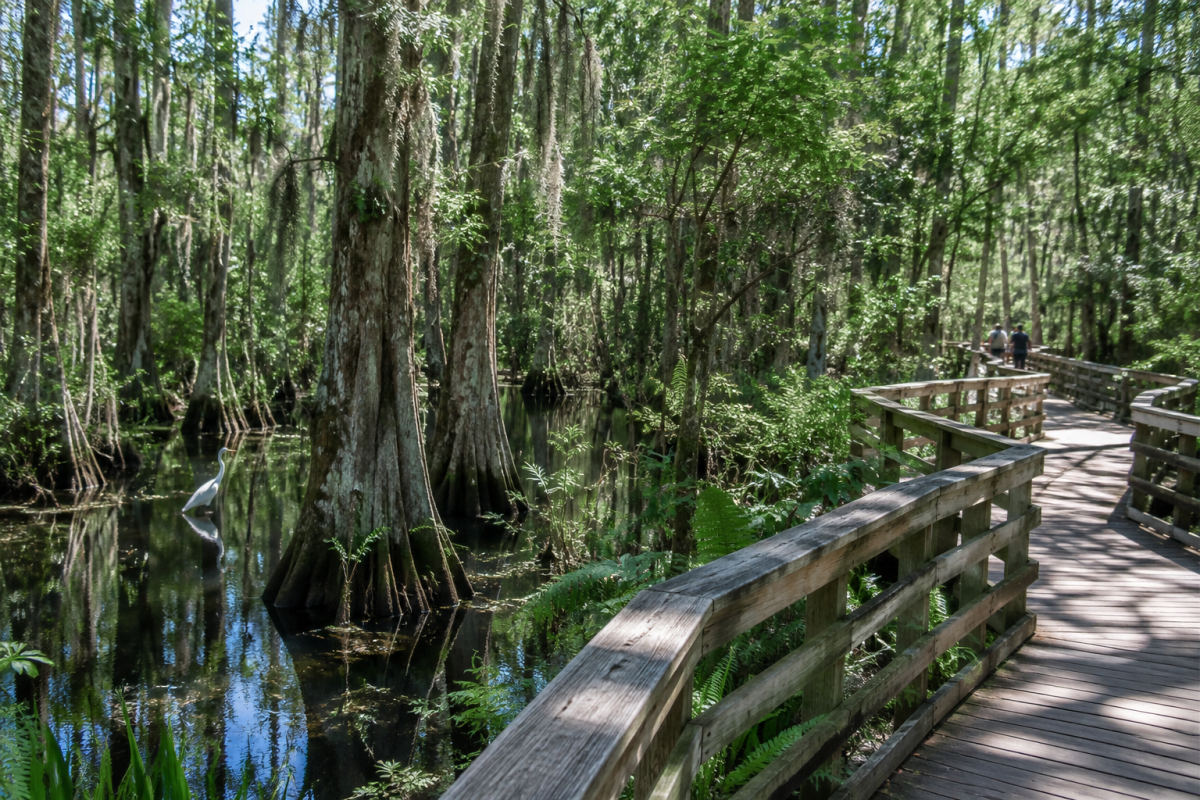
Corkscrew Swamp Sanctuary is one of Southwest Florida’s most memorable wild walks: a raised path through wet prairie, pine flatwoods and a cathedral-like old-growth bald cypress forest. Located northeast of Naples at 375 Sanctuary Road West, the Audubon sanctuary makes a fine half-day nature stop, but its seasonal admission schedule matters when mapping out your day.
Tickets and seasonal hours
General admission is $17 for adults, $10 for full-time college students with a valid school ID, and $6 for children ages 6 through 14. Children under 6 enter free. Corkscrew Swamp Sanctuary members enter free; U.S. military members and National Audubon members with ID pay $14. Buying timed admission online is recommended, particularly during busy winter and spring travel periods.
From May 1 through December 15, admissions are accepted from 8 a.m. to 1 p.m., and everyone must be off the boardwalk by 3 p.m. From December 16 through April 30, admissions run from 8 a.m. to 3 p.m., with the boardwalk closing at 5 p.m. The sanctuary is open on holidays, but special programs, maintenance periods and weather can affect plans, so check current details before heading out. Same-day ticket refunds and no-show refunds are not offered.
The boardwalk: how long and what to expect
The signature boardwalk is a 2.25-mile loop. It is not a quick roadside overlook; give yourself plenty of unhurried time to listen, scan the water and look high into the cypress canopy. The route passes several distinct habitats, so sightings can change dramatically from one section to the next.
There is no food allowed on the boardwalk, and visitors should stay on the path, keep voices low and never feed, chase or call in wildlife. A quiet pace is not just good etiquette here—it genuinely improves your odds of seeing more. Bring water, sun protection and footwear with grip, since sections can be slick after rain. A small pair of compact binoculars is especially useful for birds in the canopy and distant activity around the Lettuce Lakes.
Accessibility information
The Blair Visitor Center, restrooms and the full boardwalk are wheelchair accessible. Complimentary wheelchairs and an electric mobility scooter are available for visitor use. The boardwalk’s smooth, raised design makes Corkscrew a notably approachable way to experience a Florida swamp, though it is still a long outdoor route, with heat, humidity and changing weather to consider. Personal bicycles and scooters are not permitted, except mobility devices used for accessibility.
Service animals covered by the ADA are welcome, but pets are not allowed. Drones are also prohibited. If a summer thunderstorm develops while you are on the route, follow staff instructions and use the marked rain shelters or return to the visitor center; lightning can close the boardwalk.
When wildlife viewing is best
There is no bad season for the ancient forest itself, and more than 260 bird species have been recorded at Corkscrew. Still, the kind of wildlife you see depends heavily on water levels. For the strongest chance of concentrated wading-bird activity, aim for the latter part of the dry season—often spring. As water recedes, fish become concentrated in shallow pools, drawing birds such as Wood Storks, Roseate Spoonbills, Little Blue Herons and Tricolored Herons to the Lettuce Lakes. Alligators, turtles and otters may also be more active as they seek deeper water.
Winter is excellent for seasonal birds, including Painted Buntings, and February is a particularly promising time to watch for river otters around the lakes. Fall brings migration, with colorful songbirds often active near the visitor center and along the boardwalk. In the wetter summer months, look for butterflies, summer wildflowers and, if conditions cooperate, the sanctuary’s celebrated ghost orchid blooms. At peak water in late summer or early fall, wading birds and alligators can spread farther into the marsh, so close-up sightings may be less predictable.
For any season, arrive near opening, walk slowly, pause at overlooks and let the swamp settle around you. Pack water and a lightweight cooling towel in warm weather, then treat every sighting—whether it is an owl, an alligator or just wind in the cypress needles—as part of the experience.