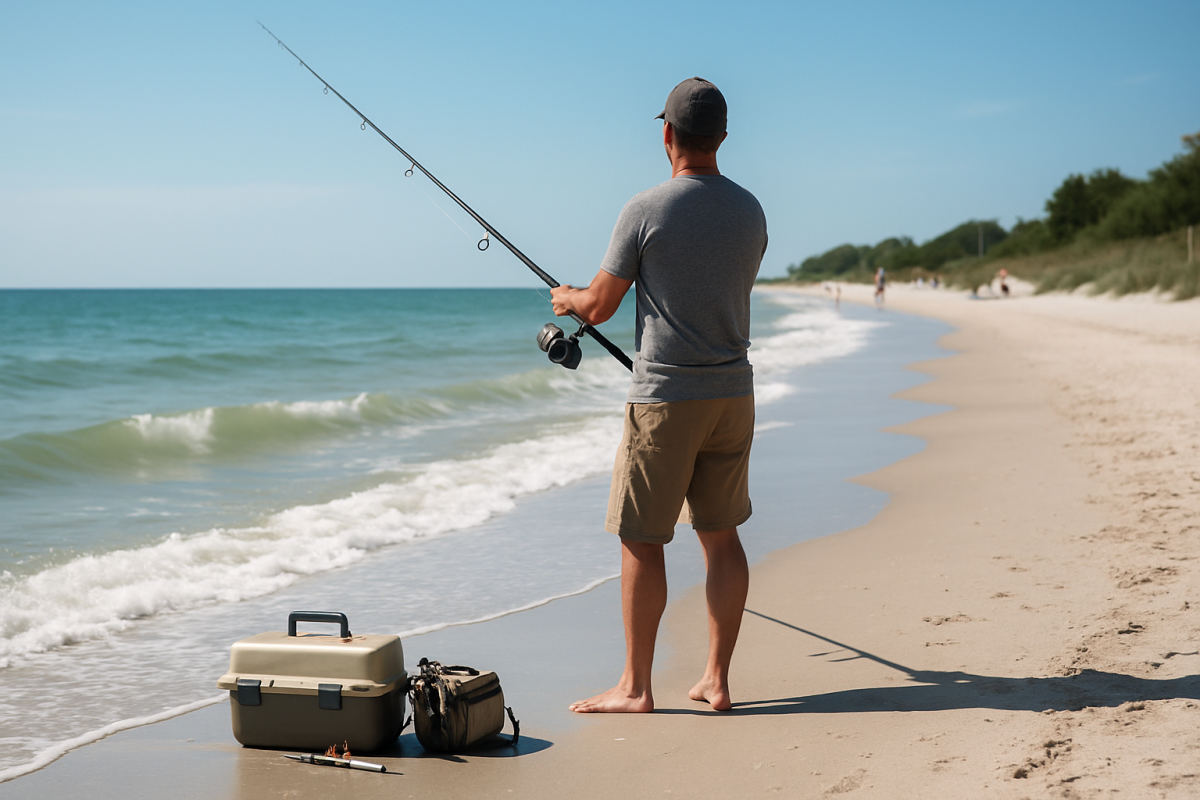
A sunrise surf-fishing session can be one of the easiest ways to enjoy a Florida beach day—but it still comes with license rules. The key question is not whether you plan to keep a fish: in Florida, casting a line or otherwise attempting to take saltwater fish or marine life generally counts as fishing. That includes catch-and-release and can include crabs, shellfish and other saltwater organisms.
The free shoreline license: for Florida residents only
Florida residents who will fish only from land or a structure attached to land can get the no-cost Resident Saltwater Shoreline Fishing License. Think beach, seawall, jetty, bridge, dock or shore-connected fishing spot. It is an annual license, and it is a smart option for locals who know they will stick to surf and shoreline fishing.
There are a few important boundaries. The free shoreline license does not cover fishing from a boat, swimming or diving to fish, or fishing from a beach or island you reached by boat. Wading is still considered shore fishing as long as you can stand on the bottom and did not arrive or depart by vessel. If there is any chance you will fish from a kayak, boat or boat-access-only island, buy the regular saltwater license instead.
A regular resident annual saltwater license costs $17 and works from shore or vessel, while the free shoreline license is strictly land-based. Children younger than 16 and qualifying Florida residents—including many residents age 65 and older—may be exempt from the underlying recreational license requirement. Carry the required proof if you are relying on an exemption, and check current details before you go.
What visitors need to buy
Nonresidents cannot use the free shoreline license, even if they never leave the sand. For visitors age 16 and up, Florida’s current nonresident saltwater license choices are $17 for three days, $30 for seven days or $47 for one year. Each works from shore or vessel, making the three-day option a tidy fit for a long beach weekend. Listed prices include the state issuance fee, though a vendor may add a small handling or transaction charge.
You can purchase licenses and permits through the FWC’s GoOutdoorsFlorida system, the Fish|Hunt Florida app, county tax collectors and many tackle or sporting-goods shops. A hard card is optional; digital license information is also useful to keep handy on your phone. Before setting up on the sand, it is worth packing a water-resistant phone pouch for your license details, tides and local rule checks.
When a pier or charter covers you
You do not need your own recreational saltwater license when fishing from a pier that holds a valid Florida saltwater pier license. The same general coverage applies to passengers fishing from a properly licensed for-hire charter, guide, party boat or headboat. That can be particularly convenient for visitors who want one guided outing rather than several days of independent fishing.
Ask before you book or pay a pier admission fee: not every dock, resort pier, guide or beach fishing excursion automatically supplies this coverage. A shore-based fishing guide and that guide’s customers, for example, remain subject to the usual individual recreational-license rules. A valid charter or pier license also does not erase bag limits, size limits, seasonal closures, location restrictions or gear rules.
Snook: the $10 add-on to understand
Snook are a prized Florida inshore catch, and they require extra planning. Anglers who are not otherwise exempt need a $10 annual Snook Permit in addition to the appropriate saltwater fishing license when taking or attempting to take snook, including from the shoreline. The permit is available to residents and nonresidents; a five-year $50 version is available to residents only.
Do not assume that buying the permit means you can bring one home. Snook seasons, slot limits and harvest rules differ by coast and management region, and they can change. Check the current FWC snook regulations for the specific beach, pass, bay or river you plan to fish. Fishing from a valid licensed pier or qualifying licensed charter is generally among the exemptions from the individual recreational license and snook permit, but the operator still must have the proper authorization.
Shore-based shark fishing has a separate no-cost permit
Shark fishing from the beach, jetty, bridge or pier is different. Anyone age 16 or older who targets or keeps sharks from shore must complete FWC’s online Shore-based Shark Fishing Educational Course and obtain the free annual Shore-based Shark Fishing permit. This rule applies even to anglers otherwise exempt from a fishing license, including qualifying seniors, and it also applies when fishing from a licensed pier.
The permit can also be triggered when an angler is shore fishing for any species with certain shark-style methods: a metal leader longer than four feet, a fighting belt or harness, or bait deployed by something other than casting while using a large hook. Florida also prohibits chumming from the beach for any species. If sharks are part of the plan, bring appropriate release tools and non-offset circle hooks; circle hooks and a tool capable of quickly cutting a leader or hook are required when targeting sharks with natural bait.
Practical takeaway: resident fishing only from the sand or a shore-fixed structure? Get the free shoreline license. Visiting or using a vessel? Buy a regular saltwater license. Then add the snook permit or shore-based shark permit whenever your target species or gear calls for it—and check the latest local regulations before your line hits the water.