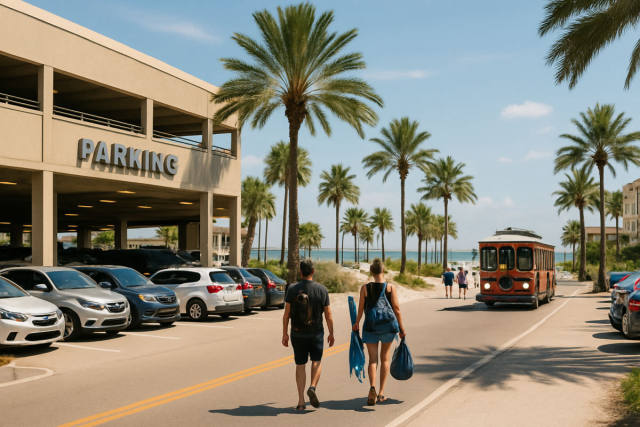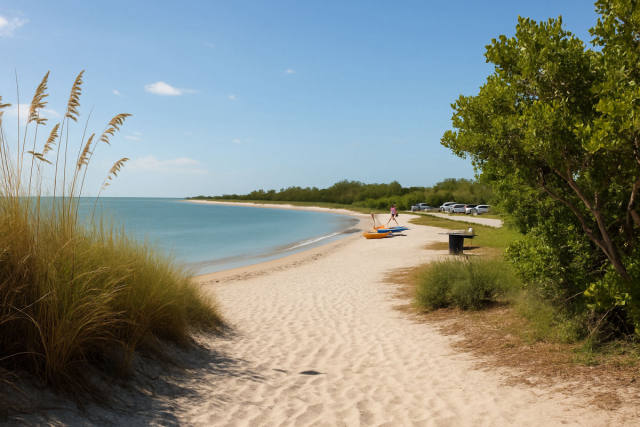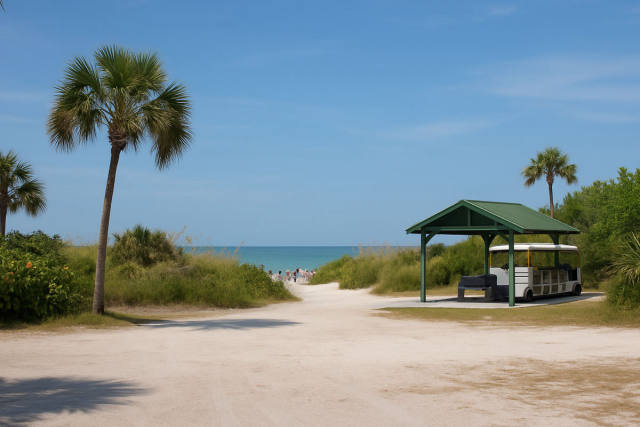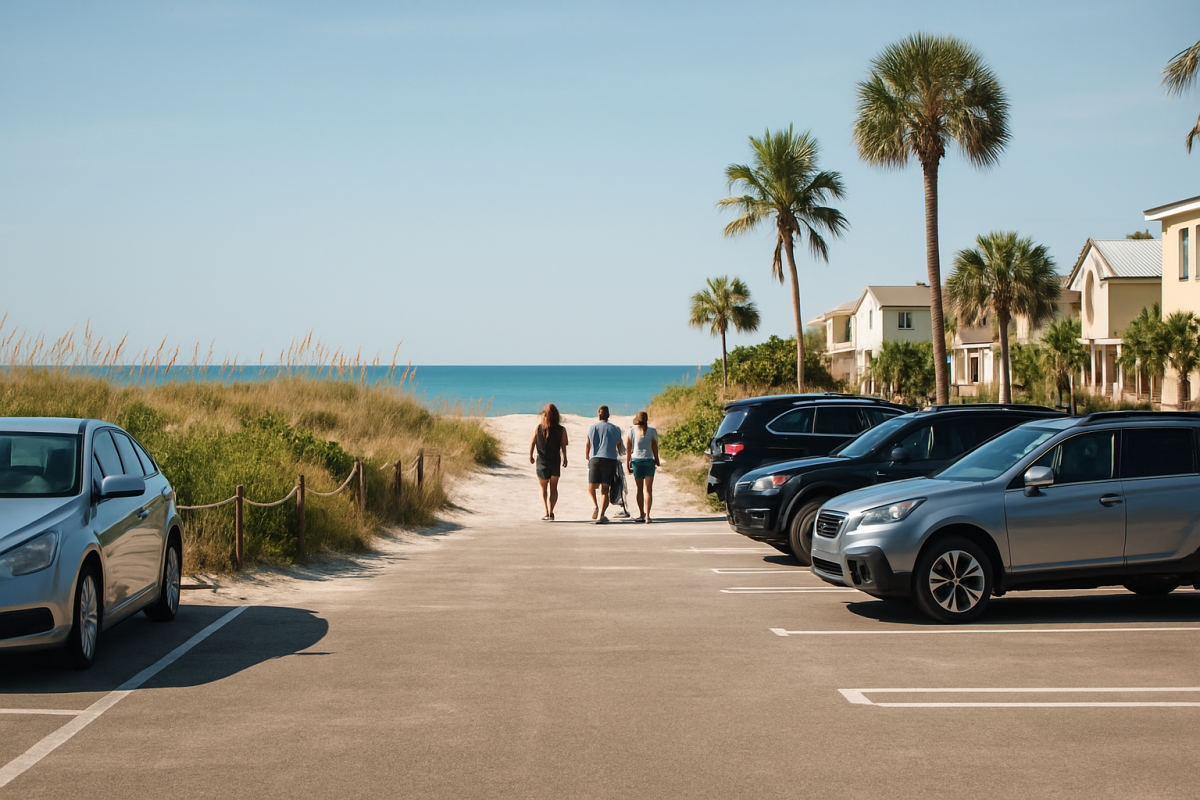
Pass-a-Grille is wonderfully walkable once you are out of the car, but parking can be less intuitive than at a typical Florida beach. The key is to separate three things that sit close together on the map: paid public spaces, resident-permit streets and pedestrian beach access points. A beach walkover does not automatically mean there is visitor parking beside it.
Start with the two main public parking areas
For a standard beach day, look for the city’s designated pay-by-plate spaces along Gulf Way and Pass-a-Grille Way. The City of St. Pete Beach lists 541 public spaces on Gulf Way and another 186 on Pass-a-Grille Way, making these the practical places for visitors to begin their search.
Gulf Way is generally the more convenient choice for getting directly onto the sand, while Pass-a-Grille Way can mean a short walk across the neighborhood to reach the beach. Neither is a traditional giant beach lot: much of the public inventory is signed, paid curbside parking. On busy weekends, do not give up after one pass. Continue slowly through the signed public areas rather than turning onto residential avenues in search of an unofficial shortcut.
How pay-by-plate parking works
St. Pete Beach parking is tied to your license plate, not to a paper receipt left on the dashboard. At a pay station, enter your plate number, pay by card, select your time and confirm the transaction. Cash and coins are not accepted at city pay stations. You can also use ParkMobile or the city’s pay-by-text option by texting “Park” to 77223.
Current city rates are $5 per hour Monday through Thursday and $6 per hour Friday through Sunday, with an additional $1-per-hour seasonal surcharge from February 1 through April 30. Before walking away, take a moment to confirm that the plate number and parking zone displayed on the screen or app match your car and space. A small portable phone charger is particularly useful on a long beach day if you are relying on app-based payment.
One easy-to-miss rule: do not back into or pull through a metered space. The city uses license-plate recognition for enforcement, so your plate must be visible from the drive lane. For parallel parking, park in the direction of traffic and keep your right wheels at the curb.
Permit-only streets are not visitor overflow parking
Pass-a-Grille’s residential streets include areas signed for permit holders, often marked with a zone such as 4R. If a sign says a permit is required, public parking is not allowed there—even if a nearby paid space is full, even if you are only planning to stay briefly, and even if a public beach access is a few steps away.
The 4R permit is for eligible Pass-a-Grille residents, and city permits are digital and associated with license plates. Visitors should not assume that a rental address, a restaurant reservation or a beach-access sign gives them permit parking privileges. Also obey any separate no-parking, time-limit, loading, fire-lane or private-property signs; a permit does not override those restrictions.
Using street-end beach access points
Public pedestrian access is one of Pass-a-Grille’s best features. Beach entrances appear at various street ends, including access points around 25th, 26th, 29th and 30th avenues in the northern part of the neighborhood, as well as the broad Gulf Way beachfront farther south. These walkovers are for reaching the sand on foot, not an invitation to park in every adjacent curb space.
The smart approach is to park legally in a marked pay-by-plate space, then choose the nearest public beach entrance and walk over. This is often easier than trying to find parking at the exact street end you had in mind. Keep driveways, walkovers, ramps and marked access areas clear, and do not block a narrow residential street while dropping off gear.
A simple no-ticket checklist
- Read the sign at the exact space, not just the sign at the start of the block.
- Use only spaces specifically marked for public pay-by-plate parking.
- Enter your full license plate carefully and save your payment confirmation.
- Park front-in where required so the plate can be read from the drive lane.
- Treat permit-required blocks as residents-only unless you have the correct digital permit.
- Use a public walkover after parking; do not confuse beach access with beach parking.
If you do receive a city parking citation, St. Pete Beach allows online appeals within 30 days, and supporting proof is required. But the better strategy is simple: plan for paid Gulf Way or Pass-a-Grille Way parking, arrive earlier on peak beach days and recheck posted signs before leaving your car. Parking rules and rates can change, so check current city details before you go.