Spotting a whooping crane in the wild feels like finding a living piece of North American natural history — because that's exactly what it is. Planning a Florida nature trip that includes wildlife watching? Put whooping cranes near the top of your list. They are among the continent's rarest birds, and Florida is one of the few states where you can realistically encounter them. Here's how, where, and when to look.
Two Florida Stories: Resident Birds and Seasonal Visitors
Florida is home to two distinct groups of whooping cranes, and understanding them keeps expectations — and your viewing strategy — on track.
The first is a small non-migratory resident population centered on the Kissimmee Prairie region of south-central Florida. This flock was established through a reintroduction effort that ran from 1993 to 2004, during which biologists released captive-raised birds into Osceola County's publicly managed conservation land and privately owned cattle ranches — habitat chosen for its large freshwater marshes and open grassland far from heavy human activity. Releases later expanded to private ranches in Lake and Polk counties. The program has not added new birds in many years, and FWC ended intensive monitoring of the remaining non-migratory cranes back in 2012; since then, tracking has depended heavily on observations submitted by the public. A collaborative effort that began in 2017 has been gradually translocating lone birds and wild-hatched chicks from the Florida flock to Louisiana to bolster recovery there. The upshot for visitors: a modest number of whooping cranes — best estimates put it in the low dozens — still roam the Kissimmee region, but they are not guaranteed sightings and may wander across private ranchland.
The second group belongs to the Eastern Migratory Population (EMP), a separate reintroduced flock that breeds at Necedah National Wildlife Refuge in Wisconsin and migrates south each fall. St. Marks National Wildlife Refuge in Wakulla County, on Florida's Gulf Coast, served as the designated southern terminus for ultralight-aircraft-led migrations that guided young cranes on their first journey south. Juvenile birds guided by ultralight pilots arrived at St. Marks as early as November in good years, though weather delays could push arrival into January. It's worth noting that as the EMP has matured, fewer birds now continue all the way to Florida — many winter short of the state, in southern Indiana or northern Alabama — so St. Marks sightings are less predictable than they once were. Always contact the refuge directly before visiting specifically for whooping cranes, and check the International Crane Foundation's real-time "Where Are the Whoopers" interactive map at savingcranes.org.
Best Viewing Windows
- Kissimmee Prairie (year-round): The resident flock doesn't migrate, so any time of year is technically possible, but the cooler, drier months from fall through spring offer better visibility across open grassland and reduce heat shimmer that makes distant birds harder to read. Early morning and late afternoon are prime times for bird activity generally.
- St. Marks NWR (late fall through late winter): If EMP birds do make it to Florida, they typically arrive somewhere between November and January and depart before the spring migration push. Call the refuge or monitor crane-tracking resources before making a special trip.
Where Exactly to Go
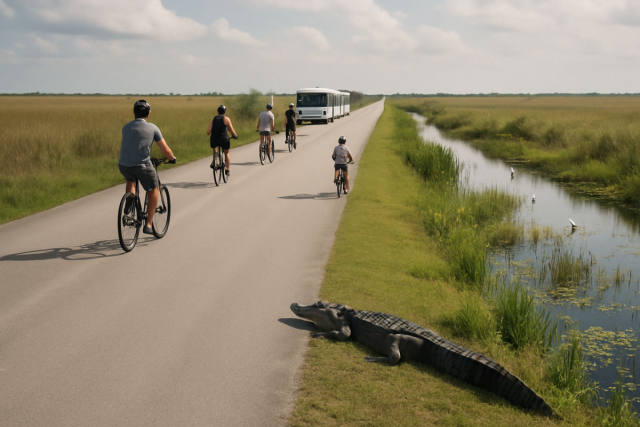
Kissimmee Prairie Preserve State Park (33104 NW 192nd Ave., Okeechobee) is the logical anchor for your central Florida search. The park protects the largest remaining tract of Florida dry prairie — part of the Everglades headwaters — and its varied habitats of wetlands, grassland, and hardwood hammocks are home to multiple rare and endangered species. The park opens at 8 a.m., with the visitor center open 9 a.m. to 4 p.m., and the gate closes at sundown. Over 100 miles of dirt roads can be explored on foot, by bike, or on horseback, and ranger-led prairie buggy tours run on weekends and holidays from fall to early spring — an excellent option for covering remote terrain where cranes are more likely to be found undisturbed. Verify current hours and tour availability with the park directly at (863) 462-5360 before you go, as schedules can change.
St. Marks National Wildlife Refuge (Wakulla County) is a sprawling coastal refuge of salt marsh, pine flatwoods, and freshwater impoundments. It has a viewing blind associated with the historic whooping crane pen site. Check with the refuge and the ICF's tracking map before visiting specifically for whoopers, as EMP flock distribution has shifted northward in recent years.
How to Tell a Whooping Crane Apart
Florida is full of tall white and gray wading birds, and misidentification is genuinely common — even among experienced birders. Use this quick field checklist:
- vs. Sandhill Crane: Sandhills are gray overall; whooping cranes are snow white with black wingtips — a decisive field mark both at rest and in flight. The whooping crane's head shows a full dark-red crown plus a black "mustache" stripe, while the sandhill has only a small red forehead patch. Size matters too: whooping cranes are North America's tallest bird, standing around five feet tall with a wingspan exceeding seven feet, making sandhills look noticeably shorter beside them. Voices also differ sharply — whoopers produce a loud, single-note trumpet call, while sandhills deliver a lower, rolling bugle.
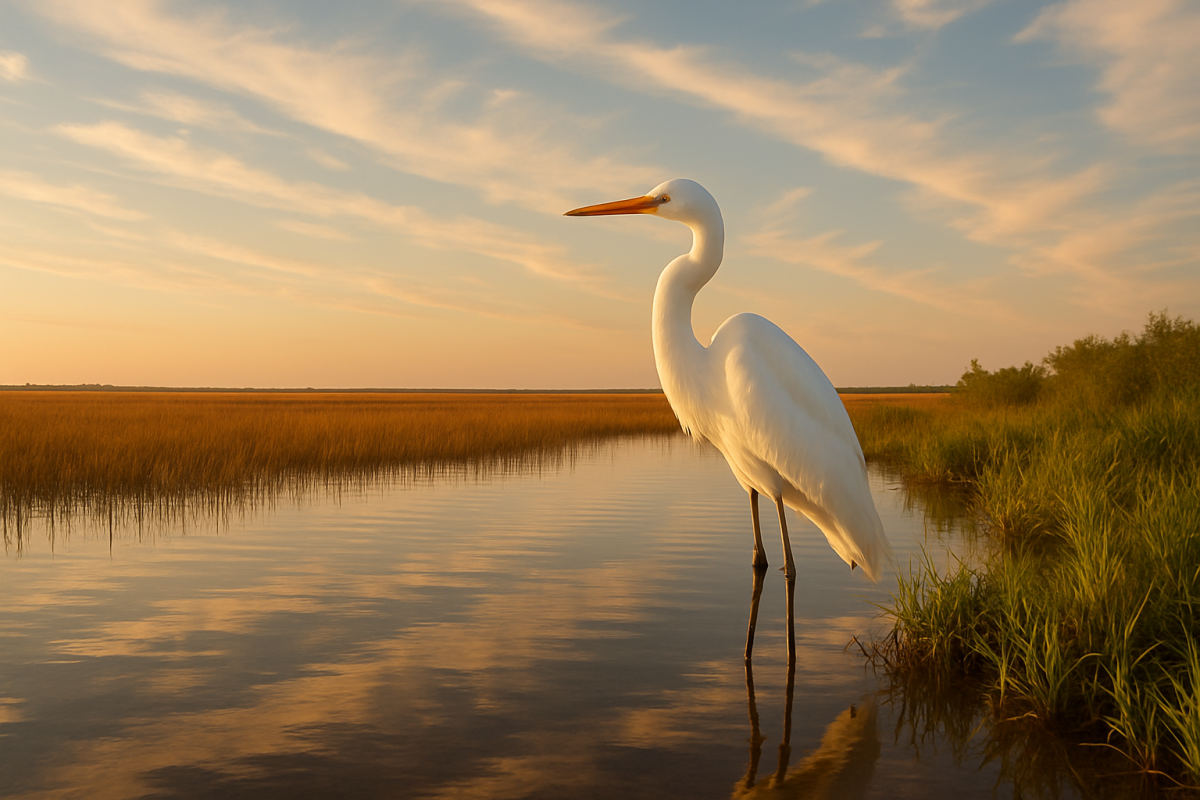
- vs. Great Egret: Great egrets are all-white and superficially similar, but they're considerably slimmer, shorter (roughly three to four feet), and carry a distinctive yellow bill rather than the whooping crane's yellowish-green bill. The most reliable in-flight clue: egrets tuck their necks into a folded S-curve while flying, whereas whooping cranes — like all cranes — stretch their neck fully straight, parallel to the ground.
- vs. Wood Stork or White Pelican: Wood storks show black along the entire wing length (not just the tips), and pelicans have an unmistakable pouched bill and stocky, short-necked silhouette. Flying pelicans also show black extending across the full wing, and their legs don't trail beyond the body in flight the way a crane's do.
- Juvenile whooping cranes are the same height as adults but wear mottled white-and-cinnamon plumage on the head, neck, and body, with blue eyes and none of the adult's bold facial markings. Don't dismiss a large, rusty-headed white bird too quickly — it may be a whooper chick.
Bring quality binoculars — at the distances you'll typically encounter these birds across open prairie or marsh, naked-eye details are rarely sufficient for a confident ID.
Reporting Rules: Why Your Sighting Matters
Because FWC monitoring of the Florida non-migratory flock now relies heavily on public observations, your report is genuinely useful to scientists. The FWC's official guidance directs Florida observers to report whooping crane sightings to the International Crane Foundation. For banded birds — those wearing colored leg bands with alphanumeric codes — submit your sighting at bandedcranes.org, where your data directly helps researchers map migration routes and assess risks. Report any sick, injured, or deceased crane to FWC's Wildlife Health Team at [email protected] or 866-293-9282. And if you ever witness harassment, disturbance, or suspected poaching of a whooping crane, report it immediately to local law enforcement or FWC.
On the etiquette side: the ICF recommends staying at least 200 yards from whooping cranes on foot, and no closer than 100 yards even when remaining in a vehicle. Stay concealed, keep your voice low, and share only the county and state when posting sighting locations publicly — protecting precise coordinates helps prevent crowds from stressing these vulnerable birds.
Practical tip: Before any dedicated whooping crane outing, spend five minutes checking the ICF's live tracking map at savingcranes.org and the eBird recent sightings layer for your target county. These tools update frequently and will tell you whether any birds have been reported in the last week — saving you a long drive to an empty prairie. Carry a cooling towel if you're visiting in warmer months; open prairie in Florida offers very little shade.