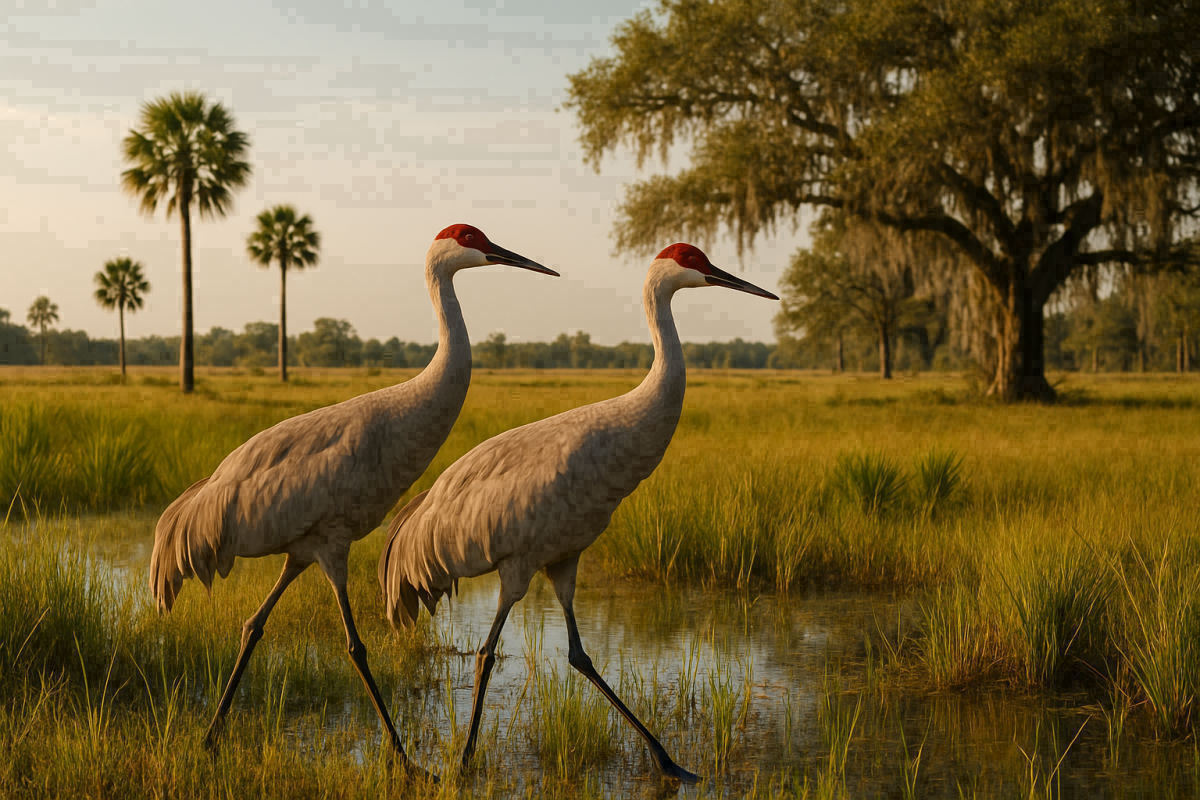
Standing nearly four feet tall with a six-foot wingspan and a scarlet cap that catches every ray of Florida light, the sandhill crane is one of the state's most unmistakable wild residents. What makes spotting one here especially satisfying is that you don't need a migratory season window or a lucky afternoon — Florida's own non-migratory subspecies lives here year-round, meaning any morning walk through the right habitat could earn you a front-row seat to one of nature's oldest performers. Fossil evidence places sandhill cranes in Florida as far back as 2.5 million years, making them genuine living relics of a prehistoric world.
Two Cranes, One State
Florida is home to two distinct sandhill crane populations at different times of year. The Florida sandhill crane (Grus canadensis pratensis) is a permanent, non-migratory resident numbering between 4,000 and 5,000 birds. Every winter, that resident population is joined by roughly 25,000 migratory greater sandhill cranes — the larger of the two subspecies — which winter in Florida before returning north to breed in the Great Lakes region. If you spot a large flock moving through in November or December, you're likely watching the winter arrivals; the smaller, year-round pairs and family trios you'll find foraging in a neighborhood retention pond are almost certainly Florida's own subspecies. The Florida bird is still listed as a state-threatened species, a reminder that its numbers, while stable, remain ecologically fragile.
Where to See Them: The Best Public Sites
The core of Florida's sandhill crane country runs through central and north-central Florida, where freshwater marshes, open prairies, and pastures provide everything a crane needs. These six public sites consistently deliver reliable sightings:
- Paynes Prairie Preserve State Park (Gainesville): This 22,000-acre preserve ranks among the state's premier crane-watching destinations. The park sits along a major crane flyway, and migratory birds moving through in late winter swell the numbers of resident cranes already present. The La Chua Trail and the Ecopassage Observation Boardwalk near US 441 are standout vantage points. Cranes are most active in early morning when they leave roost sites to feed, and again in late afternoon — midday heat often sends them into shadier loafing areas.
- Kissimmee Prairie Preserve State Park (near Okeechobee): One of Florida's largest state parks, this preserve protects the biggest remaining stretch of Florida dry prairie — habitat that cranes thrive in. More than 100 miles of dirt roads are accessible by foot, bicycle, or horseback, and ranger-led buggy tours reach the park's more remote sections. The wide-open landscape makes spotting cranes, crested caracaras, and burrowing owls genuinely straightforward.
- Three Lakes Wildlife Management Area (Osceola County): More than 150 bird species have been recorded in this mosaic of freshwater marshes, prairies, and pine flatwoods. The 7.6-mile Prairie Lakes Trail loop is a favorite route, with observation platforms that frame birds and alligators alike. Check current WMA access dates before visiting, as hunting seasons can affect public access.
- Myakka River State Park (Sarasota): Florida's largest state park by acreage pairs open prairie with river habitat, giving sandhill cranes plenty of foraging ground and visitors plenty of viewing angles. Tram tours and an elevated canopy walk put you above the action.
- Loxahatchee National Wildlife Refuge (Palm Beach County): This southernmost reliable site for Florida sandhill cranes sits near the northern tip of the Everglades ecosystem. The refuge's freshwater marshes support a small but consistent crane population, and the observation platforms along the impoundment levees make for easy, undisturbed viewing.
- Your own neighborhood: Don't overlook the obvious. Florida sandhill cranes are famously adaptable to suburban life, regularly foraging on lawns, golf courses, pastures, and park edges throughout central Florida. Some of the most intimate, unhurried crane encounters happen without a park entrance fee — which is precisely why responsible viewing habits matter everywhere, not just in protected areas.
Nesting Season: When to Watch for Chicks
For Florida's resident cranes, nesting season officially runs from January through August, though the peak of egg-laying activity falls in late February and early March for most of central and southwest Florida. Both parents share incubation duties over a 29-to-32-day period, typically hatching one or two chicks. Young cranes can follow their parents away from the nest within 24 hours of hatching, but they remain flightless for up to 70 days and stay with their parents for nine to ten months. That means from roughly March through summer, you have a good chance of spotting the rusty-brown, long-legged chicks — called colts — trotting alongside their parents across open ground. Courtship itself is a spectacle worth seeking out: pairs perform an elaborate dance of jumping, wing-flapping, and running that intensifies from late fall through early spring, particularly in February when breeding behaviors are at their peak. Cranes are monogamous and often return to the same nesting territory year after year, building a fresh nest platform from emergent vegetation in shallow water each season.
The No-Feeding Rule — And Why It Matters
Florida Administrative Code 68A-4.001(6) makes intentional feeding of sandhill cranes illegal statewide — a rule that's been on the books since 2002. The reasoning is straightforward: when cranes learn to associate people with food, they lose their natural wariness of humans. Habituated birds are more likely to wander into traffic, approach people aggressively, and suffer from a diet that no longer reflects their natural omnivorous range of seeds, insects, small reptiles, frogs, and grain. Unnatural concentrations of cranes in suburban areas also expose chicks to greater predation risk from dogs and cats, and heavily pesticide-treated lawns have been linked to chick deaths. If you witness someone intentionally feeding cranes, the FWC's Wildlife Alert Hotline (1-888-404-3922) accepts reports. Regulations can and do evolve, so confirm current rules at myfwc.com before your visit.
Viewing Ethics: How to Be a Good Crane Neighbor
Responsible watching is simple once you know the baseline: if a crane stops foraging, stands upright and alert, or begins moving away from you, you are already too close. Let the bird's behavior guide you, not a fixed number of feet. During nesting season, FWC recommends staying well clear — at least 400 feet — of any active nest. Here are the core principles to keep in mind:
- Use a good pair of binoculars so you can observe from a respectful distance without the bird ever knowing you're there.
- Stay quiet and avoid sudden movements. Cranes are not skittish by nature, but startling them — especially nesting birds — causes real stress.
- Never attempt to flush birds into flight for a photograph. It's disruptive and, near a nest, potentially dangerous to eggs and chicks.
- Keep pets leashed and controlled; dogs, even friendly ones, trigger strong alarm responses in cranes.
- On roads, slow down and give cranes time to cross — they are deliberate walkers, and vehicle collisions are a leading cause of crane mortality in Florida.
A lightweight cooling towel tucked in your bag makes a long morning on the prairie in Florida's heat significantly more comfortable — and the more comfortable you are, the longer you'll stay patient and still, which is ultimately what great wildlife watching demands.
Planning tip: The window from late February through early April combines peak courtship activity, new chicks just beginning to appear, and the tail end of the migratory greater sandhills' Florida stay — making it the single best period to plan a dedicated crane outing. Visit the Florida State Parks website to confirm current hours and entrance fees for any of the parks above before heading out.