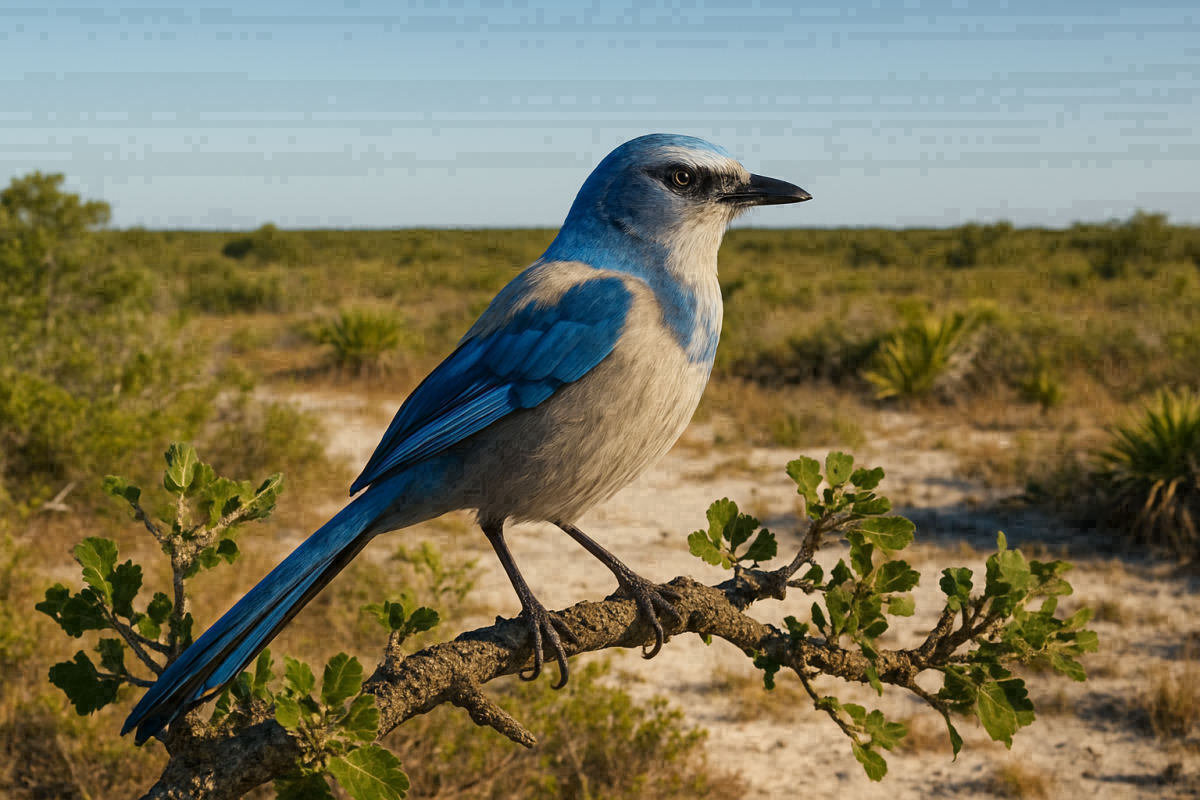
There is exactly one bird species on Earth that exists nowhere but Florida. The Florida Scrub-Jay — a striking blue-and-gray corvid slightly smaller than its Blue Jay cousin — stakes that claim, and it makes every sighting feel like a genuine privilege. Bring a good pair of compact binoculars and the tips below, and there's a very real chance one will land on your outstretched hand before the morning is over.
Why It's a Big Deal (and Why Time Matters)
The Florida Scrub-Jay was listed as federally threatened in 1987, and the news has not improved much since. The 2025 State of the Birds report designated it a Red Alert Tipping Point species, meaning it has lost more than half its population over the past 50 years and continues to decline steeply. Current estimates put the wild population somewhere between roughly 7,500 and 10,000 individuals — down approximately 90 percent from pre-European-settlement numbers. Habitat loss to development and decades of fire suppression that allowed open scrub to grow dense and overgrown are the primary culprits. A scrub-jay family needs 22 to 24 acres of properly maintained, open, sandy scrub oak habitat, and only about 15 percent of that habitat remains statewide. Every site on this list is actively managed — often with prescribed burns — to keep that scrub suitable. When you visit one, you're supporting the case that these places matter.
The Habitat: What You're Looking For
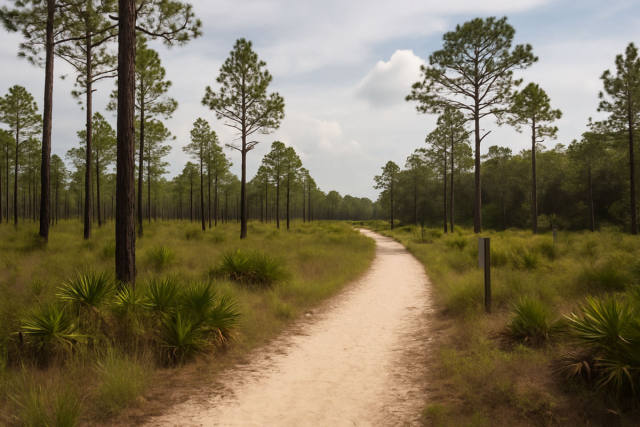
Forget dense jungle or grassy marsh. Scrub-jays live in some of Florida's highest, driest terrain: ancient sand ridges, coastal dunes, and sandy river deposits blanketed in low-growing oaks — sand live oak, myrtle oak, and Chapman's oak — typically topping out at head height or below. The open sandy patches between shrubs are essential; jays bury thousands of acorns there each fall and retrieve them through winter. If the vegetation looks almost desert-like and the soil is pure sand, you're in the right place.
Best Sites by Region
East-Central Florida (Space Coast): Merritt Island National Wildlife Refuge, adjacent to Kennedy Space Center, is arguably the single most reliable spot in the state. The dedicated Scrub Ridge Trail — a one-mile loop off State Route 3 — passes through classic scrub habitat, and the U.S. Fish & Wildlife Service notes that Florida Scrub-Jays are common there year-round. Along the trail, the birds are notoriously tame. Keep an eye on telephone poles and fence posts along SR 3/Kennedy Parkway as well; jays often use them as sentinel perches. Note that the Visitor Center boardwalk has been under ongoing construction — confirm current access before you go.
Northeast/Volusia County: Lyonia Preserve in Deltona is frequently cited as the most up-close scrub-jay experience in Florida. The preserve was purpose-managed to grow its scrub-jay population, and the results are dramatic: from one family in 1992 to more than a hundred birds by 2001. The 2.1-mile trail loops through the highest ground in Volusia County, and the birds here are so accustomed to people that encounters can be startlingly personal. A small nature museum and café are on-site. Admission is by donation.
Gulf Coast/Southwest Florida: Oscar Scherer State Park in Osprey (just south of Sarasota) holds one of the densest concentrations of scrub-jays in southwest Florida. More than 15 miles of trails wind through the park's scrubby flatwoods, and the habitat is actively managed for the birds' benefit. The park is open daily from 8 a.m. to sunset; verify current entrance fees on the Florida State Parks website before visiting. Ranger-led bird walks are occasionally offered — call ahead to ask.
South-Central Florida (Lake Wales Ridge): Archbold Biological Station in Venus has conducted one of the longest continuous wildlife studies in the world — more than 50 years of monitoring individual Florida Scrub-Jays and their family histories. The station welcomes day visitors Thursday through Sunday, 8 a.m. to 5 p.m., with self-guided trails and exhibits at the Frances Archbold Hufty Learning Center. A suggested donation applies. Expert-led public tours are scheduled periodically; check the station's events calendar. This is the closest thing birding has to a sacred site for this species.
Southeast Florida: Jonathan Dickinson State Park near Hobe Sound protects the largest area of scrub-jay habitat in southeast Florida. Experienced birders consider scrub-jay sightings there close to guaranteed on the designated scrub trail. Lake June-in-Winter Scrub State Park near Lake Placid and Seabranch Preserve State Park are also solid options on the southeast side of the peninsula.
Central Florida: Ocala National Forest harbors one of the largest scrub-jay populations in the state within the largest contiguous area of xeric oak scrub anywhere. The Yearling Trail and trails in the Juniper Prairie Wilderness and around Lake Eaton all pass through quality habitat. Rock Springs Run State Reserve and Seminole State Forest near Sorrento are good central-ridge options closer to Orlando.
When to Go
The good news: scrub-jays don't migrate, and they defend the same territories year after year, so they're findable in every month. That said, the sweet spot for most visitors is October through April. Cooler temperatures make the open, shadeless scrub comfortable to walk; the vegetation is lower and visibility is better before summer growth flushes in; and the birds are highly active, vocal, and territorial. Breeding season runs roughly March through June, when pairs and their helper offspring — young from prior years who stick around to assist at the nest — are especially animated and conspicuous. Fall is worth noting too: jays enter a frenzy of acorn-burying from late summer into autumn, giving you extended, active views as they cache food across the sandy ground. Summer works as well, but go early and bring a cooling towel — scrub habitat offers essentially no shade and Florida's humidity is unforgiving by mid-morning.
Viewing Tips
- Go early. Scrub-jays are most active in the first two to three hours after sunrise. Midday heat pushes them into shade and slows activity considerably.
- Walk slowly and stop often. Scan the tops of low oaks — jays like to perch 6 to 12 feet up and survey their territory. Listen for their distinctive raspy, rolling call; it carries well and often announces their presence before you see them.
- Watch for the sentinel. Scrub-jay families post a lookout — typically perched higher than the rest — while others forage below. Spotting the sentinel usually means the whole family is nearby.
- Keep your hands open, not extended. At managed sites, jays are famously unafraid of humans and may approach or even land on you. Resist the urge to feed them; human food disrupts their diet and natural behavior, and feeding wildlife is prohibited in state parks and refuges.
- Avoid prolonged direct eye contact during nesting season (March–June), as this can be perceived as a threat and stress a breeding pair.
- Use eBird. Cornell Lab's free eBird app shows recent confirmed sightings pinpointed to specific trails and dates — invaluable for confirming which spots are active right now before you make the drive.
Practical tip: Because habitat management schedules, trail conditions, and visitor center hours can change — especially following prescribed burns or storm damage — it's always worth a quick check of the relevant park or refuge website before your visit. The birds will be there; make sure the trail is open when you are.