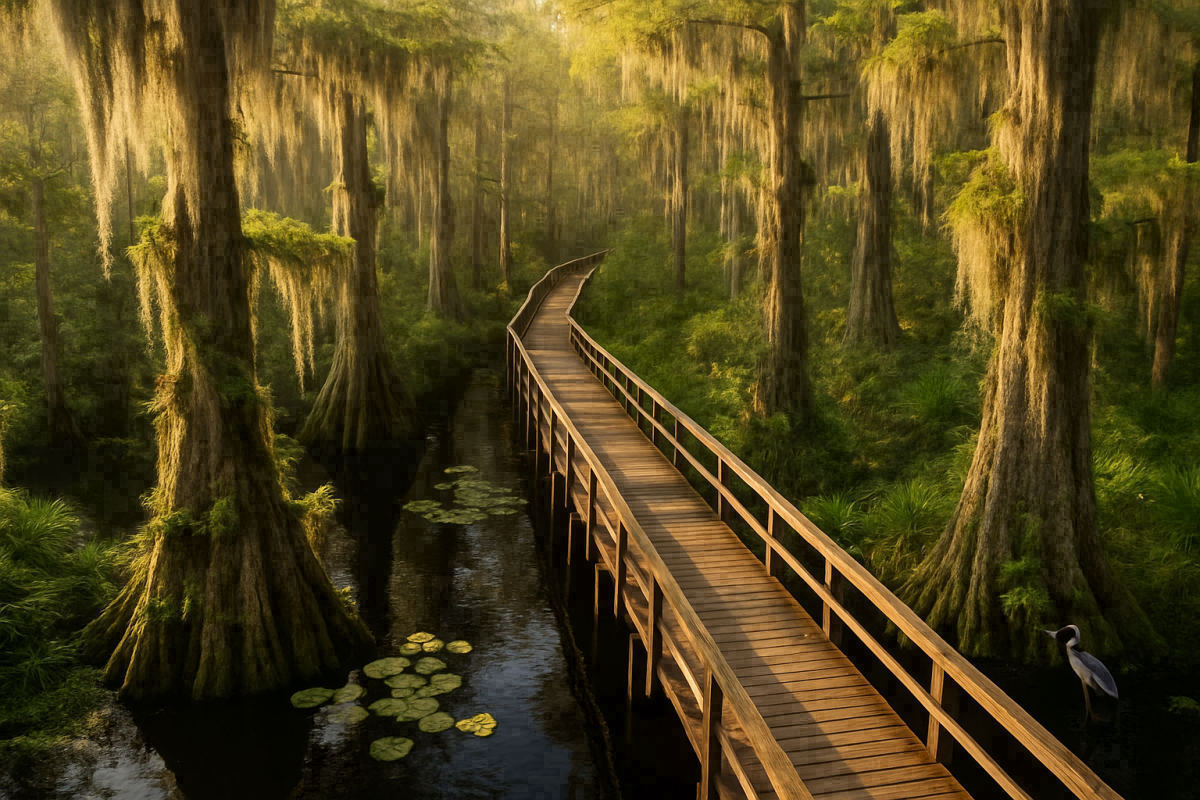
There are wild places in Florida that stop you cold — where the scale of what you're looking at simply doesn't register until you've been standing in it for a few minutes. Corkscrew Swamp Sanctuary is one of those places. Tucked about 30 minutes northeast of Naples off Immokalee Road, this 13,000-acre Audubon preserve is home to the largest remaining old-growth bald cypress forest on Earth, and getting there requires nothing more than a boardwalk and a pair of good eyes.
The Boardwalk: What to Expect
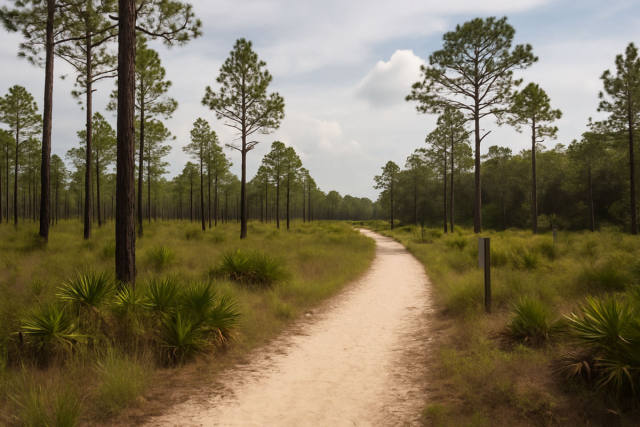
The main event is the 2.25-mile loop boardwalk that threads through four distinct ecosystems: pine flatwoods at the start, wet prairie, pond cypress swamp, the towering old-growth bald cypress forest at the heart of the sanctuary, and finally the open Lettuce Lakes. The elevated hardwood planks keep your feet completely dry even in the heart of the swamp — a welcome fact in a place where the water below you can be several feet deep. Interpretive markers spaced along the route help you track your progress and identify what you're seeing, and several rain shelters dot the trail if an afternoon storm rolls through.
For visitors who can't manage the full loop, a shorter approximately 0.7-mile inner path offers an abbreviated experience that still captures much of the cypress forest. The boardwalk and Blair Visitor Center are also fully wheelchair accessible, with wheelchairs available on-site at no charge. The sanctuary recommends walking the loop clockwise. Binoculars are available to rent at the visitor center for a few dollars — or bring your own to get the most out of the experience. A quality pair of compact binoculars makes a real difference here.
Admission and Hours
Admission runs $17 for adults, $6 for children ages 6–14, and free for children under 6 and Audubon members. Students and military pay $10. The sanctuary is open every day, including holidays, with hours that shift by season. During peak season (mid-December through April 30), the grounds are open from 8 a.m. to 5 p.m., with the last admission accepted at 3 p.m. During the off-season (May 1 through mid-December), hours shift to 8 a.m. to 3 p.m. with a 1 p.m. last admission cutoff. Booking tickets online in advance is strongly recommended, especially on winter weekends. Note that the sanctuary closes annually for maintenance — check the official Audubon Corkscrew site before you go, since closure windows can shift from year to year.
The Blair Visitor Center houses the Cypress Café (open during peak season), a Nature Store stocked with gifts and locally made goods, and the recently reopened Spurlino Foundation Discovery Center with immersive natural history exhibits — all worth a few minutes before or after your walk.
Best Season to Visit
Every season brings a different version of Corkscrew, and the honest answer is that there is no bad time — just different trade-offs.
- Winter (December–February): This is peak season in every sense. Comfortable temperatures, the lowest water levels of the year, and the greatest concentration of wildlife make January through March the most spectacular time to visit. Wood storks from across the Southeast gather here to mate, nest, and raise their young — this is the largest wood stork gathering in the United States. Painted Buntings and other winter migrants add dazzling color. Weekday mornings are the quietest; weekend crowds can be significant.
- Spring (March–May): As water levels continue dropping, wading birds — tricolored herons, little blue herons, roseate spoonbills — concentrate around the Lettuce Lakes to feast. Barred owls and red-shouldered hawks are actively nesting, and lucky visitors may spot owlets peering down from the canopy. Various orchid species begin blooming through the pine flatwoods and cypress forest.
- Summer (June–September): Hot, humid, and transformed. The landscape floods to brilliant green, foot traffic drops dramatically, and this is when Corkscrew's most legendary resident makes its appearance: the ghost orchid. The sanctuary holds the largest known concentration of ghost orchids in the world, and summer blooms — occurring high up in the bald cypress canopy — draw visitors from around the globe. Come early, bring insect repellent, and enjoy having the boardwalk nearly to yourself.
- Fall (October–November): A pleasant transition. Temperatures ease, migratory birds begin returning, water levels start their seasonal drop, and the wet prairie can erupt in a spectacular bloom of native wildflowers including millions of southeastern sunflowers.
Wildlife to Watch For
The sanctuary supports more than 260 species across its habitats. Alligators are a near-certainty, especially in the pond cypress zone and at the Lettuce Lakes. Wading birds — anhingas, great blue herons, snowy egrets, limpkins, and purple gallinules — are reliably present throughout the year. River otters occasionally surface in the open water sections. Keep an eye on the treetops: the ancient cypress branches are draped with bromeliads, ferns, and rare orchids, and the ghost orchid — which blooms some 60 feet up in its host tree — requires patience and sometimes a spotting scope to locate. The Florida panther, while almost never seen, does inhabit the broader Corkscrew watershed. Volunteers are often stationed at key points along the boardwalk to help visitors spot what might otherwise be missed.
Practical Tips Before You Go
No food or beverages (except bottled water) are allowed on the boardwalk itself, but a picnic area near the parking lot is available. Restrooms are located at the visitor center, not on the trail. Florida's heat and humidity can sneak up on you even under the cypress canopy — carry plenty of water and consider a lightweight cooling towel for the open prairie sections. Arrive at opening time, especially in winter, to catch the best light and the most active wildlife before midday heat sets in.