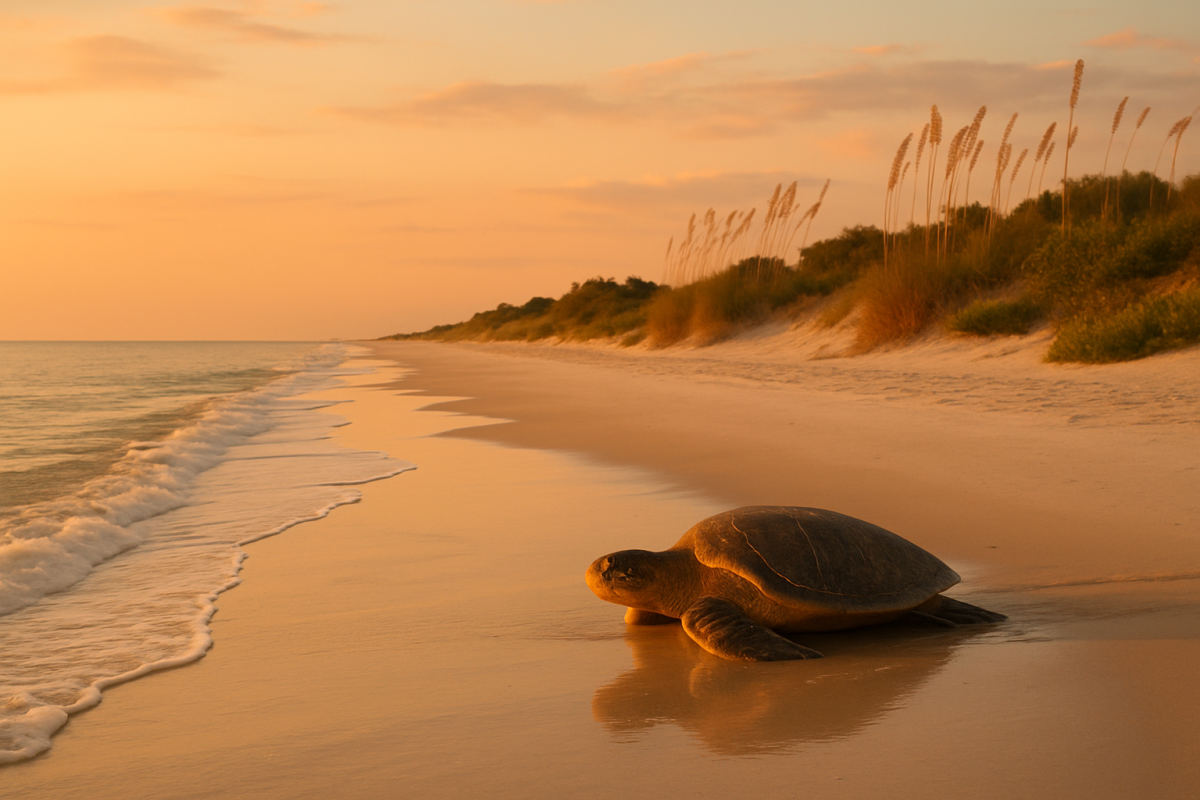
Each spring and summer, something ancient and extraordinary happens on Florida's beaches: sea turtles haul themselves ashore under cover of darkness to lay their eggs in the same sand where they were born decades earlier. Florida is, without exaggeration, one of the most important sea turtle nesting destinations on the planet — and knowing the rules before you visit makes you part of the story, not a disruption to it.
When Nesting Season Happens
The official nesting season runs from March 1 through October 31, though peak activity varies by coastline and species. Atlantic coast beaches — particularly from Brevard County south through the Treasure Coast to Palm Beach County — typically see the earliest arrivals, with loggerheads beginning to come ashore in March. Gulf Coast and northern Florida beaches generally see nesting kick off in April or May. Eggs incubate for roughly two months, so hatchlings emerge from roughly June onward, with peak hatchling activity often running August through September.
All five of Florida's sea turtle species — loggerhead, green, leatherback, Kemp's ridley, and hawksbill — are either threatened or endangered under federal law. Florida is the only state in the continental U.S. where leatherback turtles regularly nest, and the southeastern U.S. hosts the world's largest loggerhead nesting aggregation. The 2025 season was a strong one: loggerhead turtles recorded over 50,000 nests on Florida's 27 core index beaches, and green turtle counts approached 50,000 as well.
The Rules Every Beachgoer Must Know
Sea turtles and their nests are protected under both Florida's Marine Turtle Protection Act and the federal Endangered Species Act. Violations carry serious consequences, including fines up to $100,000 and potential jail time. Here's what that means practically for anyone on a Florida beach during nesting season:
- Keep your distance. Getting within 50 feet of a nesting female can cause her to abandon the process and return to the ocean without laying her eggs. Stay well back, stay quiet, and never approach from the front or shine a light in her direction.
- No flash, no flashlights, no bright phones. Artificial light is one of the biggest threats to both nesting mothers and hatchlings. It disorients them — females may turn back from the beach, and hatchlings can crawl toward lit roads and buildings instead of the ocean. Use red-tinted lights only if you truly need illumination, and keep phones face-down.
- Clear the beach at sunset. Chairs, umbrellas, coolers, toys, and sandcastles left on the sand become serious obstacles for nesting females crawling ashore and hatchlings racing to the water. Stack furniture at the dune line or take it home entirely.
- Fill in your holes. Any hole dug in the sand — whether for fun or to anchor an umbrella — can trap a hatchling on its way to the sea. Fill them in before you leave for the day.
- Never touch, move, or disturb a marked nest. Nests are staked and flagged by permitted surveyors who patrol beaches each morning. Leave markers exactly as you find them.
- Dispose of fishing line properly. Monofilament is a serious hazard to sea turtles and shorebirds alike. Use the monofilament recycling stations found at many Florida boat ramps and fishing piers — the FWC maintains a locator at mrrp.MyFWC.com.
- Pack out your trash. Food scraps and litter attract raccoons and other predators that raid nests. Leave the beach cleaner than you found it.
Bringing a red-lens flashlight is a smart move for any nighttime beach walk during nesting season — red wavelengths are far less disruptive to sea turtles than white light.
Florida's Best Beaches for Witnessing Nesting and Hatching
Archie Carr National Wildlife Refuge (Melbourne Beach, Brevard County): This is the crown jewel. The Archie Carr refuge protects over 20 miles of coastline that constitute the most important sea turtle nesting habitat in the United States — more loggerheads and green turtles nest here than on any other beach in North America. In 2025, Brevard County recorded more than 53,000 nests. The Sea Turtle Conservancy runs guided nighttime turtle walks here from roughly mid-May through August, limited to small groups — they sell out fast, so book well in advance.
Canaveral National Seashore (Titusville / New Smyrna Beach): This long, undeveloped stretch of Atlantic coastline — divided between Apollo Beach to the north and Playalinda Beach to the south — sees roughly 6,000 nests per season. It's a raw, wild environment shared with manatees and bald eagles. Guided turtle walks through the Friends of Canaveral are typically offered on Friday and Saturday evenings in June and July; reservations open in mid-May. Verify the current schedule before booking.
Juno Beach (Palm Beach County): Juno Beach is one of the most densely nested loggerhead beaches in the world, and it's home to the Loggerhead Marinelife Center — a rehabilitation facility and research hub where injured turtles recover before being released back to sea. The center offers free admission to its outdoor sea turtle hospital year-round and runs organized nighttime turtle walks during nesting season. Ticket proceeds directly support conservation work.
Siesta Key (Sarasota, Gulf Coast): Famous for its powdery white quartz sand, Siesta Key also serves as a loggerhead nesting habitat on the Gulf side. Local volunteers from Mote Marine Laboratory monitor nests here throughout the season — the same team that documented the first nests of 2025 on the key in late April.
What to Do If You Encounter a Turtle or Nest
If you spot a nesting female or hatchlings heading to sea, the best thing you can do is stay still, stay silent, and stay out of the way. Do not place your hands on or near the turtle, and resist the urge to photograph with a flash. Let the animal complete what she came to do.
If you find a turtle that appears sick, injured, or dead — or if you see hatchlings wandering away from the ocean — call the FWC's 24-hour Wildlife Alert Hotline immediately: 1-888-404-FWCC (3922). Cell users can also dial *FWC or #FWC. Do not attempt to move or handle the animal yourself; trained responders will direct next steps. The same number is used to report anyone tampering with a nest or harassing a turtle.
If you spot a disoriented hatchling in immediate danger — in a storm drain or on a road — stay with it and follow FWC instructions rather than attempting your own rescue.
How to Make the Most of Your Visit
No naturalist can predict which night will produce a sighting — there's no correlation between moon phase, tides, or weather and nesting activity, so patience is part of the experience. Booking a guided walk through a permitted organization (the Loggerhead Marinelife Center, Sea Turtle Conservancy, Sea Turtle Preservation Society, or Mote Marine Laboratory are all excellent options) gives you trained guides who know how to position the group without disturbing the animals, and they'll have the right equipment. Tour fees typically run $10–$40 per person, with proceeds funding conservation.
Arrive early enough for the pre-walk presentation, wear dark clothing, and leave the white-light devices in the car. A cooling neck towel is a summer-night essential on Florida's humid beaches. Tour programs and pricing change season to season, so confirm availability and booking procedures directly with the organization before your trip — spots fill up within hours of going on sale.