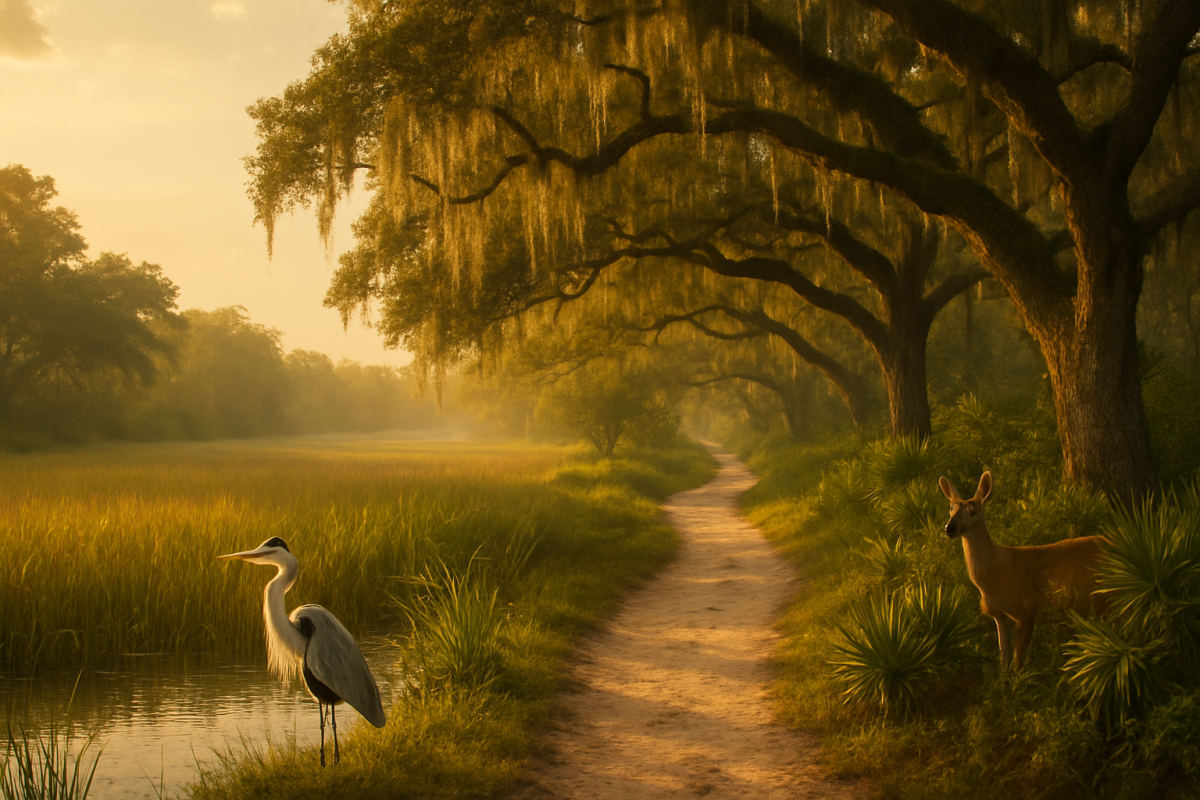
Most visitors to Florida think of beaches and theme parks. But running the full length of the state — from the Everglades to the forests of the Panhandle — is one of the most ambitious conservation landscapes in North America. The Florida Wildlife Corridor is a nearly 18-million-acre network of forests, rivers, ranches, and prairies that keeps wild Florida stitched together and, increasingly, open to anyone who wants to explore it.
What the Corridor Actually Is
The Florida Wildlife Corridor is a contiguous network of public and private lands spanning roughly 40 percent of the entire state. As of 2025, close to 10 million of those acres are permanently protected from development, including national forests, state parks, wildlife refuges, and working ranch lands held under conservation easements. The rest remains at risk, which is why conservation funding — including a dedicated stream from the Seminole Tribe Gaming Compact — continues pouring into land acquisition each year. The Corridor isn't a single park you drive to; it's a living landscape you dip into at dozens of public access points, some of them world-class destinations in their own right.
Where the Public Can Go
Not every acre of the Corridor is open to visitors — private ranch and farm land that provides habitat connectivity isn't accessible on foot — but a remarkable amount of it is. Within the Corridor's boundaries, there are more than 5,800 miles of trails (including nearly 1,000 miles of the Florida National Scenic Trail) and over 1,500 miles of designated paddling routes along named rivers and streams. Here are four of the most rewarding public entry points, spread across the Corridor's full length:
- Tate's Hell State Forest (Panhandle): Wedged between the Apalachicola and Ochlocknee Rivers in Franklin County, this 202,000-acre coastal swamp is one of Florida's most atmospheric wild places. Paddle a blackwater river all the way to a Gulf beach, hike the High Bluff Coastal Hiking Trail, or scan cypress strands for swallow-tailed kites, bald eagles, and red-cockaded woodpeckers. Primitive campsites are scattered throughout the forest — many along the banks of the New River — and can be reserved through Reserve America. Always get current maps and permit information from the forest headquarters before heading in; cell service is minimal once you're deep inside.
- Ocala National Forest (Central Florida): Covering nearly 400,000 acres in north-central Florida, Ocala is the southernmost national forest in the continental United States and protects the largest contiguous sand pine scrub forest on the planet. Its signature springs — Alexander Springs, Juniper Springs, Salt Springs, and Silver Glen Springs — are brilliant-blue swim holes ringed by subtropical forest. Hikers and backpackers can jump onto the Florida Trail, which runs 67 miles through the heart of the forest past pine flatwoods, oak hammocks, and scrub habitat. Note that Alexander Springs Recreation Area requires a timed-entry reservation on summer weekends and holidays; check Recreation.gov before you go.
- Kissimmee Prairie Preserve State Park (South-Central Florida): Florida's largest state park protects more than 50,000 acres of rare dry prairie — a habitat so unusual it feels more like the American West than the subtropics. It's home to the critically endangered Florida grasshopper sparrow, found nowhere else on Earth, along with crested caracaras, burrowing owls, and sandhill cranes. Over 100 miles of multi-use trails let hikers, cyclists, and equestrians explore the sweeping grasslands and seasonal sloughs. The park also carries one of Florida's few certified dark-sky designations, making its campground a magnet for stargazers. Ranger-led swamp buggy eco-tours run on weekends from November through March — call the park office to reserve a spot, as availability is limited.
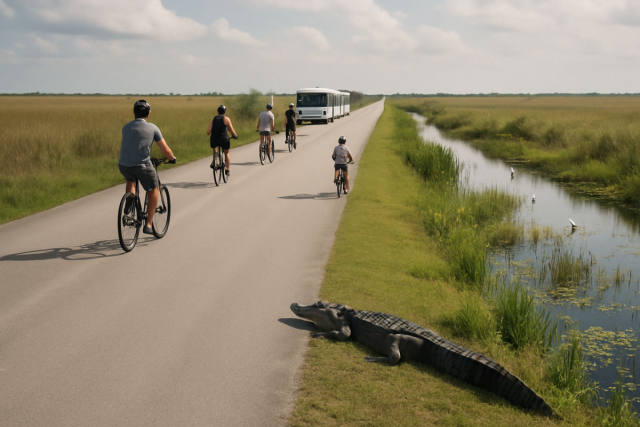
- Everglades National Park (South Florida): The southern anchor of the Corridor, the Everglades is where the whole 18-million-acre system ultimately drains. Day-trippers can walk the Anhinga Trail at Royal Palm — a short boardwalk over Taylor Slough teeming with wading birds and alligators — while longer adventures await on the Flamingo and Pine Island trails deeper into the park. The Shark Valley loop, accessible off U.S. 41, offers a 15-mile paved circuit through open sawgrass that's one of the best wildlife-viewing routes in North America.
Wildlife to Watch For
The Corridor currently supports 131 at-risk animal species, and a connected landscape is the only thing keeping several of them viable. Here's a cheat sheet of who lives where:
- Florida panther: Critically endangered and deeply elusive, panthers range primarily across South Florida's ranch and forest lands. Seeing one in the wild is extraordinarily rare, but camera-trap images from private Corridor lands confirm they're still moving.
- Florida black bear: Far more visible than panthers. Seminole State Forest near the Wekiva River is considered one of the Florida Trail's best spots for a bear sighting, and Ocala National Forest has a healthy population as well.
- West Indian manatee: Crystal River and the springs of the Nature Coast — including Chassahowitzka and Homosassa — are the go-to spots, especially in winter when manatees cluster in warm spring water.
- Gopher tortoise: A keystone species that digs burrows used by more than 350 other animals. You'll spot them in scrub and sandhill habitats throughout the Corridor, especially in Ocala and at Kissimmee Prairie.
- Swallow-tailed kite: One of Florida's most breathtaking birds. These striking raptors return from South America each March and rely on the Corridor's cypress strands and forests to hunt, nest, and raise young through summer.
- Florida scrub-jay, crested caracara, roseate spoonbill, wood stork: All Corridor residents that reward patient birdwatchers at the right habitats — scrub for jays, open prairie for caracaras, and wetland edges for spoonbills and storks.
Planning Tips Before You Go
The Corridor's public lands are managed by different agencies — the U.S. Forest Service, Florida State Parks, the Florida Forest Service, U.S. Fish & Wildlife Service — each with its own fee structures, camping reservation systems, and seasonal rules. Hours, permit requirements, and trail conditions can change, so always check the specific land's official page before your visit. For the Florida National Scenic Trail, the Florida Trail Association's website is the best resource for current conditions, closures, and segment maps. Pack a good insect repellent and a cooling towel — Florida's heat and bugs are part of the experience, but there's no reason to be miserable. The Corridor's peak wildlife-viewing season runs from November through April, when temperatures are mild, migratory birds arrive, and water levels drop to concentrate animals near rivers and wetlands. Summer visits are entirely doable, especially if springs are your focus, but come prepared for heat, humidity, and mosquitoes.