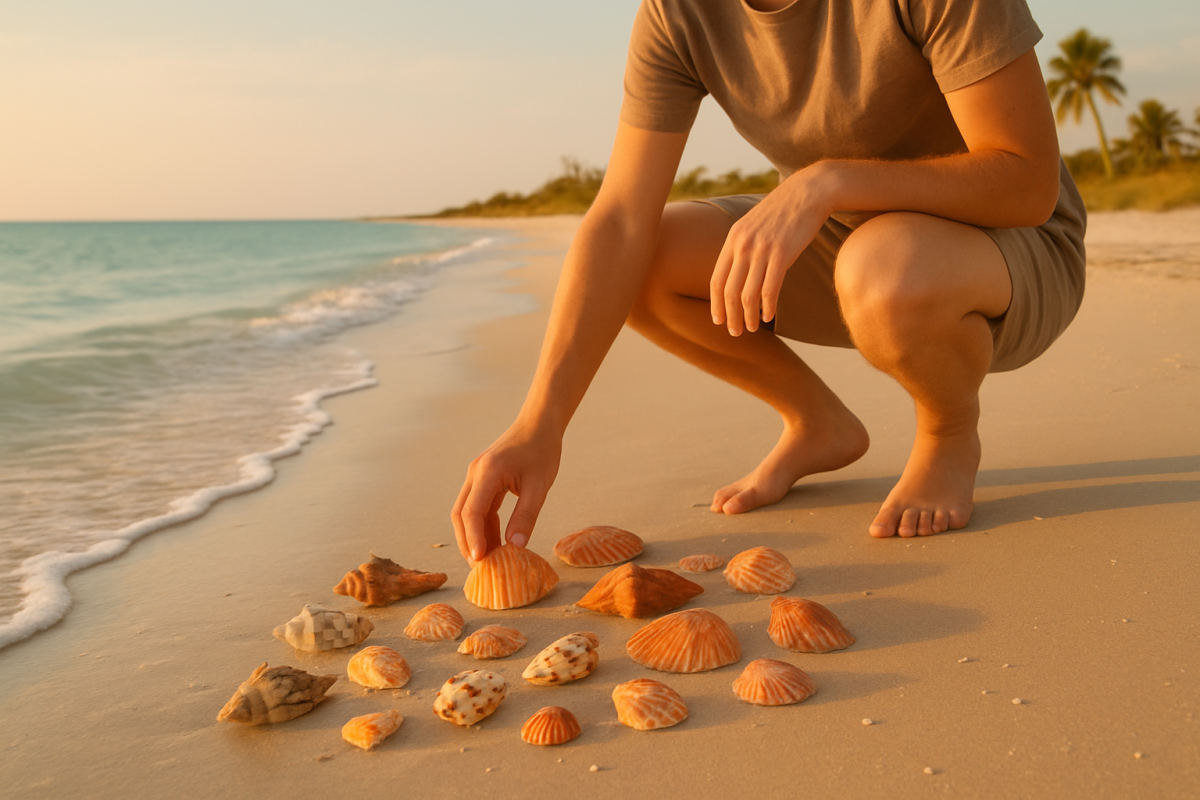
Florida beaches are legendary for shelling — nowhere more so than the Gulf Coast, where barrier islands like Sanibel funnel millions of shells onto the shore each year. But before you start filling your bag, it's worth knowing that Florida has a genuinely layered set of rules governing what you can collect, and enforcement is active and real. The good news: the basic principle is straightforward. The nuances, though, can surprise even experienced visitors.
The Golden Rule: Dead Is Fine, Alive Is Not
The single most important thing to understand is the live/dead distinction. Planning a Florida trip that includes beach time? Know this first: you do not need any special permit or license to collect empty shells from public beaches in Florida — just pick them up and enjoy. But the moment a shell contains a living organism, the rules change entirely. Picking up, keeping, or harming a live animal without the proper credentials is illegal and can result in significant fines.
The Florida Fish and Wildlife Conservation Commission (FWC) is the primary enforcing body, and it draws the line clearly: if something is alive, it stays in the water. That applies not just to mollusks, but to sand dollars, sea stars (starfish), and sea urchins as well. If you pick up a shell and aren't sure whether something is still living inside, the safest move is to put it back. A shell with an occupant — even one that appears dormant — counts as a live shell under Florida law.
Species That Are Always Off-Limits
Two species stand out as completely protected regardless of where you're shelling in Florida:
- Queen Conch (Strombus gigas): Possessing a live queen conch is prohibited at all times, full stop. You can legally keep an empty queen conch shell, provided the animal was not alive when you collected it and you did not kill, injure, or remove it from the shell yourself. There's also a specific red flag to know: possessing a queen conch shell with an off-center hole larger than 1/16 inch through its spire is prohibited, because that's the method poachers use to extract the living animal. Possession of conch meat is also strictly illegal.
- Bahama Starfish (Oreaster reticulatus): All harvest of this species is prohibited statewide, no exceptions.
Coral is in a category of its own. Florida's reefs — especially in Biscayne National Park and the Florida Keys National Marine Sanctuary — are protected under the state's Coral Reef Protection Program, and collecting coral is strictly prohibited.
When a License Is Required
Collecting any shell that contains a living organism — even while standing on dry land — requires a Florida recreational saltwater fishing license. This surprises many beachgoers who assume the rule only applies to people wading or diving. It does not. The license requirement covers shoreline collection too. Licenses are available through the GoOutdoorsFlorida.com website and the Fish|Hunt Florida mobile app, as well as at county tax collector offices.
If your goal is to collect regulated species like bay scallops, those come with their own seasonal rules and bag limits that must be followed even if you're not collecting them for food. The general marine life bag limit across Florida is 20 organisms per person per day, with no more than five of any single species within that total.
County-by-County: Where the Rules Get Stricter
State rules set the floor, but some counties go further — and the two you're most likely to encounter as a visitor are Lee and Manatee:
- Lee County (home to Sanibel and Captiva): Live shelling is completely prohibited here, with no exceptions other than oysters, hard clams, sunray venus clams, and coquinas. This includes sand dollars, sea stars, and sea urchins. The ban on Sanibel has been in place since 1995 and was extended county-wide in 2002. Violators face up to a $500 fine and 60 days in jail for a first offense, and FWC has increased patrol presence along this stretch of coastline.
- Manatee County: You may not harvest or possess more than two live shells of any single species per day (a rule that also covers echinoderms like sand dollars and starfish), outside of the standard oyster and clam exceptions.
It's worth checking current FWC guidelines at myfwc.com before your trip, as county-level rules can be updated.
Protected Areas: Parks, Refuges, and Sanctuaries
Location matters as much as species. Several areas in Florida carry additional restrictions that go beyond the standard FWC rules:
- Florida State Parks: The general policy is that empty shells, sea glass, and shark teeth may be collected between the waterline and the toe of the sand dunes. Live shelling is strictly forbidden in all state parks. If a shell has a living occupant, it belongs back in the water.
- Everglades National Park: Shell collecting of any kind — empty or otherwise — is explicitly prohibited here.
- J.N. "Ding" Darling National Wildlife Refuge (Sanibel): All shelling is prohibited within refuge waters.
- Florida Keys National Marine Sanctuary: Within the Sanctuary Preservation Areas, Ecological Reserves, and Special-Use Areas — all fully protected no-take zones — harvesting, moving, removing, collecting, or possessing any living or dead organism, including shells, is prohibited. If you're diving or boating in the Keys, it's worth familiarizing yourself with the sanctuary's marine zone map before you go.
- Biscayne National Park: Coral reef areas here are under strict protection, and removal of any natural object is prohibited.
Bringing Shells Back from Abroad
One more thing worth flagging: if you're also visiting the Bahamas or another Caribbean destination on your Florida trip, be careful about what comes home with you. U.S. Customs and Border Protection actively intercepts restricted shells, corals, and marine specimens at Miami and Tampa airports. Certain items — including queen conch — are protected under international agreements, and declaring or smuggling restricted shells can carry serious federal consequences.
Practical tip: When in doubt about whether a shell is truly empty, the nose knows — dead shells don't smell. A live or recently deceased shell will have a noticeable ocean or organic scent. A mesh tote bag is ideal for carrying your finds because it lets sand drain as you walk and gives you a clear view of everything you've collected. Always verify current rules at myfwc.com before heading out, since species protections and county-specific rules can change between seasons.