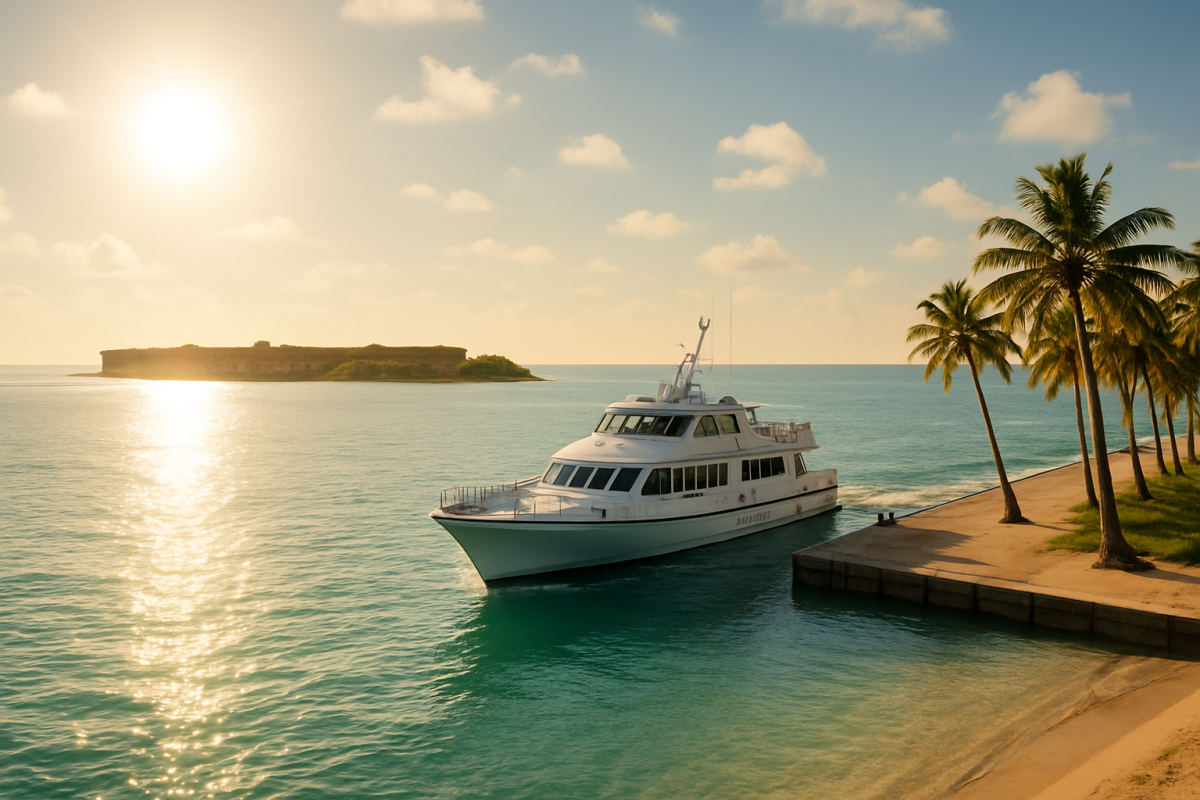
Seventy miles west of Key West, surrounded by impossibly blue water and anchored by a 16-million-brick Civil War fortress, Dry Tortugas National Park is one of Florida's great bucket-list destinations. The catch: you can't drive there. Every visitor either boards the Yankee Freedom ferry, flies in by seaplane, or arrives on a private vessel. For the vast majority of people, the ferry is the answer — and understanding exactly how it works is the difference between a dream trip and a frustrating no-show.
The Yankee Freedom: What It Is and How the Day Works
The Yankee Freedom III is a high-speed catamaran and the sole authorized ferry concessionaire serving Dry Tortugas National Park. It departs daily from the Key West Ferry Terminal at 100 Grinnell Street in the Historic Seaport, promptly at 8 AM — day-trippers need to check in by 7 AM, and campers by 6:30 AM. The crossing is roughly 2.5 hours each way across open Gulf water, putting you back in Key West around 5:30 PM. That math leaves you about four to four-and-a-half hours on the island itself — enough time for a narrated fort tour, solid snorkeling time, and a stretch on the beach, but the day moves fast.
On the outbound leg, breakfast is served: think bagels, fresh fruit, and coffee. Lunch is included as well. Snorkel gear is provided at no extra charge. The park entrance fee is bundled into your ticket price, so there are no surprise add-ons at the dock. If you carry an America the Beautiful annual pass, a veteran's ID, or an Every Kid Outdoors pass, you can select a discounted ticket type that deducts the entrance fee — but you must present the physical pass at check-in or you'll be charged the difference. Fresh water rinse-off stations on the ferry make the return ride considerably more comfortable.
What It Costs in 2026
Adult fares for a day trip run approximately $250 per person in 2026, with discounted rates available for children (ages 4–16 around $195), students, seniors, and active military (around $240). Camping passengers pay a slightly higher ferry rate — roughly $255 — and must also pay a separate nightly campsite fee to the National Park Service upon arrival. Those prices have climbed steadily in recent years, and it's worth checking the official Yankee Freedom site at drytortugas.com for the current rate before you book, since fares do get updated. The ticket is genuinely all-in for what it covers: park entrance, meals, and snorkel equipment, which softens the sticker shock somewhat.
Parking is your main out-of-pocket extra. There's no dedicated ferry lot, and Key West has no free parking to speak of. The City Parking Garage at 300 Grinnell Street — a short walk from the terminal — is the standard option; budget accordingly for a daily rate. Arrive early enough to park and make your check-in window comfortably.
The Booking Window: When Spots Open and How Fast They Go
This is the part most first-timers underestimate. Online reservations for day trips open up to six months before the travel date. For dates beyond that six-month window, you can call the reservation line directly at 305-294-7009 to book by phone. Camping reservations follow a specific release schedule: on the first weekday of each month, between 8 AM and 5 PM Eastern, the Yankee Freedom calendar opens availability for the month that falls exactly six months out — so on October 1, for instance, March dates become bookable. Camping spots cannot be reserved online; you must call 800-634-0939 as soon as that window opens. The ferry limits campers to roughly 10 per sailing, and those slots routinely sell out 9 to 12 months in advance. The official advice is to book 8 to 12 months ahead — and that's not an exaggeration.
Day-trip tickets move nearly as fast. During peak season (roughly November through April, when South Florida weather is at its best), popular dates can sell out weeks in advance. The safest strategy is to book the ferry first, then plan the rest of your Key West itinerary around the date you land.
If the Ferry Is Sold Out: The Standby Option
It's not a guarantee, but a real standby process exists. If you find yourself shut out of a reservation, you can go to the ferry terminal at 100 Grinnell Street as early as possible on the morning you want to travel — some optimistic souls show up before 4 AM during busy stretches. The standby list officially opens between 6 and 6:30 AM, and names are taken in the order people arrived. Only one person per group needs to wait in line, since you can add your whole party to the sheet. If ticketed passengers don't show by around 7:45 AM, those no-show seats go to standby. Historically, a reasonable number of people do board this way, especially when the day before had rough weather or last-minute cancellations — but availability is never promised. Keep checking the ferry's website in the weeks before your trip too, as cancellations do open back up online.
Ferry vs. Seaplane: The Real Trade-Off
Key West Seaplane Adventures is the only other authorized operator to the park, flying out of Key West International Airport. The flight takes about 40 minutes each way — dramatically shorter than 2.5 hours on the water — and the aerial views of the Florida Keys and the reef system below are genuinely spectacular. Half-day excursions run approximately $527 per adult, and full-day trips (about 6.5 hours on the island) run approximately $890 per adult, based on current pricing at keywestseaplanecharters.com. The park entrance fee is not included and must be paid separately. The seaplane carries just 10 passengers per flight, so seats can book up months out as well — though it sometimes has availability when the ferry is sold out, and the operator does maintain a waitlist via email.
The meaningful trade-offs: the seaplane wins on time efficiency and sheer experience, but costs roughly twice as much as the ferry and doesn't allow you to bring camping gear. The ferry wins on value, includes meals, and is the only practical way to camp overnight. If you tend toward seasickness, that 2.5-hour open-water crossing warrants a Dramamine; the ferry sells it dockside, or you can pick up motion sickness patches beforehand to be prepared.
Camping Overnight: Worth the Extra Planning
If your schedule allows it, staying overnight transforms the experience. Once the ferry sounds its horn around 3 PM and the day-trippers head home, the island belongs almost entirely to the handful of campers who remain. The campground on Garden Key is primitive — no electricity, no running water, no showers — which means you must bring absolutely everything in, including all the fresh water you'll need. The Yankee Freedom allows campers to stay up to three nights (four days total). Gear inspection happens before boarding, and certain items like compressed gas canisters are prohibited, so review the packing rules when you book. A good waterproof dry bag is genuinely useful for keeping gear protected on the crossing and at a beach campsite.
One Practical Takeaway
Treat the ferry reservation as the anchor of your entire Key West trip, not an afterthought. Mark your calendar for the first weekday of the month six months before your target dates, have the phone number ready, and be prepared to book the moment spots open. Fares, hours, and specific policies do shift from season to season, so confirm all current details directly at drytortugas.com before finalizing your plans — but the earlier you act, the better your odds of standing on that moat wall watching the water turn from turquoise to indigo as the sun goes down.