Before you load that cooler and point your car toward the coast, here's the single most important thing to know about drinking on Florida beaches in 2026: there is no single statewide rule. Florida leaves alcohol regulation entirely to local governments, which means two beaches a mile apart can have completely different policies — and the fine for getting it wrong can run anywhere from $50 to $500, depending on where you're standing.
The One Rule That Applies Almost Everywhere: No Glass
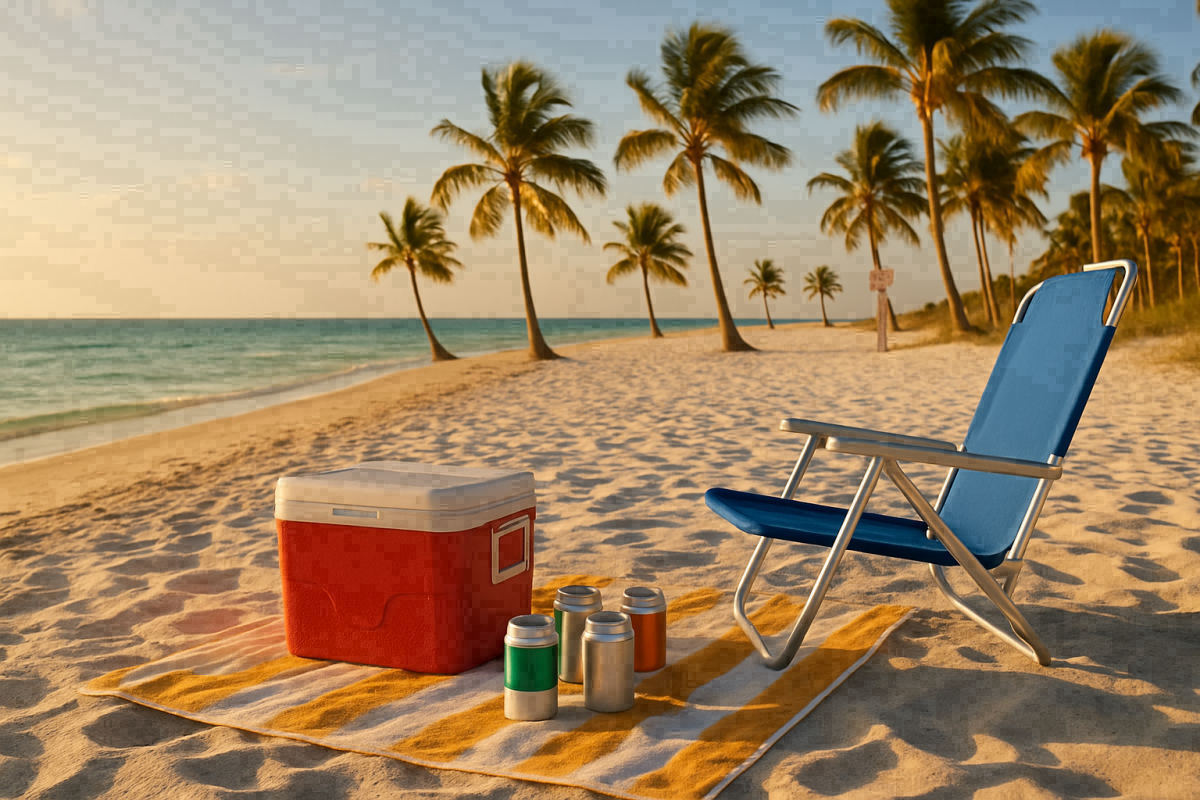
Even where beach drinking is perfectly legal, glass containers are banned on virtually every Florida public beach — whether alcohol is permitted or not. That means wine bottles, glass beer bottles, and even glass jars of any kind stay in the car. The reason is simple and hard to argue with: broken glass grinds into sand, becomes nearly impossible to fully remove, and can slice through a bare foot long after the original mess has been forgotten. Stick to aluminum cans or plastic cups, and check your cooler before you leave the parking lot. A good insulated beach cooler that keeps cans cold all day makes this easy.
Where Alcohol Is Generally Allowed
Sarasota County (Gulf Coast) is one of the most permissive stretches in the state. Siesta Beach, Turtle Beach, Lido Key, Casey Key, Venice Beach, and Manasota Key all permit alcohol — cans and plastic only, no glass. The one exception on this barrier-island chain is Longboat Key, which prohibits drinking on its beaches entirely.
Pinellas County (Tampa Bay area) is a patchwork. Madeira Beach and Redington Beach allow alcohol, as does Treasure Island — though Treasure Island blocks drinking on the stretch between the 8500 and 9900 blocks on weekend mornings (8 a.m. to 4 p.m. Saturdays and Sundays). Be careful with the Redington name: Redington Beach permits it, but the adjacent Redington Shores and North Redington Beach do not. At St. Pete Beach, alcohol on the sand is only allowed within the cabana areas of beachfront hotels, and only for guests of those properties. Clearwater Beach — one of the state's most visited — has maintained a year-round ban on open containers since 2012. Honeymoon Island and Caladesi Island are also dry on the sand, though beer and wine are available inside the on-site café. Indian Rocks Beach and Belleair Beach are no-alcohol zones as well.
Hillsborough and Manatee counties both ban alcohol on their beaches outright — no exceptions for containers or time of day.
Southwest Gulf Coast: Naples Municipal Beach allows alcohol on the sand, with a notable carve-out — no drinking within a block north or south of the pier along certain avenues, though beer and wine are permitted on the pier itself between noon and roughly sunset. Always check posted signage at the access point.
Florida Panhandle: This region is generally the most permissive in the state. Pensacola Beach (Escambia County) allows alcohol across most of the beach, with alcohol-free zones near designated family areas. Navarre Beach and parts of Okaloosa Island have historically been drink-friendly as well, while Fort Walton Beach and Destin-area beaches vary by specific stretch. Walton County (home to Grayton Beach and 30A) has not enacted a blanket ban, making it another relatively relaxed option. Panama City Beach allows alcohol year-round — except for the entire month of March, when a full ban on beach drinking goes into effect, a policy that has been enforced since 2016 in response to spring break incidents.
Atlantic (East) Coast: Flagler Beach, Cocoa Beach (Brevard County), and Playalinda Beach within Canaveral National Seashore all permit alcohol on the sand, with the standard no-glass requirement and a minimum age of 21 at the national seashore. These spots are perennial favorites for the surf crowd precisely because the rules are relaxed. Gulf Islands National Seashore near Pensacola also allows alcohol on its beaches, with glass containers banned and alcohol separately prohibited on public fishing piers.
Where Alcohol Is Banned
Florida's most heavily trafficked tourist beaches tend to be the strictest. Clearwater Beach and Miami Beach both prohibit open containers on the public sand. The City of Miami Beach's official beach rules state that alcohol is always prohibited on city beaches — though a significant policy shift was approved in mid-2025: commissioners voted 5-to-2 to launch a one-year pilot program allowing a licensed concessionaire to sell beer, wine, and cocktails at two designated zones (behind Lummus Park and at 21st Street), limited to 11 a.m. to 6 p.m. daily. As this program was still being implemented at the time of writing, confirm the current status before your visit, as the city retains the right to suspend it at any time.
Fort Lauderdale (Broward County) has gone in a different direction in recent years — a longtime alcohol ban on the sand was lifted, but a newer ordinance banning outdoor alcohol sales and open containers in entertainment districts was reported to be affecting beach businesses as recently as spring 2026. The rules here are actively evolving, so checking the city's current ordinance before you go is especially worthwhile.
Broadly, South Florida beaches are more restrictive than the Panhandle or Gulf mid-coast. Florida State Park beaches are generally dry across the board — state park authority typically enforces alcohol bans to preserve natural areas and maintain family-friendly environments, with violations potentially resulting in fines or removal from the park.
The Cooler Question and Enforcement
Bringing a cooler with alcohol onto a beach where drinking is prohibited is itself a violation — the ordinance covers possession, not just consumption. Where beach drinking is legal, remember that Florida Statute 856.011 covers disorderly intoxication in any public place, which means being visibly drunk and disruptive can escalate a casual beach day into a misdemeanor charge regardless of which beach you're on. Most officers will issue a warning first for first-time container violations, but enforcement tends to tighten during peak season. A set of collapsible silicone cups is a compact, glass-free way to pour drinks from a can without fumbling.
Practical takeaway: Rules change at the local level — sometimes block by block — and what was true last season may not be true today. Before you pack, spend two minutes on the city or county website for your specific destination. Signs at beach access points also post current rules, so read them before you set up your umbrella. When in doubt, cans travel well and keep you on the right side of every Florida beach ordinance in the book.