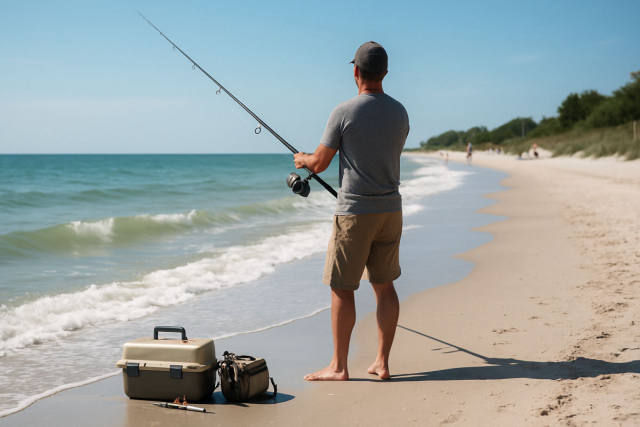
Blowing Rocks Preserve is not the kind of beach where one plan fits every day. On a calm, clear morning, its limestone shoreline can be a compelling place to look for fish and explore the beach from a respectful distance. When a strong swell meets high tide, though, the same Anastasia limestone ledges become the main event: water surges through holes and crevices and sends spray skyward. The key is deciding whether you want drama, exposed rock, or a swim—and checking conditions before leaving.
For the famous spray, line up two things
The preserve’s “blowing” effect needs rough seas plus high tide. The Nature Conservancy notes that winter more often brings the larger waves that create the spectacle, while summer is typically calmer and clearer. Start with NOAA’s Jupiter Inlet tide predictions, then compare the high-tide time with the forecast and the preserve’s open hours. Tide predictions tell you the astronomical timing, but wind and swell determine whether the rocks will actually put on a show.
For a rock-focused visit without the crashing-water drama, choose a calmer day and aim closer to low tide. More of the weather-carved ledges, shelves and crevices are visible then. Either way, treat the shoreline as observation territory rather than a place to scramble around: wet limestone is slick, waves can arrive farther up the beach than expected, and the landscape is protected.
Hours and parking: arrive with a backup plan
Blowing Rocks Preserve is open daily from 9 a.m. to 4:30 p.m., with last entry at 4:15 p.m. The preserve is closed on Easter Sunday, Thanksgiving Day, Christmas Eve, Christmas Day and New Year’s Day. Its parking is free during open hours, but the gates lock at closing—so do not leave a vehicle behind for sunset. An optional $2-per-person donation can be paid by cash or card.
Parking is the practical constraint here. The on-site lots can fill by late morning on weekends and holidays, and street parking is not allowed. Your best move is to arrive near opening, especially if a high tide falls in the morning. If the preserve lot is full, The Nature Conservancy identifies Coral Cove Park, about a mile south, as the nearest additional parking option. Think of Coral Cove as a separate beach stop and drive there rather than assuming there is a convenient beach walk back to the preserve entrance.
How to reach the beach and rocks
From the preserve parking area, take the short Beach Trail through maritime hammock to the main stairs and viewing platform. The preserve also has a 0.4-mile one-way Dune Trail, with broad ocean views and another staircase partway along. The trail map also shows lagoon-side and mangrove routes, so it is worth allowing time for more than a quick beach look.
The beach is accessible only during preserve hours, and the preserve asks visitors to stay on marked trails and leave all rocks, plants and wildlife in place. Pets, alcohol, drones, picnics and grills are not permitted. If you pack a snack for later, save it for Coral Cove’s picnic area rather than bringing it onto preserve trails or beach.
Rock formations, snorkeling or Coral Cove: choose your day
- Want the signature photos and wave action? Choose Blowing Rocks on a rough-surf, high-tide day. Stay well back from the surge line and enjoy the view from shore or the platform.
- Want to study the limestone? Choose a calmer, lower-tide window. You will generally see more exposed formations, but avoid touching, collecting or climbing on the rock.
- Want to snorkel? Save Blowing Rocks for calm, clear water—not the day you came hoping for spray. The preserve permits swimming and snorkeling, but there is no lifeguard. A snug pair of water shoes for rocky entries can be useful, but they do not make surf, current or poor visibility safe.
- Need amenities or a more conventional beach setup? Coral Cove has parking, restrooms, outdoor showers and picnic facilities. Its oceanfront includes a guarded section as well as a longer unguarded section to the south; check conditions and follow posted guidance before entering the water.
Before heading out, check the current tide window, weather and beach conditions, then arrive early enough to park legally. The simplest rule: rough high tide is for watching Blowing Rocks; calm, clear water is for considering a swim or snorkel.
Sources used for this guide
- Blowing Rocks Preserve | The Nature Conservancy in Florida
- What Exactly are the Blowing Rocks? | The Nature Conservancy
- Annual Prediction Tide Tables for Jupiter Inlet, FL | NOAA Tides & Currents
- Coral Cove Park | Palm Beach County Parks & Recreation
- Blowing Rocks Preserve Trail Map | The Nature Conservancy