Before you wade into the Gulf or the Atlantic on your Florida vacation, there's a free, state-run tool most visitors never think to consult: the Florida Healthy Beaches Program. Run by the Florida Department of Health, it's designed to give swimmers real, science-backed information about the water they're about to enter. Once you understand how it works — and where its limits lie — it becomes one of the most useful two-minute pre-beach habits you can build.
What the Program Actually Does
The Healthy Beaches Program monitors salt and brackish water beaches across Florida's coastline by collecting water samples and testing them for a specific type of bacteria called enterococcus. These are microorganisms that normally live in the intestinal tracts of humans and warm-blooded animals, so their presence in beach water signals the potential for fecal contamination — from stormwater runoff, wildlife, pets, or human sewage. The bacteria themselves don't always cause illness, but high concentrations suggest that other, more dangerous pathogens may also be present. If those bacteria are ingested while swimming, or enter the body through a cut or open sore, they can cause gastrointestinal illness, ear and throat infections, skin rashes, and wound infections.
The reason enterococcus became the federal standard for coastal water quality is rooted in science: research has shown it correlates more strongly with swimming-associated illness in marine waters than older indicator bacteria like fecal coliform. The program follows Recreational Water Quality Criteria set by the U.S. Environmental Protection Agency.
How the Numbers Work
Results are expressed in colony forming units (CFU) per 100 milliliters of water. The state uses a straightforward three-tier classification. A reading of 0–35 CFU/100 mL is considered Good. Moderate falls between 36 and 70. Anything at 71 or above is classified as Poor. A single Poor result doesn't automatically trigger an advisory — the county health department resamples that same site, and only if the second sample also exceeds 70 CFU/100 mL does an official health advisory get issued recommending that swimmers stay out of the water. Advisories aren't lifted until follow-up samples confirm the water has returned to acceptable levels.
When an advisory is active, you'll typically know through multiple channels: the results are posted on the Department of Health's website, physical signs go up at the beach itself, and local news media and government officials are notified. Many monitored beaches display permanent reflective signs indicating their Healthy Beaches status, which are updated when conditions change.
How to Look Up Your Beach Before You Go
The Florida Department of Health posts results and active advisories by county at its official Florida Healthy Beaches Program page (floridahealth.gov). From there, select your county to see the individual sampling sites and their most recent readings. Results are updated as new samples come in, so it's worth bookmarking for any beach-heavy trip. Most counties sample at least every two weeks; some higher-traffic areas sample weekly. Note that sampling schedules can vary — some northern-county programs pause during winter months, so always confirm that results for your beach are current before relying on them.
One important caveat: the sample date matters enormously. A "Good" badge based on data from ten days ago tells you relatively little about conditions today, especially if it has rained since then. Always check when the most recent sample was collected, not just what it says.
The Big Gap: What This Program Doesn't Cover
This is the part that catches many beachgoers off guard. The Healthy Beaches Program tests exclusively for enterococcus bacteria. It does not test for several other genuine hazards that Florida swimmers face:
- Red tide (Karenia brevis): This harmful algal bloom is tracked by the Florida Fish and Wildlife Conservation Commission, not the Healthy Beaches Program. Red tide can cause respiratory irritation, coughing, and eye-watering even on shore, and is a separate system entirely. For the latest red tide conditions, check the FWC's dedicated tracker.
- Vibrio vulnificus: This naturally occurring bacterium lives in warm, brackish seawater and poses a risk to people with open wounds or compromised immune systems — not because of fecal contamination, but simply because of Florida's warm-water environment. The Healthy Beaches Program does not test for it. The Florida Department of Health provides a separate Vibrio vulnificus information resource, which is worth reading if you have open cuts or are immunocompromised.
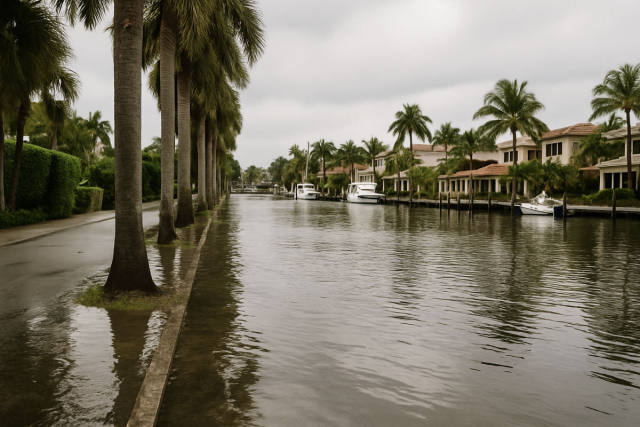
- Post-rain bacterial spikes: Heavy rainfall can push bacteria levels sharply higher near storm drains, canal mouths, and enclosed lagoons — often before any new official sample is collected. Stormwater runoff is one of the most common drivers of elevated enterococcus readings. As a general rule of thumb, it's prudent to wait at least 72 hours after heavy rain before swimming, particularly near known runoff points, even if the most recent posted result looks fine.
- Blue-green algae and sargassum: These are tracked by the Florida Department of Environmental Protection and addressed through separate advisories and resources.
A Few Practical Tips for Smarter Beach Days
Check the program the morning you plan to go, not the night before — advisories can be issued at any time. Pay attention to both the result and the sample date. If the water looks unusually murky or discolored, or smells off, trust your senses regardless of what the most recent result says. People with open wounds, young children, older adults, and anyone with a weakened immune system should be especially cautious when results are in the Moderate range or when conditions look questionable. Keeping a waterproof phone case handy makes it easy to pull up the latest results right at the beach without worrying about sand or surf.
The Healthy Beaches Program is a genuinely useful layer of protection — it's just one layer. Pair it with a quick FWC red tide check and a look at recent rainfall, and you've done more pre-swim homework than the vast majority of Florida beachgoers ever do.