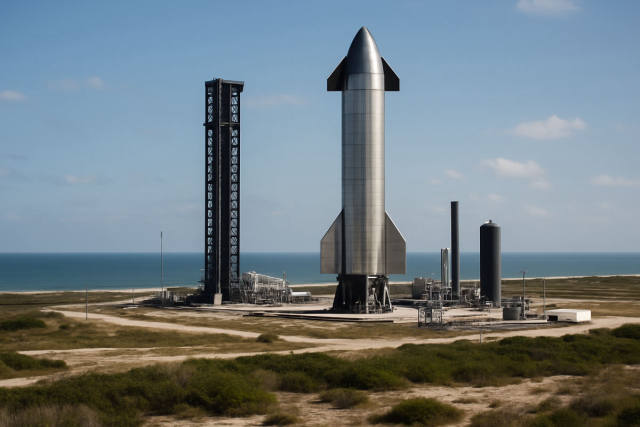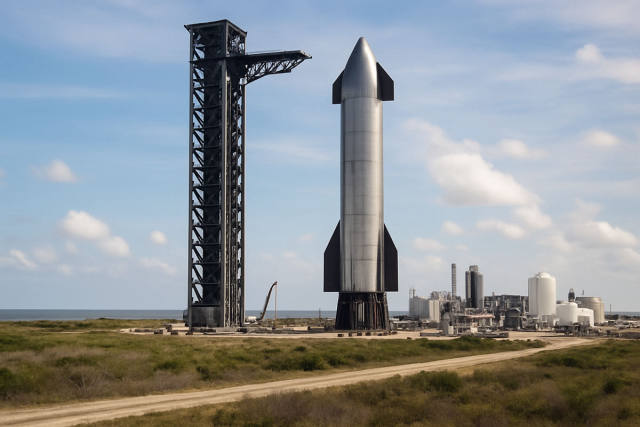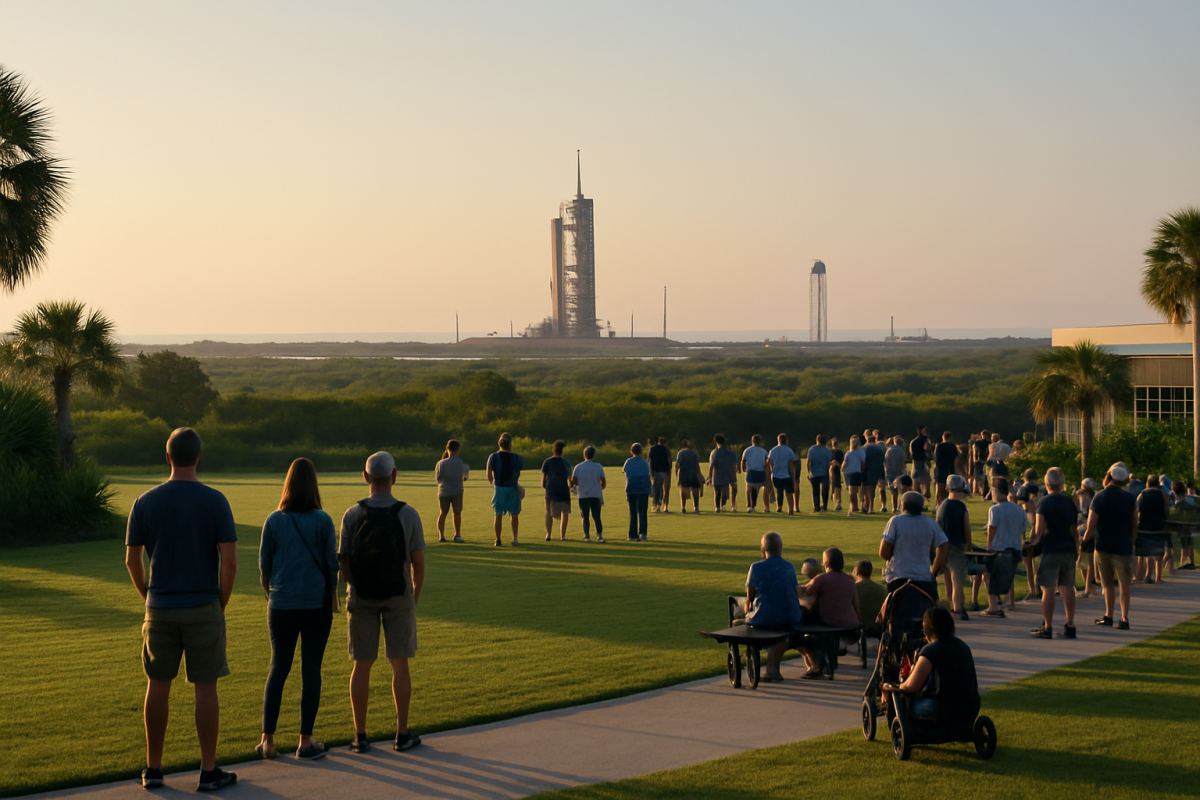
A rocket launch can be the most memorable part of a Kennedy Space Center Visitor Complex day, but there is no one-ticket rule for every mission. The right plan depends on the launch pad, scheduled window, safety requirements and anticipated crowds. The most useful habit: check the official event listing for your specific mission shortly before buying, then check it again before leaving for Merritt Island. Launch dates, times and viewing arrangements can move with very little notice.
When regular admission is enough
For many launches, standard visitor-complex admission is all you need. This is most common when the launch window falls during normal visitor-complex and bus-tour hours. Viewing may be from the main complex, or the event listing may make a farther viewing area available by bus on a first-come, first-served basis.
Admission-based viewing still comes with the essentials: a designated viewing area, live commentary and access to the attractions operating that day. Seating is not reserved, though, so arrive early on a launch day. For a straightforward daytime mission, planning Kennedy Space Center tickets around the launch can be an excellent way to combine a full museum-and-attractions day with a memorable evening or afternoon liftoff.
Do not assume that an annual pass, a normal admission ticket or a prior visit automatically covers every launch. Major crewed and milestone missions can use separate launch packages, with different admission rules.
When you need a Launch Transportation Ticket
A Launch Transportation Ticket, usually called an LTT, is an add-on to valid visitor-complex admission—not a replacement for it. It covers bus transportation through NASA’s gates to the designated launch-viewing site. The visitor complex tends to offer LTTs when a launch falls well outside regular operating hours, when interest is especially high, or when it has created a premium viewing option for that mission.
Prices, check-in times, included extras and the exact viewing site vary by mission, so treat the event page as the final word. These tickets can sell out, particularly for crewed launches. Importantly, guests cannot drive themselves to the restricted viewing sites; everyone using an LTT or qualifying package travels there on visitor-complex buses after entering through the main gate and security.
When a launch package makes sense
For the biggest events—think crewed missions or milestone flights—the visitor complex may sell a special launch-viewing package rather than, or alongside, simpler options. Packages include admission and generally build in a second launch attempt if the first is scrubbed, plus a separate return visit to explore the complex within 30 days, subject to blackout dates. Depending on the package, food, a commemorative item, photos or other extras may be included.
That structure can be reassuring for travelers who want the enhanced experience, but it does not make the launch date certain. A package is tied to the mission, not a particular date or time, and it is not transferable to another mission. If you have a fixed flight home or only one day on the Space Coast, read the scrub policy before committing.
Where you may watch
- Main Visitor Complex: The Atlantis North Lawn is the familiar regular-admission option. It is roughly 6.7 to 7.5 miles from common Cape Canaveral and Kennedy launch pads, depending on the pad. You generally see the rocket after it rises above the tree line, with bleacher and lawn space.
- Banana Creek at the Apollo/Saturn V Center: This is a prized viewpoint across the water from the pads, around 3.9 miles from Launch Complex 39A and about 6.2 miles from Space Launch Complex 40. When open, it has bleachers, a lawn and access to the Apollo/Saturn V Center. It may be included with admission for some missions or accessed with an LTT/package for others.
- The Gantry at LC-39: This is the closest public visitor-complex location for eligible Cape Canaveral Space Force Station launches—about 2.3 miles from Atlas V’s SLC-41 and 3.4 miles from Falcon 9’s SLC-40. It cannot be used for launches from Kennedy’s LC-39A or LC-39B because it is too close for safety rules. It may be an LTT site, an admission option or unavailable, depending on the mission.
In other words, choose the mission first, then accept the site the event listing assigns or offers. There is no universal “best” location that applies to every rocket.
What a scrub means for your plans
A scrub means that day’s launch attempt has been canceled and a new time must be chosen. Weather, upper-level winds, technical readings, range safety and even aircraft or boats entering the protected area can cause a delay. A scrub can happen days in advance—or minutes before liftoff—and the launch provider, not the visitor complex, makes the call.
With an LTT, a postponement before bus boarding lets you use the ticket for the next attempt or request a refund for the unused LTT. After you board for the first attempt, the LTT normally carries to a second attempt and the visitor complex provides a return-admission voucher for that next date. If the second attempt scrubs after transportation has occurred, the LTT is considered fully used. Package rules differ, especially for food and souvenirs based on how close to launch time the scrub occurs.
Practical takeaway: Build flexibility into your trip if seeing liftoff is the priority, arrive early, bring a portable phone charger for schedule updates, and verify your mission’s exact viewing and scrub terms before you go.