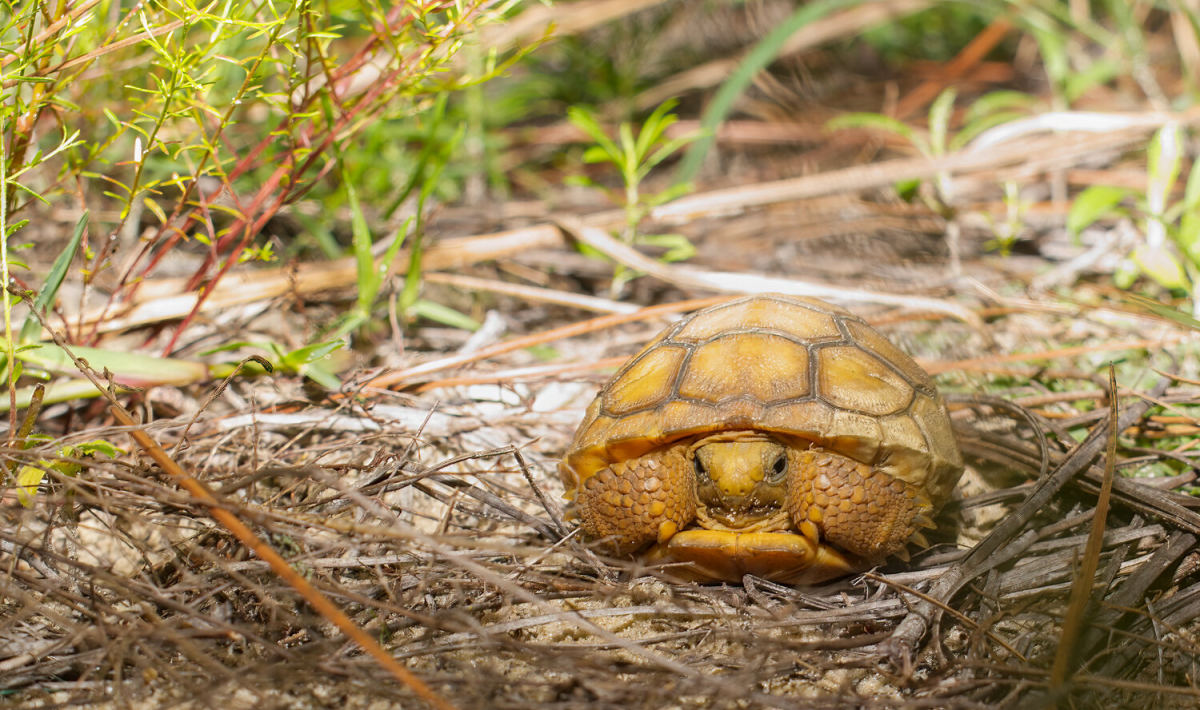
Florida’s gopher tortoise is a threatened species, and its future is increasingly uncertain across the state and the Southeast as habitat is lost and fragmented.
The tortoise is considered a keystone species because its burrows provide shelter for many other organisms. Those underground spaces can serve as refuge during wildfires in forests, savannas, high sand ridges and sand dunes, according to the Fernandina Observer.
In July 2026, the International Union for Conservation of Nature and Natural Resources said the species was more endangered than previously understood. The source reported that, if current trends continue, the overall population could decline by more than 95% over the next 80 years.
Development-driven habitat loss is a central threat. Florida has only an estimated 3% to 5% of its original longleaf pine habitat remaining, the report said, leaving smaller and more isolated tortoise populations. Small populations of 20 to 40 animals face especially high extinction risk.
For homeowners, Florida Fish and Wildlife Conservation Commission rules make it illegal to harm a gopher tortoise, its eggs or its burrow without the required permit. Residents should not pick up or move a tortoise themselves, including moving one off their property.
If a burrow threatens an existing foundation, driveway or other structure, a property owner may apply for a free FWC Burrow or Structural Protection Plan permit for one or two burrows, provided the animal can be relocated elsewhere on the same property. Required training and permit approval come before any move, and owners may also use an authorized gopher tortoise agent.
Off-site relocation requires a separate FWC permit and must be handled by an authorized agent. The Fernandina Observer reported that recipient-site fees can range from $5,000 to $8,000 per tortoise for space, health assessments and long-term management. Officials in Fernandina Beach have found tortoises in the Ron Sapp Egans Creek Greenway, an area described as unsuitable habitat, where they are believed to have been illegally released.
Moving tortoises without authorization can also spread disease to healthy populations. The source advises contacting FWC or an authorized agent before construction or major habitat changes where tortoises may be present.