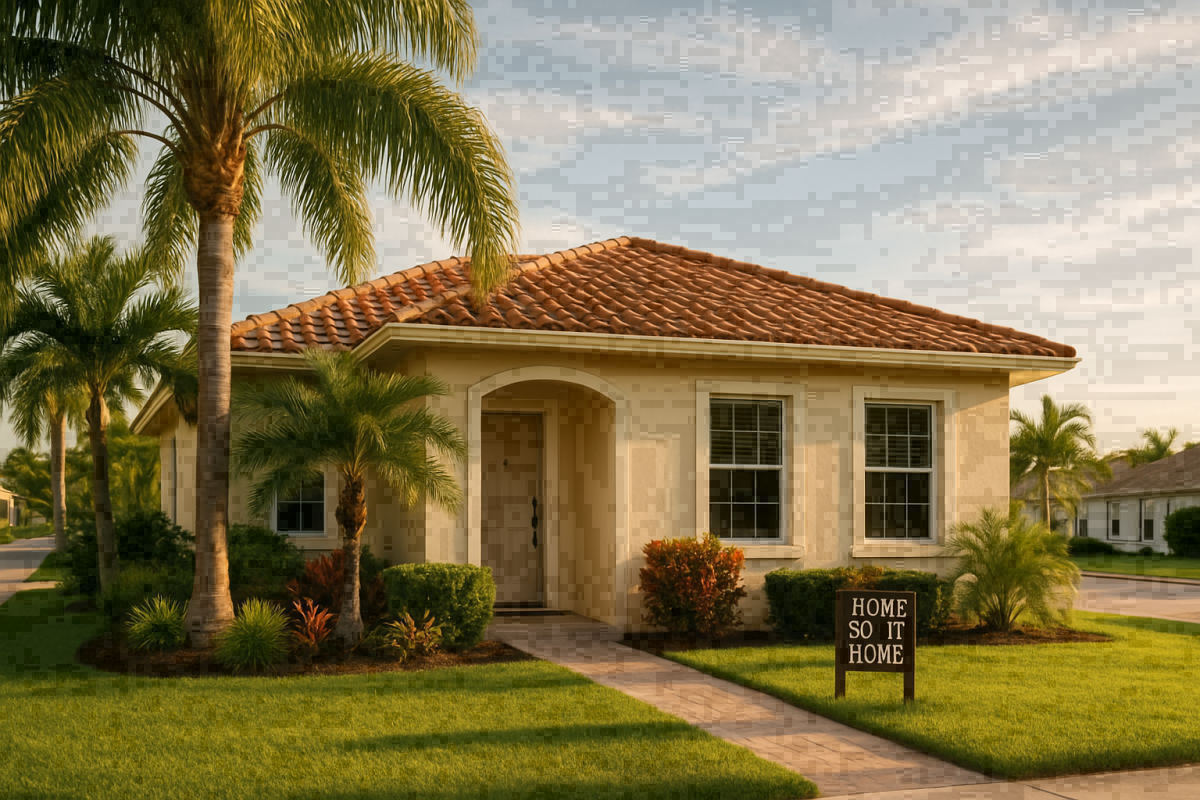
If you own a Florida home with a homestead exemption, one number deserves a spot in your financial vocabulary: 2.7%. That's the Save Our Homes (SOH) cap for the 2026 tax year — the ceiling on how much your property's assessed value can grow, no matter how much the market surges around you. Understanding how this cap compounds over time, what causes it to reset, and how you can carry it with you when you move is some of the most valuable homeowner knowledge in the state.
What Save Our Homes Actually Does
Save Our Homes is a constitutional amendment that took effect in 1995. It limits the annual increase in the assessed value of any homestead-exempt property to the lesser of 3% or the change in the Consumer Price Index. Because the CPI came in below the 3% ceiling, the Florida Department of Revenue set the 2026 cap at 2.7% — down from 2.9% in 2025 and 3.0% the two years before that. In practice, this means if your assessed value was $350,000 last year, it can rise to at most $359,450 in 2026, even if comparable homes down the street are selling for $425,000.
It's worth noting what SOH is not: it's a limit on assessed value growth, not a cap on your actual tax bill. Local millage rates set by counties, cities, and school boards can still move up or down independently. But because your taxable base is held in check, the savings are real and meaningful.
How the Savings Compound Into Real Money
The true power of Save Our Homes is arithmetic — it compounds year after year. In hot real estate markets across Florida, where market values have climbed 5–10% annually in many stretches of the last decade, the gap between what your home is worth and what you're taxed on widens every single year you stay put. That gap is called the SOH differential, and it's where the serious money lives.
Consider a concrete example: a homeowner who bought a South Florida property in 2008 for $500,000 and took homestead. By 2026, that home's market value might have climbed to $1,800,000. With the cap applied at roughly 3% per year on average, the assessed value would sit somewhere around $850,000 — meaning the homeowner is only taxed on less than half the home's actual value. At a combined millage of around 19 mills (common in Miami-Dade), that differential translates to roughly $18,000 per year in property tax savings. Even in more modest markets, a homeowner who purchased a $250,000 home in 2016 would today have an assessed value shielded well below current market prices, saving thousands annually.
What Resets the Clock When You Sell
Here's the part that catches buyers off guard: when a homesteaded property changes hands, the entire accumulated SOH benefit disappears for the incoming owner. The county property appraiser reassesses the property at its full market value as of January 1 of the year following the sale — so if you buy in May 2025, your reassessment happens January 1, 2026. The previous owner's tax bill is essentially irrelevant to what you'll pay.
This means a home where the seller was paying taxes on a $320,000 assessed value could instantly become a $600,000 taxable property for the buyer — potentially doubling the annual tax bill. Always budget based on your purchase price, not the seller's assessment. The SOH cap won't protect you in year one; it kicks in the January 1 after your homestead exemption is granted, so your second year of ownership is when the protection begins. Any sale, foreclosure, or transfer of legal title generally constitutes a change of ownership under Florida law, though certain transfers between spouses and some transfers upon death are exceptions — check current statute details if your situation involves those scenarios.
Portability: Taking Your Savings With You
The good news for long-term homeowners who want to move? Florida lets you take most of your accumulated SOH benefit with you. Called portability, this provision allows you to transfer up to $500,000 of your SOH differential to a new Florida homestead. If your old home had a market value of $450,000 but an assessed value of only $285,000, that $165,000 differential is your portable benefit — and applying it to a new $500,000 home could reduce its assessed value by the same $165,000, saving roughly $3,300 per year in taxes from day one.
If you're upsizing, the full differential (up to the $500,000 cap) transfers. If you're downsizing, a proportional share transfers based on the ratio of your new home's market value to your old one's. You claim portability by filing Form DR-501T with your new county's property appraiser by March 1. Critically, you must establish your new homestead within three tax years of abandoning your previous one — after that window closes, the benefit is gone permanently. Portability works anywhere in Florida, including condos, townhomes, and manufactured homes on owned land, as long as the new property qualifies for homestead exemption.
One thing to watch: there is a proposed amendment on Florida's November 2026 ballot that could affect future exemption amounts. Monitor official state sources for any changes heading into next year.
How to Get the Cap Working for You
- File for homestead exemption by March 1. This is the standard annual deadline. You must own the property and use it as your permanent residence as of January 1 of the tax year. File Form DR-501 with your county property appraiser — most counties offer free online filing, though first-time applicants may need to appear in person with original documents. Once granted, the exemption renews automatically as long as you remain eligible.
- Don't confuse the seller's tax bill with yours. Always ask your lender to estimate taxes based on your actual purchase price.
- If you're moving, don't let the portability window expire. File Form DR-501T alongside your new homestead application and confirm the March 1 deadline with your new county's appraiser.
- Check your TRIM notice every August. This is the annual Notice of Proposed Property Taxes that shows your assessed value, exemptions, and estimated bill — it's your best tool for confirming everything is applied correctly.
Florida's Save Our Homes cap is one of the most generous homeowner tax protections in any state, but it rewards those who understand and actively use it. Planning your Florida lifestyle around long-term homeownership here can mean tens of thousands of dollars in compounding savings — as long as you file on time, budget correctly when buying, and use portability wisely when you eventually move. Because these rules and figures are set annually by the Florida Department of Revenue, always verify the current cap percentage and deadlines with your county property appraiser before making financial decisions.