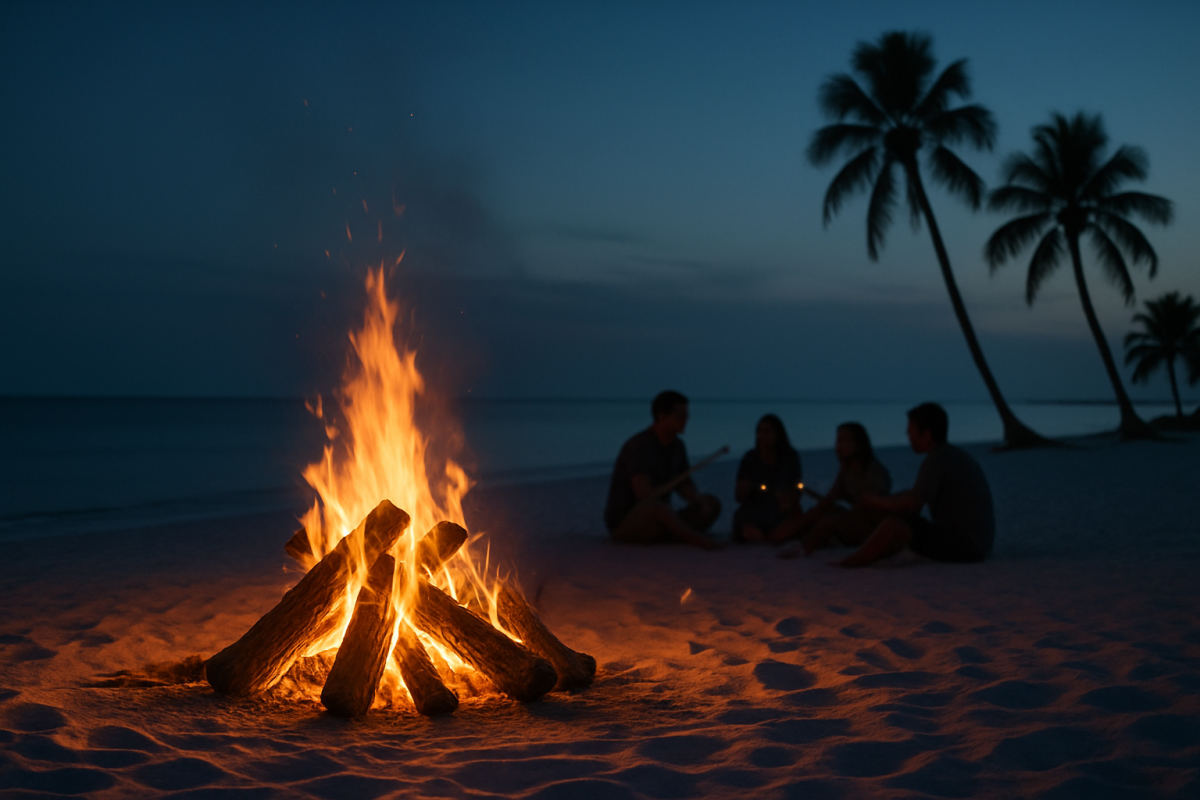
Few things beat a crackling fire on a Florida beach as the Gulf or Atlantic sky fades to black. But before you stack the first log, know this: lighting a beach fire without understanding your county's rules can earn you a fine, not a memory. Florida has no single statewide permit system — every county, and sometimes every municipality, writes its own playbook. Here's how the major beach destinations actually work.
The One Rule That Applies Everywhere: Sea Turtle Season
No matter which county you're visiting, sea turtles set the calendar. Nesting season generally runs from May through October, and during that window open fires on the beach are either outright prohibited or subject to strict additional rules designed to keep disoriented hatchlings from crawling toward firelight instead of the sea. Fires can damage incubating nests through heat and confuse emerging hatchlings with their glow — which is why the restrictions exist in the first place. In practice, this means beach bonfire season in most of Florida is a winter and early-spring activity. Always verify current turtle-season dates with the local authority before you go, as exact start and end dates can shift slightly by jurisdiction.
Walton County (30A / South Walton / Destin area)
Walton County — which takes in the beloved 30A corridor, Seagrove Beach, and Santa Rosa Beach — is one of the most bonfire-friendly stretches of Florida coastline, but it comes with a real permitting infrastructure. A permit is required for every fire, and you apply through the South Walton Fire District. The county offers both temporary single-night permits and annual permits for Gulf-front property owners; the annual permit expires December 31st each year.
Fees are split between the Fire District and Walton County. A propane-fueled bonfire runs $100 total (or $105 if you pay online), while a wood-fueled bonfire costs $150 total ($157 online). The permit holder must be at least 18 years old and present for the entire event. Fire containers cannot exceed four feet in diameter, and the area must be cleaned of all debris afterward. During turtle nesting season, fires must stay at least 200 feet from any marked nest, and special lighting rules may apply to protect hatchlings. Fires generally may not be set up before 5 p.m. in the March–October window, with cleanup required by midnight. Note that fires are prohibited countywide on July 4th. Confirm current timing rules with the South Walton Fire District before booking, as seasonal schedules do get updated.
Bay County (Panama City Beach)
Panama City Beach falls under Bay County's jurisdiction, and a permit is mandatory for any beach bonfire here — unpermitted fires are illegal and can result in fines. Applications are submitted through Bay County Emergency Services via their online Community Access Portal. One important detail: if you're on an incorporated stretch of beach, the county permit system doesn't apply and your application will be rejected, so confirm your specific location first.
Bay County has some of the state's most detailed turtle-protection rules built right into its bonfire ordinance. No fire is permitted within 250 feet of a marked turtle nest or within 50 feet of any vegetation line. If a fire is within 400 feet of a marked nest it must be screened to reduce visible light toward the nest. Wood-fueled fires cannot be lit when wind speeds exceed 10 mph. All fires must take place between 5 p.m. and midnight, and fires are strictly prohibited on January 1st, July 4th, and December 31st. Always check for active burn bans before your visit — the county can cancel permits at any time for safety reasons.
Volusia County (Daytona Beach / Ormond Beach / New Smyrna Beach)
Volusia County is one of Florida's most accessible beach fire destinations because, outside of turtle nesting season, no permit is required to bring your own fire pit. You simply show up, set it down anywhere on the beach that isn't the conservation zone or the emergency traffic lane, and enjoy. The county also maintains eight pre-existing fire pit rings at locations stretching from Ormond Beach down to New Smyrna Beach — these are free to use but do require a reservation, which is first-come, first-served. During turtle nesting season, roughly mid-April through the end of October, beach fires are not permitted at all. Bring untreated, unprocessed wood — no painted lumber, varnished wood, or material with nails.
Brevard County (Space Coast)
Brevard County keeps it simple: no fires are permitted on any county beach from March 1st through November 1st due to sea turtle nesting season. Outside that window, a recreational fire application through Brevard County Fire Rescue is required. Note that burn bans can extend or modify the off-season window — check the county's Fire Rescue page for the latest status before making plans.
Atlantic Beach (Duval County area)
Atlantic Beach — notably one of the few Jacksonville-area beaches where fires are allowed at all, since Neptune Beach and Jacksonville Beach prohibit them entirely — limits bonfire season to November 1 through February 28. A permit is required, costs $75, and comes with a $150 refundable deposit. The permit holder must be at least 21 years old, present for the entire fire, and apply in person at the Adele Grage Cultural Center. Fires are capped at 25 attendees, must be no larger than 2 feet by 2 feet by 1 foot deep, and can only be lit between 6 p.m. and 10 p.m. Fires are also prohibited near several specific beach access points and on certain holidays — check current access restrictions before applying.
Sanibel Island (Lee County)
Sanibel Fire & Rescue District issues beach campfire permits for the island, but the season is tightly constrained: permits are only available from November 1st through February 14th each year to protect nesting shorebirds and sea turtles. Fires with a permit are allowed daily from 5 p.m. to midnight, and permits are valid only within Sanibel's city limits. Be aware that even within the permitted season, abnormally dry conditions can result in the permit program being suspended mid-season — the district posts current availability on its website, so check before you travel.
Where Fires Are Off-Limits Entirely
Not every Florida beach community opens the door at all. Fort Lauderdale Beach, for instance, prohibits all open fires on city beaches by ordinance, with an exception only for self-contained gas-fueled devices. Jacksonville Beach and Neptune Beach similarly ban beach fires outright. Many of the heavily developed resort municipalities along the Gulf Coast — including large stretches of Pinellas County's barrier islands — either ban open fires or restrict them to conditions that effectively make them impractical for casual visitors. If your destination isn't listed above, contact the local fire department or parks department directly rather than assuming fires are allowed.
Universal Rules Worth Knowing Before You Go
- Permit on-site: In every county that issues permits, the permit holder must be physically present for the entire fire.
- Clean burns only: Treated lumber, wood with nails, painted or varnished wood, Christmas trees, and pallets are prohibited everywhere. Stick to clean, dry, untreated wood.
- No accelerants: Lighter fluid and chemical fire starters are widely banned. Kiln-dried wood catches cleanly.
- Dune setbacks matter: Fires must stay well clear of dunes and sea oats. Disturbing sea oats can carry fines up to $5,000 under Florida state law.
- Burn bans override permits: A county-issued burn ban cancels any permit instantly, with no exceptions. Check local fire department social media or websites the day of your fire.
- Leave no trace: Every jurisdiction requires complete cleanup — ash, charred wood, and any debris must leave the beach with you.
A collapsible portable fire pit with a spark screen is worth packing regardless of county — it keeps your fire contained, elevates it off the sand (protecting the beach surface), and satisfies the "approved container" requirement in most jurisdictions. Toss a cooling towel in your bag too; Florida evenings warm up fast once a fire is going. The practical takeaway: look up the specific rules for your destination county before you book, not the morning you arrive — permit windows, burn bans, and turtle-season dates can all change, and the county fire department's website is always the authoritative source.