One of Florida's most distinctive beach experiences is also one of its most logistically layered: Volusia County lets you literally drive your car onto the sand in Daytona Beach, New Smyrna Beach, Ormond Beach, and Ponce Inlet. But that privilege — along with access to the county's sprawling network of off-beach lots — now flows through a single, fully digital system called ParkVolusia. If you're planning a visit, understanding how it works before you leave your driveway will save you real money and a lot of confusion at the ramp.
The Big Shift: License Plates Are the New Stickers
Not long ago, beach passes in Volusia County meant a sticker stuck to your windshield. That era is over. The ParkVolusia program is entirely virtual — your vehicle's license plate number is your permit. License plate reader (LPR) cameras at automated beach ramps read your plate and open the gate automatically. There's nothing to peel, display, or remember to transfer when you rent a different car. If you get a new plate at any point, it's your responsibility to log in and update your account; the system won't do it automatically.
For Visitors: Two Separate Passes, Two Different Price Points
Here's the detail that trips up most out-of-towners: off-beach parking and beach driving are not covered by the same annual pass for non-residents. Visitors must purchase them separately. As of the latest published rates, an annual off-beach parking pass runs $100, and an annual beach driving pass runs $150 — each per vehicle. If you plan to do both, budget $250 total before taxes and fees.
Not making a return trip this year? Daily passes are also available. The daily beach driving fee is $30 per vehicle (plus sales tax and any applicable credit card fees), while a daily off-beach parking pass runs $20. Both daily options include unlimited re-entry on the day of purchase — so you can head out for lunch and come back without paying again.
Annual Passes Can't Be Bought at the Ramp
This is the single most important logistical fact to internalize: annual permits are no longer sold at beach entrance ramps or off-beach parking lot kiosks. You must buy them in advance — either online at parkvolusia.org, through the Volusia County Beaches app, or in person at one of two ParkVolusia offices. The Daytona Beach Shores office is at 2422 S. Atlantic Avenue (open Monday–Saturday, 8:30 a.m.–6 p.m.), and the New Smyrna Beach office is at 302 N. Causeway (open Monday–Friday, 10 a.m.–6 p.m.). Daily passes, however, can still be purchased on the spot at beach entrance ramps or parking lot kiosks — so walk-up access is still possible, just pricier per visit.
One important nuance for visitors buying annual passes: each vehicle requires its own separate pass purchase, and once a pass is linked to a plate, it cannot be transferred. If you're driving a rental car, you'll need to register that plate specifically — and if you swap vehicles, you'll need to purchase a new visitor permit rather than simply updating the plate. Keep that in mind if your trip involves more than one rental.
On-Beach Driving: Hours, Rules, and Where It's Allowed
Beach vehicle access runs from 8 a.m. to 7 p.m. (or sundown, whichever comes first) between May 1 and October 31 — sea turtle nesting season, which explains the tighter window. From November 1 through April 30, hours extend from sunrise to sunset, tides permitting. Ramp availability can change with the tides and weather, so download the free Volusia County Beaches app before you go; it shows real-time ramp status and off-beach lot availability.
Once you're on the sand, stay on the seaward side of the wooden conservation zone posts, keep your headlights on, and maintain at least one front window open. The posted speed limit is 10 mph. Note that front-elevated vehicles — specifically those with a front fender height more than four inches higher than the rear — are not permitted on the beach. Ormond Beach access is sometimes restricted to four-wheel-drive vehicles, and only the southern tip of Ponce Inlet is open to beach driving, so check current conditions before heading to those areas.
A waterproof bag is a smart call for keeping your documents and devices protected while you park right on the sand.
The Inlet Parks Are a Separate Category Entirely
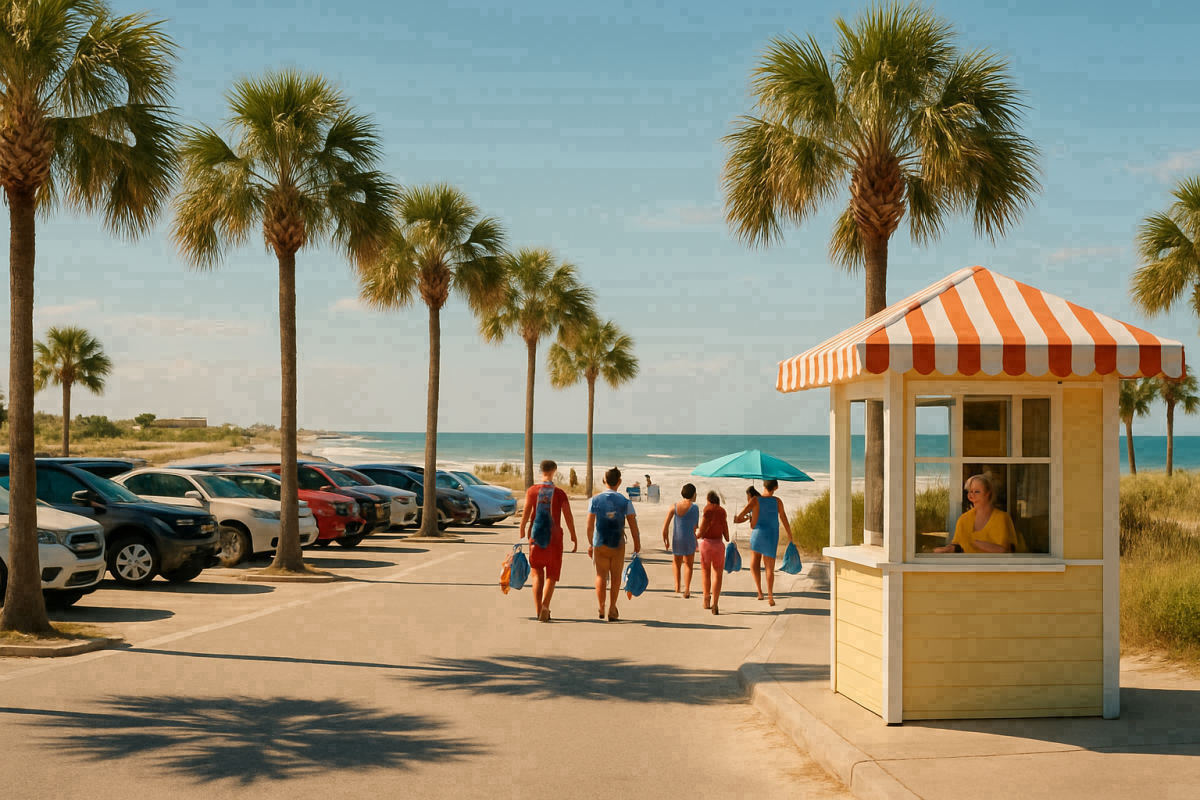
Worth flagging clearly: ParkVolusia beach driving and off-beach parking permits do not cover the county's two inlet parks — Lighthouse Point Park and Smyrna Dunes Park. Both residents and visitors need a separate inlet park pass for those locations. A daily inlet park pass is $10; an annual inlet park pass is $20 (plus taxes and fees). Daily fees can be paid on arrival at the entrance booth, while annual inlet park passes must be bought online or at a ParkVolusia office.
Permits Don't Work in Municipal Lots
One more thing to keep in mind: ParkVolusia permits cover county-owned and operated lots only. Parking lots managed by the cities of Daytona Beach and New Smyrna Beach operate under separate programs with their own fees and rules. If you're parking in a city-run lot, check with the respective city for current rates and procedures.
Quick Practical Tip
If you're visiting more than once in a 12-month span — even across two separate trips — the annual passes will almost certainly pay for themselves. Run the math against daily rates before you book, apply online ahead of time (allow 24–48 hours for approval), and download the Volusia County Beaches app to scout ramp and lot availability the morning of your visit. A portable phone charger helps ensure the app stays live throughout the day. Always verify current prices and procedures at parkvolusia.org before your trip, as fees and policies are subject to change.