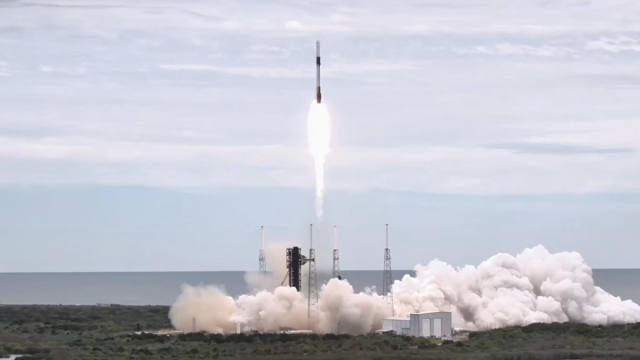
NASA’s SpaceX CRS-35 commercial resupply mission is set to carry health-focused research to the International Space Station from Cape Canaveral Space Force Station in Florida.
The agency said four investigations from its Biological and Physical Sciences division are designed to support astronaut health during long-duration missions while advancing research with potential benefits on Earth. The work includes lab-grown human brain models, a crop-disease study, a faster approach to assessing astronaut health and an examination of antibiotic-resistant bacteria aboard the space station.
One precision-health experiment will send small models of human brain tissue to the orbiting laboratory for five weeks. Researchers will compare the models that traveled in space with identical models kept on Earth to study how short-term spaceflight affects the brain at a cellular level.
NASA said the results could improve understanding of how the brain responds to stress and help inform ways to address brain-health risks astronauts may face on future missions to the Moon and beyond.
A separate space-crops investigation will examine whether plant diseases develop faster and more severely in microgravity. It will compare molecular and structural changes in infected plants grown on Earth and on the space station.