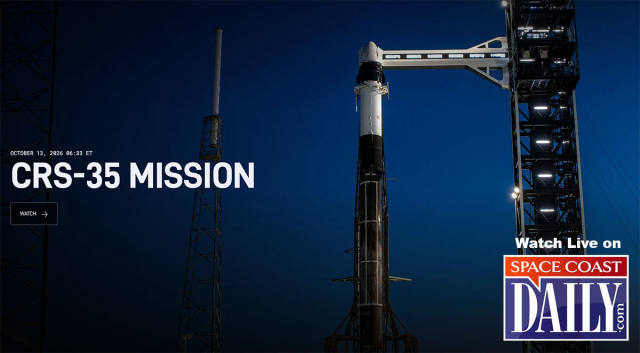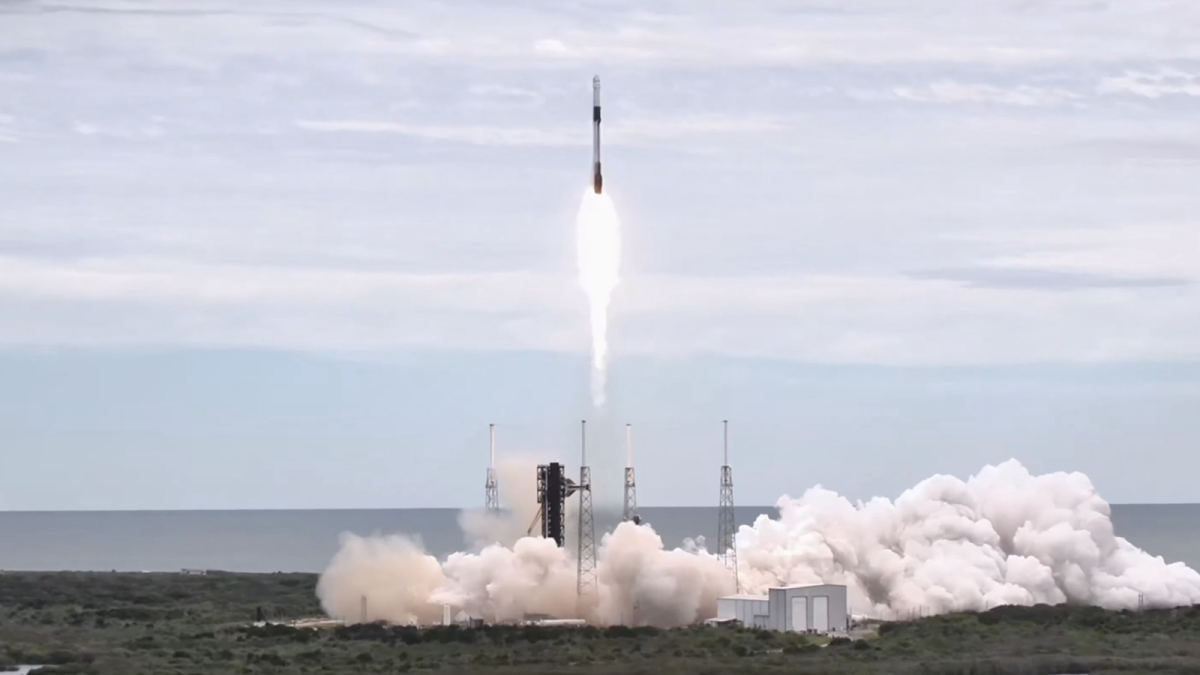
SpaceX’s Crew-13 mission set a new speed record for a U.S. spacecraft carrying astronauts to the International Space Station, reaching the orbiting laboratory 7 hours and 55 minutes after launching from Cape Canaveral on Oct. 1, 2026.
A Falcon 9 rocket launched the Crew Dragon capsule from Florida with NASA astronauts Jessica Watkins and Luke Delaney, Canadian Space Agency astronaut Joshua Kutryk, and Roscosmos cosmonaut Sergey Teteryatnikov. The spacecraft docked with the ISS about 250 miles above Earth later the same day.
The trip surpassed the prior U.S.-launched crewed-mission record of 14 hours and 43 minutes, set by SpaceX’s Crew-11 mission in August 2025.
It was not the fastest crewed journey to the ISS overall. Russia’s Soyuz MS-17 reached the station in 3 hours and 3 minutes after launching from Kazakhstan in October 2020.
Travel time to the station depends heavily on orbital alignment. The ISS travels around Earth at roughly 17,400 mph, and an arriving spacecraft must match its altitude, position and speed before docking. Favorable positioning can allow a shorter route, while other launch opportunities require more time in orbit for maneuvers. Weather, launchpad and ground-system readiness, and spacecraft readiness also affect when a mission can launch.
SpaceX has worked with NASA on crewed ISS missions since its Demo-2 flight in 2020, when Crew Dragon became the first commercially built and operated American spacecraft to carry NASA astronauts to orbit. NASA and SpaceX are also targeting early 2028 for Artemis IV, which is planned to use SpaceX’s Starship Human Landing System for a lunar landing mission; the vehicle remains in development.