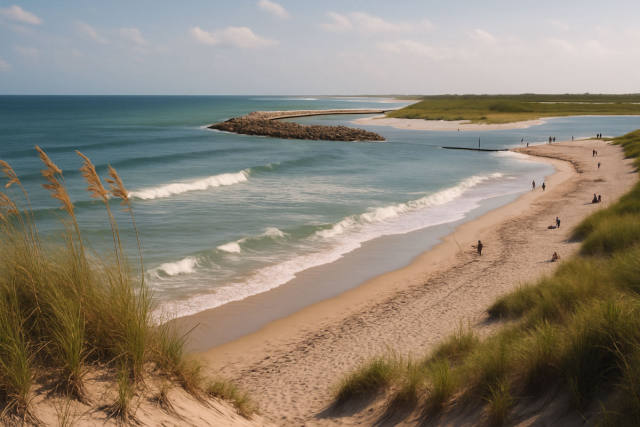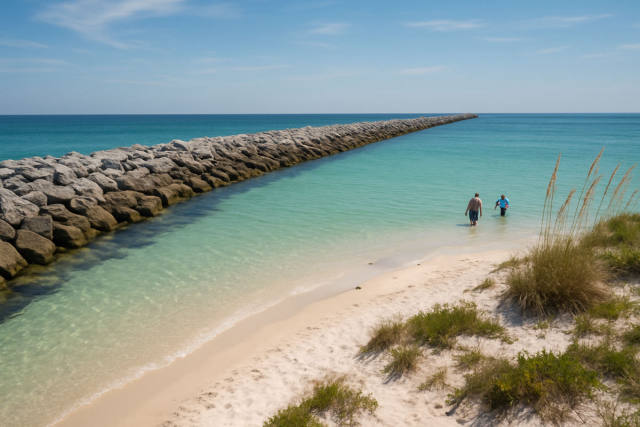
At Dr. Julian G. Bruce St. George Island State Park, the question is less about finding a beautiful beach—there are nine miles of undeveloped Gulf shoreline here—and more about choosing the access point that fits your day. The two full-service beach use areas, East Slough and Sugar Hill, have much in common: Gulf access, parking, boardwalk-style routes over the dunes, picnic space, restrooms and cold-water rinse showers. The practical difference is location.
Quick answer: East Slough for convenience, Sugar Hill for a quieter base
East Slough Beach Use Area is the better pick for a straightforward beach day. It is the first main beach area visitors encounter after entering the park, so it makes sense for families unloading lots of gear, anyone arriving for only a few hours, and first-time visitors who want to get settled quickly. It has a parking area, three covered picnic pavilions, restrooms and outdoor rinse showers. There is no lifeguard, so always check the posted beach flags and keep an eye on surf conditions.
Sugar Hill Beach Use Area is farther into the park and is the better choice when you want to feel more removed from the entrance activity. It has comparable day-use basics—parking, three picnic pavilions, restrooms and cold-water showers—but it is especially handy for campers because it sits near the Sugar Hill camping area. If your plan includes a longer beach walk, birding, an early-morning visit or simply spreading out for the day, start here.
Neither beach is a bad choice. The Gulf views, pale sand and natural dune backdrop are the real draw at both. If you arrive and one parking area feels busier than you like, it is easy to use the other rather than settling for a crowded setup.
Parking, fees and facilities
Park admission is currently $6 per vehicle for two to eight people, $4 for a single-occupant vehicle, and $2 for pedestrians, bicyclists and extra passengers. The park is open daily from 8 a.m. until sundown. Pay at the entrance, then follow signs for either beach use area; both have their own day-use parking. Parking is included with admission, but spaces are not reservable for ordinary beach visits, so arrive earlier on holiday weekends and peak summer days.
Each beach use area has three covered picnic pavilions with tables and charcoal grills. One pavilion at East Slough and one at Sugar Hill can be reserved for $50 plus tax, subject to park rules and holiday restrictions. Both areas have restroom facilities and outdoor cold-water showers for rinsing sand and saltwater. Bring drinking water, sun protection and a way to keep your phone dry; a waterproof phone pouch is useful when the wind, surf and sand are all in play.
Pets may be on paved surfaces and nature trails when leashed, but they are not allowed on the beach or in park facilities. Service animals are permitted. Alcohol is also not permitted on the beach or in the picnic pavilions.
Accessibility: both main areas work well
For visitors with mobility needs, this is one of the easiest decisions: both East Slough and Sugar Hill have mobility mats that improve access across the sand toward the water, and the beach-use restrooms are accessible. The park also has beach wheelchairs, a floating Mobi-Chair and two Beach Cruiser electric mobility devices available through the ranger station, subject to availability. Ask when you enter rather than assuming equipment will be waiting at the beach.
There are also mobility mats at beach access pull-offs No. 1 and No. 8, plus one at the East End special-use area. Conditions on sand and at the shoreline can change quickly with tides and weather, so visitors needing a particular accommodation should check current details with the park before making the trip.
How to reach the East End
The East End is for visitors who want the park at its most remote. Do not expect to drive to the far tip: the park has four miles of paved main drive, followed by a five-mile stabilized road leading toward the eastern end of the island. The East End Special Use Area is currently closed to vehicle access. You can still reach it on foot, by bicycle or by boat, and the East Pass area itself is also limited to walking, biking or boat access.
The simplest strategy is to park at a regular beach use area, bring a bicycle or prepare for a long walk, and follow the stabilized route east while respecting every closure, nesting-area marker and protected-dune boundary. This is a low-service outing: pack plenty of water, snacks, navigation backup and a pair of compact binoculars for shorebirds and distant wildlife. There are no lifeguards, and the return trip matters just as much as the trip out.
Best practical tip: Pick East Slough for the easiest short beach day, Sugar Hill for a more tucked-away all-day base, and save the East End for a self-sufficient walk, ride or paddle after confirming current access conditions at the ranger station.