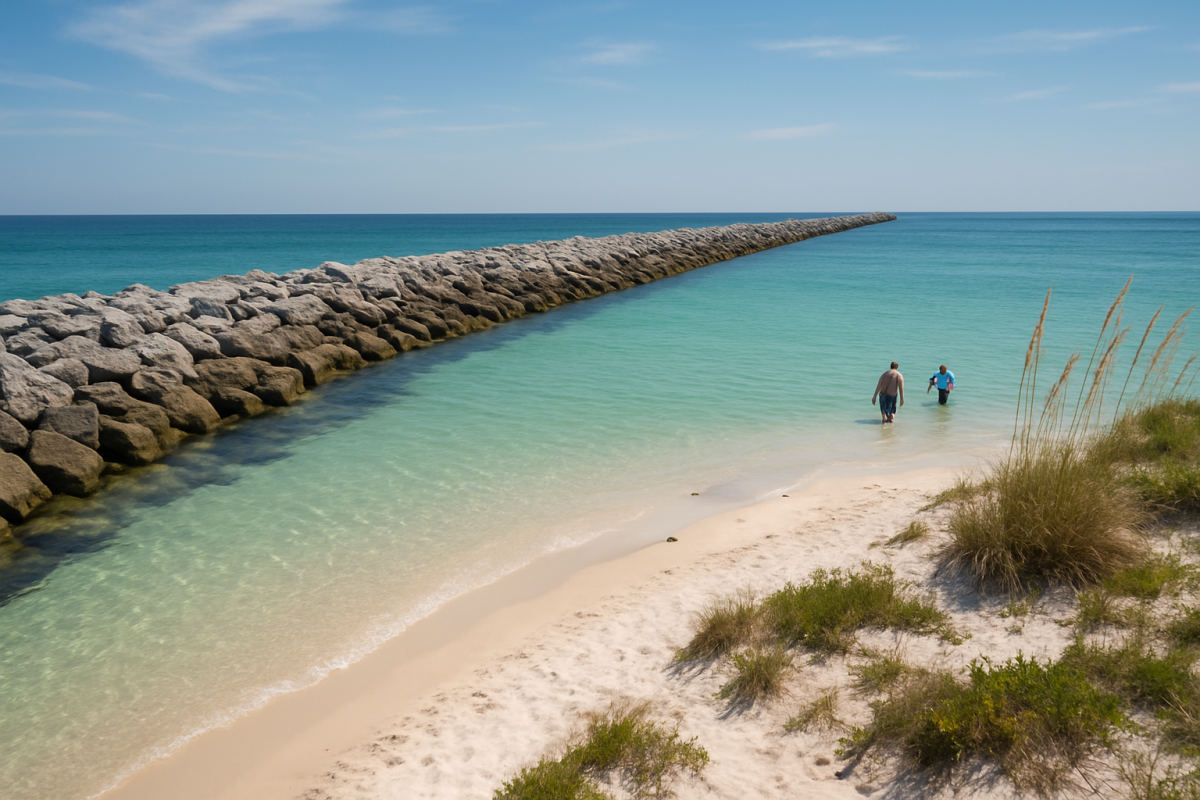
St. Andrews State Park is one of the Panama City Beach area’s easiest shore-snorkeling stops, but the best experience comes from treating it as a jetty habitat—not an open-water expedition. The rock jetty shelters a sandy lagoon and doubles as an artificial reef, so fish, crabs, rays, sponges and the occasional octopus tend to gather near the structure. The payoff is close to shore; there is no need to swim out into St. Andrews Pass.
Where to park and enter
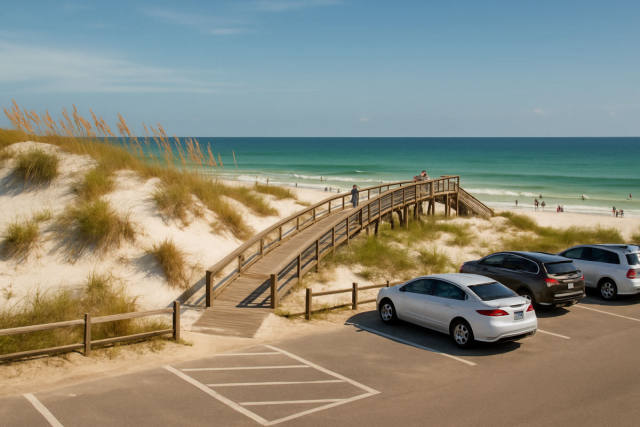
Enter the park at 4607 State Park Lane in Panama City and follow signs toward the Jetty or Jetty Store rather than the Gulf Pier. The jetty day-use area is the most direct base for snorkelers, with beach access, restrooms/changing facilities, outdoor showers, picnic space and the seasonal Jetty Store nearby. The park has two main beach parking areas, so do not worry if another beach lot appears first—keep following the internal signs for the jetty.
Park admission is currently $8 per vehicle for two to eight people, $4 for a single-occupant vehicle, and $2 for pedestrians or bicyclists. The park is open daily from 8 a.m. until sundown. Jetty-area pavilion work can reduce parking, so arrive early on summer weekends and holiday periods, and check the park’s current alerts before leaving your hotel.
From the Jetty parking area, take the beach access down to the protected lagoon on the inside of the rocks. This is the sensible entry for families, first-time snorkelers and anyone who wants a shorter swim. Wade in over sand, then make a slow parallel pass along the base of the rocks, keeping a comfortable distance from them. The shallow “kiddie pool” section is a separate calm-water option for small children, but the jetty rocks are where the marine life is most concentrated.
Do not make the pass your snorkeling route
The far end of the rocks borders St. Andrews Pass, an active navigation channel used by boats. Do not swim around the tip of the jetty, cross the pass toward Shell Island, or climb out onto the boulders. Waves, changing tides, sharp and slippery rocks, fishing lines and boat traffic all make that area a poor choice for casual snorkeling. Stay on the beach side of the jetty and turn back well before the channel becomes a factor.
Florida’s divers-down rules apply to people using a mask and snorkel while submerged. Bring and display a proper red-and-white divers-down flag or buoy, particularly if you plan to work along the deeper rocky edge. It is also a good idea to snorkel with a buddy, keep one person watching from shore when children are in the water, and remain easy to spot.
When conditions are worth it
The jetties can be calm while the open Gulf looks lively, but they are not immune to weather. Your best odds are a morning with light wind, modest wave action and clear water; sand stirred up by surf can quickly reduce visibility. Look at the water from the shore before gearing up: if you cannot see the sandy bottom in the shallows, save the snorkel for another day and enjoy the beach instead.
Check Panama City Beach’s beach-warning flags on the day of your visit and heed any instructions from park staff. Double red flags mean the water is closed to the public. A single red flag signals dangerous surf or currents, while yellow means moderate hazard. Even a green flag is not a guarantee of calm conditions, especially close to a structure and an inlet. St. Andrews is not among the Panama City Beach locations with seasonal lifeguard stations, so plan on being responsible for your own group’s water decisions.
Gear that makes the trip easier
- Mask, snorkel and fins: Fins help with gentle movement along the rocks, but avoid kicking up sand. The park concession sells or rents snorkeling gear seasonally; bringing a well-fitting snorkel, mask and fin set gives you more flexibility.
- Water footwear: Enter on sand, not rocks, but sturdy water shoes are useful for shell fragments and the walk between your beach setup and the water.
- Safety basics: Pack drinking water, reef-conscious sunscreen, a rash guard, a whistle and that divers-down flag or buoy. Leave glass behind, and secure valuables in the car rather than on the sand.
Respect the reef-like habitat
Look closely, but do not touch wildlife, pull organisms from the rocks or stand on aquatic growth. Give rays and dolphins plenty of room, watch for anglers using the jetty, and never handle fishing line or hooks you find underwater. The park’s rules also prohibit spearfishing within its boundaries.
Practical takeaway: Park at the jetty area, enter from the sandy lagoon side, stay well away from the pass, and make the final call based on that day’s flags and water clarity. If the water does not look inviting from shore, it is perfectly fine to make St. Andrews a beach-and-picnic day instead.