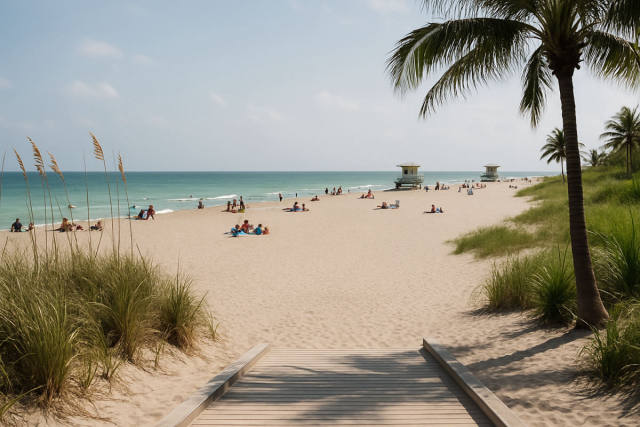
There is something distinctly Volusia County about bringing the car right onto the sand—but Daytona Beach and New Smyrna Beach beach driving takes a little more planning than it once did. ParkVolusia now uses a license-plate-based permit system for County-operated beach ramps and County-owned off-beach lots. That means no new windshield sticker to display, and it also means the right pass for driving is not always the right pass for a nearby parking lot.
Start with the right ParkVolusia pass
Volusia County residents can register for a no-cost annual permit that covers both beach driving and parking at County-owned, County-operated off-beach lots. Registration is tied to the vehicle’s plate, so residents should wait for confirmation before assuming the car is cleared for an automated gate or a license-plate-reader lot.
Visitors have two distinct annual options: an on-beach driving pass costs $150, while an off-beach parking pass costs $100. A visitor who wants the flexibility to do both needs both annual passes. For a single visit, the on-beach daily fee is $30 and the off-beach daily fee is $20, plus applicable tax and card fees. Daily driving admission is paid at a ramp booth; daily off-beach parking is paid at the County lot. A day pass for driving includes reentry that day.
Annual passes are not sold at beach ramps or in off-beach lots. Buy or register in advance through ParkVolusia, the Volusia Beaches app, or a ParkVolusia office. The Daytona Beach Shores office is at 2422 S. Atlantic Ave. and is generally open Monday through Saturday, while the New Smyrna Beach office at 302 N. Causeway is generally open Monday through Friday. Check current office hours and permit details before you go.
- Residents: A Florida driver license or state ID and vehicle registration with matching name and Volusia County address are the basic documents. Part-time residents and property owners need additional property-tax documentation.
- Visitors: No residency paperwork is required to purchase a permit, but each permitted vehicle requires its own pass.
- New plate or rental car: Update vehicle details before heading out. For visitors, a change of vehicle or plate may mean purchasing a new visitor permit.
- Disabled parking credentials: Drivers with qualifying disability plates or placards can receive no-cost access, but registration is still the smart move for automated ramps and lots.
Where ParkVolusia works—and where it does not
ParkVolusia covers County-operated beach ramps and more than 60 County-owned off-beach lots along the coast. It is useful around Daytona Beach, Daytona Beach Shores and New Smyrna Beach, but do not assume every oceanfront lot participates. City-run lots—including several popular New Smyrna Beach locations around Flagler Avenue and 27th Avenue, plus certain Daytona Beach lots—have their own fees and rules.
The same distinction applies at the inlet parks. Lighthouse Point Park and Smyrna Dunes Park require a separate inlet-park admission; they are not included with the standard resident beach parking permit. The inlet fee is currently $10 daily or $20 for an annual pass, plus applicable taxes and card fees.
How beach driving works
Beach driving is available at designated ramps in the Daytona Beach and New Smyrna Beach areas, but it is never a promise that every ramp—or every stretch of sand—will be open. From May 1 through October 31, vehicle access runs from 8 a.m. until 7 p.m. or sundown, whichever arrives first. From November 1 through April 30, it runs from sunrise to sunset. All hours are subject to tide and conditions.
Once on the sand, follow the signed lanes and the posted speed limit, watch carefully for walkers and wildlife, and park only on the ocean side of the wooden conservation-zone posts. Those posts protect dunes and nesting habitat; do not cross them. Park facing the ocean or back in toward the dunes, as directed. Front-elevated vehicles are prohibited when the front fender sits more than four inches higher than the rear.
The real-time closure rule to know
A ramp can be open at breakfast and closed by lunchtime. Beach Patrol must suspend driving and parking when tide leaves less than 30 feet of driving lane. Extreme tides can also close portions of the beach for roughly two hours before and after high tide, and weather, repairs or construction can shut an individual ramp at any time. If officers announce a closure, vehicles must leave promptly rather than moving into the conservation zone.
Before loading the cooler, open the official Volusia Beaches app. It is the practical source for current vehicular-ramp status and available off-beach parking, though conditions can change without notice. Follow signs and Beach Patrol directions when you arrive, even if the app showed a ramp as open a few minutes earlier.
Best practical move: Treat your permit as admission—not a guarantee of sand space. Register or buy ahead, check the app just before leaving, and keep an off-beach backup lot in mind for high tide or a busy weekend.