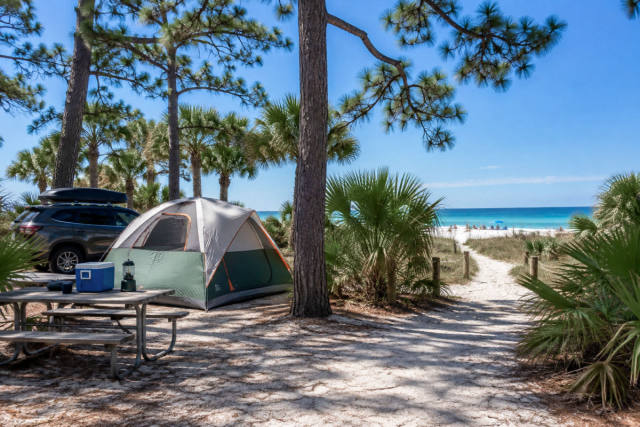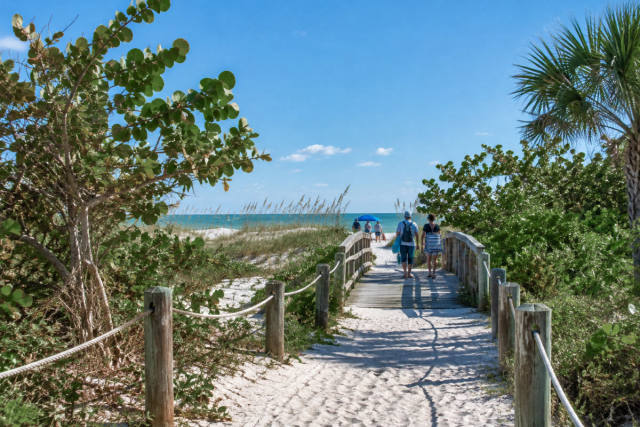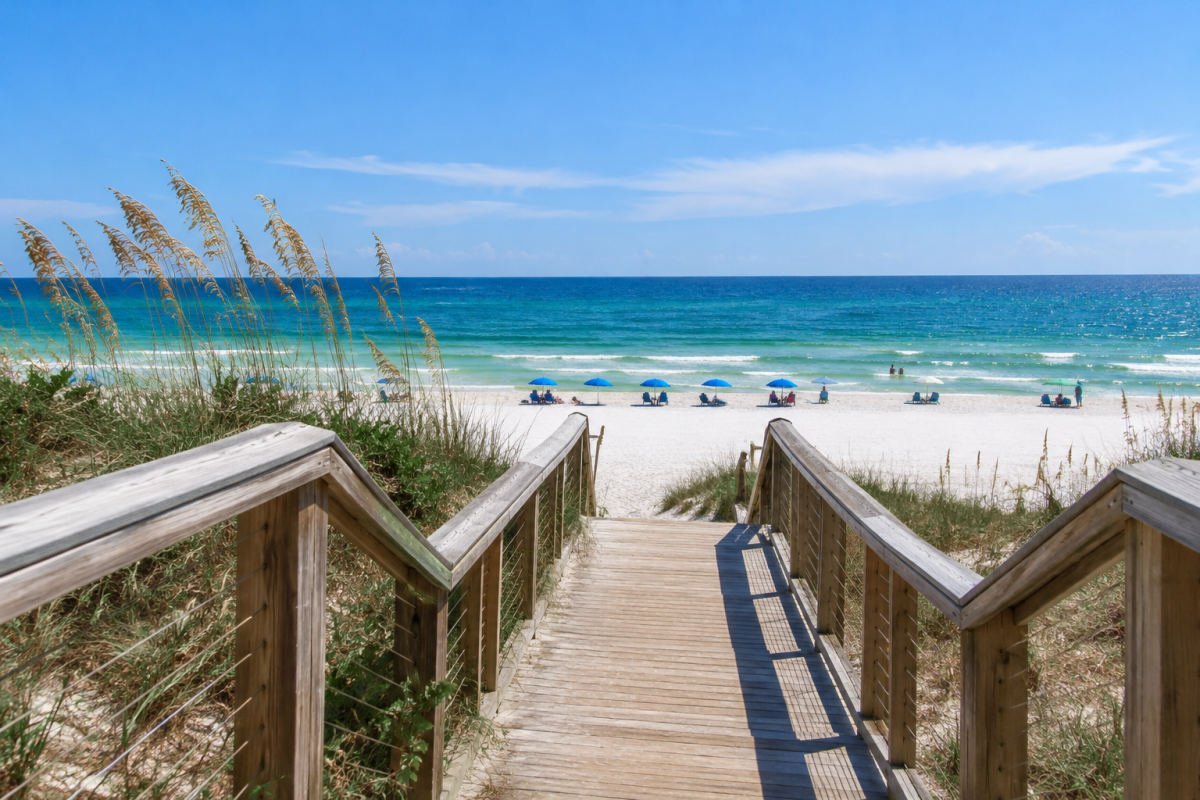
South Walton’s beach-access rules can feel confusing because the 26-mile Gulf shoreline includes county public beaches, state parks, resort- or rental-managed beaches, and certain privately owned stretches covered by a 2023 settlement. The simplest starting point: don’t assume that a boardwalk, a row of chairs or an open-looking patch of sand means the same rules apply everywhere. Before heading out, use the South Walton Beach and Bay Access map to enter your lodging address and see the access type, amenities and nearby entry points.
The 20-foot transitory zone, explained
On specific privately owned parcels identified on the county’s map as owner-managed private beach, the public may use a strip extending 20 feet landward from the wet/dry sand line. This is called the transitory zone. It is not a blanket right to use every privately owned dry-sand beach in South Walton, and the wet/dry line naturally moves with surf and tides.
Within that zone, visitors may walk, jog, run and enter the Gulf for swimming or other water activities. The county also permits stationary use—such as sitting or sunbathing on a towel or personal chair—from 9 a.m. to 4 p.m. A chair-and-umbrella rental may be available at some of these locations, but it is not guaranteed. The settlement limits public use to the equivalent of one person for every five feet of private-beach frontage, so a property manager may need to relocate visitors who do not fit within the rules. Read the county’s current Beach Access FAQ before you go; details can change as shoreline mapping and site information are updated.
One important distinction: you cannot enter the transitory zone by crossing an owner-managed private beach. Instead, use a designated public access or another authorized entry point, then travel along the shoreline where permitted. Beach signage and the interactive map are the practical guides at ground level.
What “public access” really means
For the least complicated beach day, choose a location shown as full public use. South Walton’s regional beach accesses generally offer the most amenities: parking, restrooms, showers, bike racks, surf-warning flags and seasonal lifeguards. The current access map lists 11 regional beach accesses, from the Miramar Beach area east to Inlet Beach; lifeguards are generally on duty from March through October. Neighborhood beach accesses are smaller walk-up boardwalk entries and may have little or no parking, so they work best when you are staying or biking nearby.
The map also identifies county- or state-owned beach areas. County public beaches have no access or recreation restrictions of the sort applied to owner-managed private parcels, while state parks may charge an admission fee. Even when you are only planning a shoreline walk, the county says everyone can traverse the wet sand along the full 26-mile Gulf frontage. That does not give visitors permission to use the dry sand above it on a private parcel outside the settlement’s limited-use area.
How beach-chair setups work
Rows of matching chairs do not automatically mean the beach is closed to the public. At public regional accesses and other participating county beaches, vendor-operated rentals are offered in designated areas. Walton County’s managed-vendor program identifies Coastal as the provider for public-access rentals; reservations and available locations should be confirmed close to your visit through the Managed Vendor Program page.
On county public beaches, the local beach ordinance requires vendor chairs and umbrellas to stay on dry sand, leave space from the dunes, preserve clear lifeguard corridors and retain room for visitors’ own setups. In other words, renting chairs can be convenient, but it does not erase the public character of a county beach. Bring your own low-profile chair if you prefer—just set up thoughtfully, keep clear of marked access paths and lifeguard routes, and do not block other people’s route to the water. A lightweight beach chair is especially handy at neighborhood accesses, where you may be walking farther from your lodging or bike parking.
Private resort or vacation-rental beaches operate differently. A chair rental there may be reserved for guests or renters of that property, and a booking at a nearby condo does not necessarily include access. Ask your host before arrival exactly which beach entry you may use, whether chairs are included, and whether a particular vendor is authorized for that property. For the underlying vendor-placement rules, see Walton County’s Waterways and Beach Activities Ordinance.
A smart beach-day plan
- Check the interactive map before leaving your rental, not once you reach the sand.
- Use a signed public boardwalk for entry; do not cut through a condo, dune walkover or private beach operation.
- If you are using an owner-managed private stretch, stay close to the waterline and remember the 9 a.m.–4 p.m. window for a stationary setup.
- Watch the beach flags and follow lifeguard instructions—double red flags mean the water is closed.
Practical takeaway: When in doubt, start at a full-public-use access and treat the map and posted signs as your real-time playbook. It is the easiest way to spend less time decoding beach rules and more time enjoying the water.