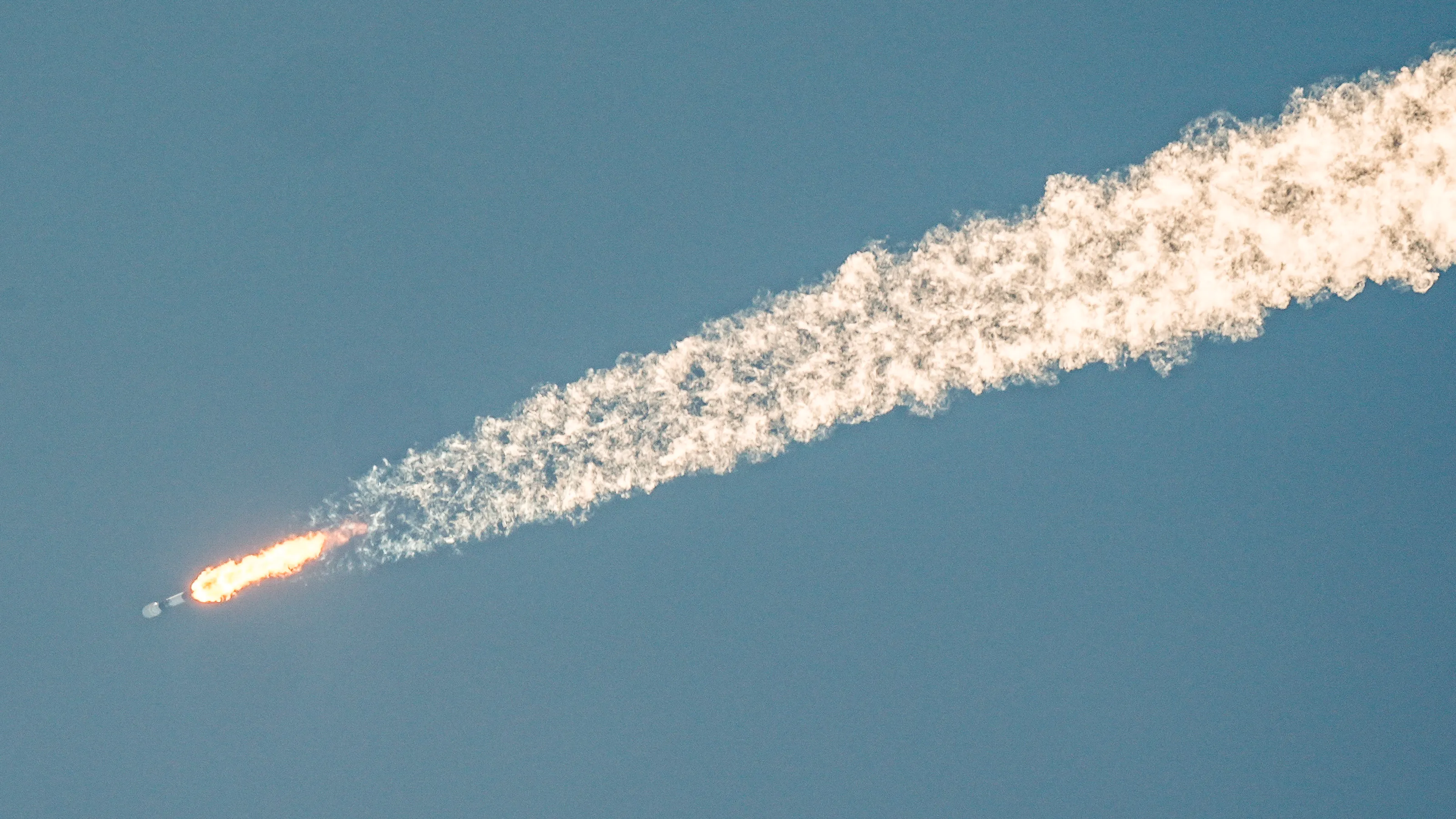
SpaceX successfully launched its Falcon 9 rocket from Launch Complex 40 at Cape Canaveral Space Force Station at 11:14 a.m. on Friday, August 21, marking the Starlink 10-39 mission's second attempt after Thursday's countdown was halted just 28 seconds before liftoff. The rocket carried 29 Starlink broadband satellites into low-Earth orbit along a northeasterly trajectory.
The mission's first-stage booster — a veteran of 30 total flights — touched down safely aboard SpaceX's drone ship A Shortfall of Gravitas in the Atlantic Ocean approximately eight minutes and 25 seconds after liftoff, right on schedule. Because the booster landed offshore, Central Florida residents were spared any sonic booms. Brevard County Emergency Management deactivated its launch support team shortly after the successful landing.
Weather was a lingering concern heading into the window. The Space Force's 45th Weather Squadron pegged an 85% chance of favorable conditions early in the window, dropping to just 45% by its end, with cumulus clouds, anvil clouds, and surface electric fields cited as the primary threats. Fortunately, conditions held long enough for a clean liftoff. The Starlink satellites were set to deploy about an hour after launch.
Friday's flight counted as the 53rd orbital rocket launch of 2026 from Cape Canaveral Space Force Station and Kennedy Space Center combined. The booster's impressive résumé includes prior flights supporting NASA's SpaceX Crew-6 mission, the SES O3b mPOWER-B commercial satellite, USSF-124, and more than two dozen other missions. Back on the ground, the Falcon 9's rumble was felt — and heard — by attendees gathered at the Space Coast Symposium & Expo at the Radisson Resort at the Port in Cape Canaveral.
SpaceX is already eyeing its next Florida launch: another Starlink mission is targeted for Tuesday, August 25, with a window opening at 1:49 a.m. from the same launch complex. Coverage was provided by Rick Neale of Florida Today.