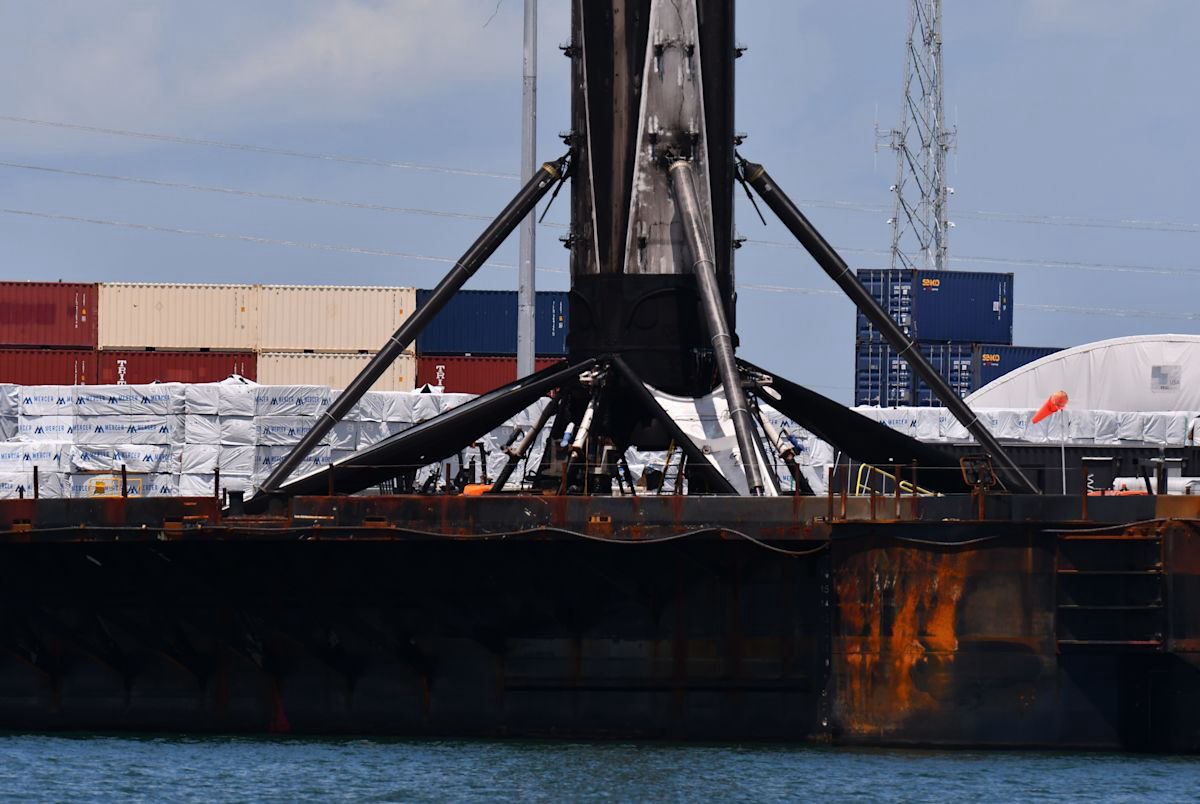
For Brevard County residents who grew accustomed to the rumble of multiple Falcon 9 rockets every week, life on the Space Coast is about to get a little quieter — at least temporarily. A SpaceX Falcon 9 booster rolled into Port Canaveral on Thursday, August 27, after completing what is, for now, the final Starlink satellite delivery mission launched from Florida.
The mission lifted off at 5:33 a.m. on Tuesday, August 25, from Launch Complex 40 at Cape Canaveral Space Force Station. As dawn light caught the rocket's exhaust plume, the launch produced a faint glowing jellyfish effect in the sky. The booster — on its remarkable 37th flight — will return to Kennedy Space Center for refurbishment, though SpaceX has not confirmed whether it will fly again.
Hours after that Tuesday liftoff, SpaceX announced that all future Starlink missions would shift to Vandenberg Space Force Base in California, at least until the company's next-generation Starship rocket comes online at KSC. Pad 39A is currently being prepared for Starship operations, which is why Falcon 9 flights have been limited to Launch Complex 40 in recent months.
Florida launches aren't disappearing entirely, though. Falcon 9 will continue flying from the Cape for other missions, including NASA's Crew-13 flight expected in September. Meanwhile, Starship is advancing through test flights from Starbase in Texas — its 13th test flight on July 24 successfully deployed 20 Starlink V3 satellites in a demonstration, and future flights aim for full orbital missions with a complete booster and upper-stage recovery. SpaceX has also announced a new Starbase facility in Louisiana as an additional future launch site.
This article originally appeared in Florida Today, written by Space Reporter Brooke Edwards.