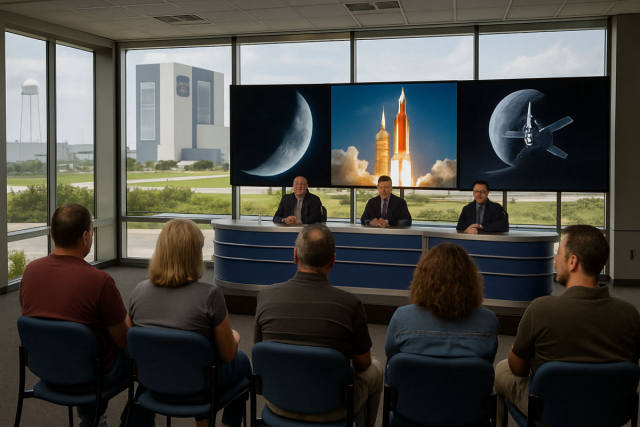
Florida skywatchers have another reason to set an early alarm: a SpaceX Falcon Heavy rocket is scheduled to lift off from Launch Pad 39A at Kennedy Space Center at 7:26 a.m. ET on Sunday, Aug. 30, 2026, carrying NASA's Nancy Grace Roman Space Telescope toward its place among the great cosmic observatories.
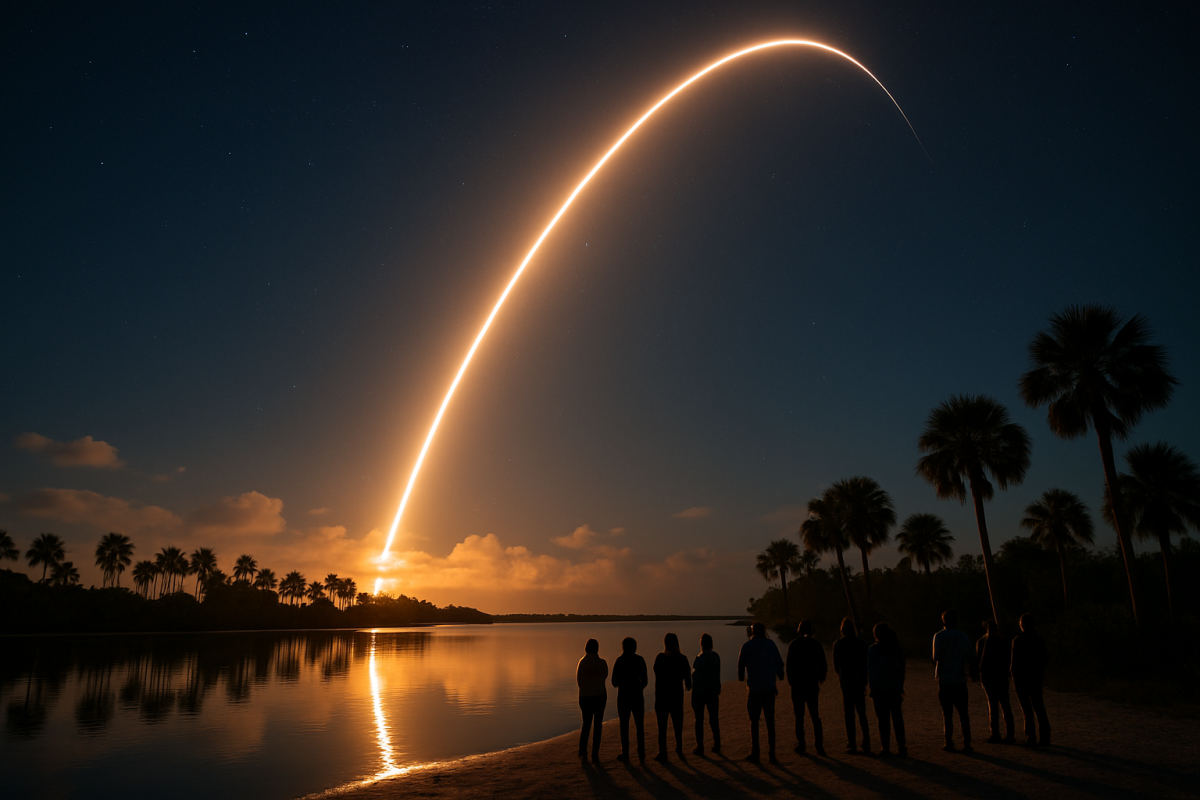
The Falcon Heavy is no ordinary rocket. Capable of generating more than 5 million pounds of thrust at liftoff, it's significantly more powerful than the Falcon 9 that Floridians routinely spot streaking across the night sky — which means visibility across the state could be exceptional, weather and cloud cover permitting. The Roman Space Telescope itself is designed with a field of view at least 100 times wider than the Hubble Space Telescope, putting it in the same league as both Hubble and the James Webb Space Telescope.
North Floridians, including folks in Tallahassee and Leon County, have tracked launches before. A Falcon 9 that lifted off at 5:21 a.m. on July 9, 2026, produced the dramatic "space jellyfish effect" — a glowing, bubble-like shape formed when sunlight catches a rocket's exhaust plume — visible as far away as Tallahassee, St. Augustine, and Naples. The effect tends to appear during sunrise or sunset launches, and Sunday morning's early liftoff puts this one squarely in that window.
If you'd rather watch from closer to the action, the Space Coast itself offers the best views, with solid sightlines also reported from the Treasure Coast and Volusia County. A northeast-trajectory launch can be spotted as far north as Jacksonville Beach, roughly 160 miles from the pad. Viewers who can't make the trip can stream live coverage starting two hours before liftoff at floridatoday.com/space, or catch NASA+ content through its website, YouTube, mobile app, or Prime Video's free Live TV section — no Prime subscription required.
This story is based on reporting by Jennifer Sangalang, Eric Lagatta, Brooke Edwards, Rick Neale, and Lianna Norman for the USA TODAY Network – Florida.