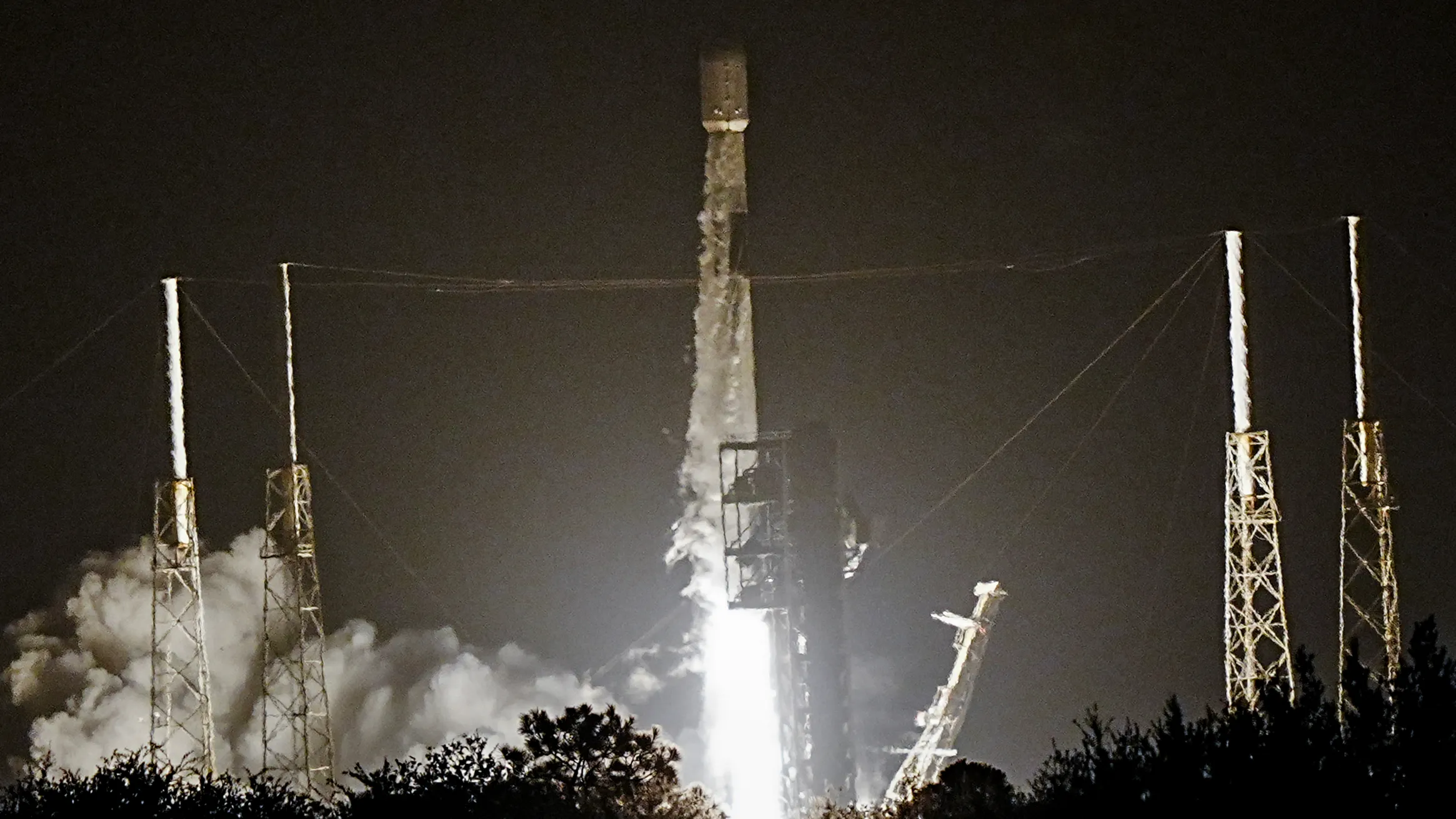
Early risers on Florida's Space Coast have a reason to set their alarms: SpaceX is targeting 5:33 a.m. on August 25 to launch a Falcon 9 rocket from Launch Complex 40 at Cape Canaveral Space Force Station, and conditions are just right for a stunning atmospheric light show known as a "space jellyfish."
The effect happens when a rocket launches in darkness but climbs high enough to catch sunlight while its exhaust plume is still visible from the ground. According to the Space Jellyfish Predictor tool maintained by photographer and NASA communications official John Kraus, this Falcon 9 — flying a northeasterly trajectory — is expected to enter sunlight roughly five and a half minutes after liftoff, making the jellyfish display a genuine possibility for those watching near the Cape.
Weather looks cooperative. The Space Force's 45th Weather Squadron put the odds of favorable launch conditions at 90%, with only distant threats from cumulus and anvil clouds. The rocket will carry 29 Starlink broadband satellites into low-Earth orbit as part of SpaceX's ongoing constellation expansion.
Adding a milestone to the mission: the Falcon 9's first-stage booster is slated for its 37th flight, targeting a landing on the drone ship A Shortfall of Gravitas in the Atlantic Ocean after stage separation — a remarkable reuse record for a single booster.
This story and live launch coverage originate from Florida Today.