If you've been daydreaming about retiring to a Florida beach town with a modest portfolio and a pair of Social Security checks, most of the state's coastline is no longer within reach. Naples, Sarasota, Destin, Vero Beach, and the Florida Keys have all priced out the median retiree, according to a financial analysis from 24/7 Wall St. What's left standing, the piece argues, is essentially one workable option on the Atlantic coast: New Smyrna Beach.
The appeal starts with home prices. Single-family inventory in New Smyrna still trades in the mid-$400s rather than the mid-$700s typical of trophy Florida markets. Volusia County property taxes on a homesteaded home in that range settle near $4,800 annually, and the Atlantic side has historically absorbed less hurricane damage per decade than the Gulf coast stretching from Fort Myers north to the Panhandle.
Running the full household budget for a retired couple — covering property taxes, homeowners and flood insurance, healthcare, food, transportation, and reserves for major repairs — lands at roughly $82,000 per year in today's dollars. With combined Social Security benefits near $52,000 for a dual-earner couple claiming at full retirement age, that leaves a $30,000 annual gap to cover from savings. At a 4% withdrawal rate over a 30-year horizon, closing that gap requires approximately $750,000 in investable assets, plus a $75,000 reserve for the insurance and roof surprises that come with coastal living — putting the total portfolio target at around $825,000, on top of a paid-off home.
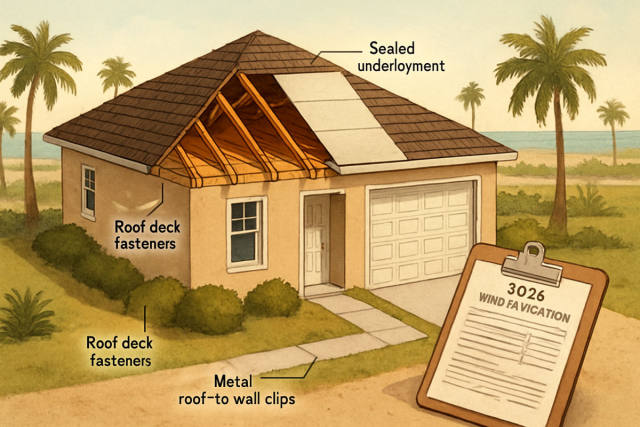
The analysis flags homeowners insurance as the single biggest threat to the model. A $7,000 annual premium compounding at 8% — the pace Florida coastal premiums have run since the 2022 reinsurance reset — reaches $15,000 in ten years and $32,000 in twenty. That trajectory quietly outpaces the 2.8% Social Security COLA protecting the rest of the budget. Retirees who make the numbers work, the piece notes, tend to buy newer or hurricane-retrofitted homes to keep premiums manageable and treat flood zone maps as a primary shopping filter from the start.
For households retiring at 60 rather than 65, the math tightens considerably: five additional years of full ACA health insurance premiums and a longer withdrawal horizon push the required portfolio closer to $1.3 million. Elsewhere on the Florida coast, the same household would need roughly $1.5 million — and the insurance curve still catches up eventually. This analysis was originally published by 24/7 Wall St.