Most people who make the drive to Lake Apopka Wildlife Drive say the same thing afterward: they had no idea something this wild existed so close to Orlando's theme park corridor. About 15 miles northwest of downtown, this 11-mile one-way route threads through 20,000 acres of restored wetland on the lake's north shore — and it costs absolutely nothing to enter. Whether you're a serious birder, a family looking for a low-key outdoor morning, or a photographer chasing golden-hour light over the marsh, it delivers in a way few free attractions in Central Florida can match.
When You Can Go: Access Days and Hours
The Wildlife Drive is open to vehicles on Fridays, Saturdays, Sundays, and federal holidays only — the entrance gate at 2850 Lust Road opens at 7 a.m. and closes to new arrivals at 3 p.m., and all vehicles must be off the property by 5 p.m. The drive is closed to cars on weekdays because the St. Johns River Water Management District uses those days for ongoing wetland restoration work. That said, if you'd rather hike or bike the area, foot and bicycle traffic is welcome any day of the week. Federal holidays that expand the access calendar include New Year's Day, Martin Luther King Jr. Day, Presidents' Day, Memorial Day, Juneteenth, Independence Day, Labor Day, Columbus Day, Thanksgiving, and Christmas — a useful bonus if you're visiting Orlando over a holiday week. Always check the SJRWMD website before you head out, since weather events or road maintenance can trigger short-notice closures.
The Route: What to Expect on 11 Miles of Dirt Road
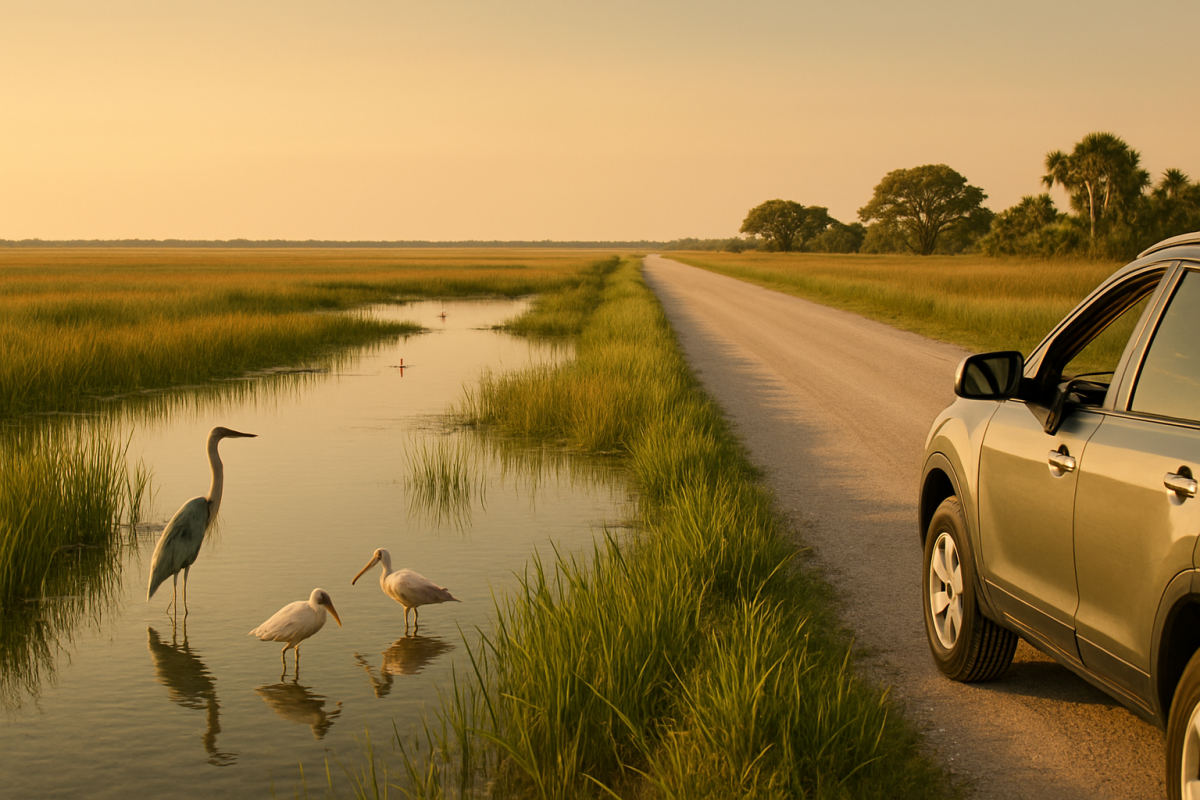
The drive begins where the pavement ends on Lust Road and exits onto Jones Avenue in Orange County — a true point-to-point route with no intermediate bail-out. Once you roll through the gate, you're committed to completing the full course, so make sure you have enough time and fuel before entering. The road is unpaved and one-way, a mix of packed and loose sand that can develop muddy soft spots after heavy rain. No four-wheel drive is required under normal conditions, but your car will come home dusty. Vehicles must be street-legal, under 25 feet in length, and no trailers are permitted. The speed limit is 10 mph throughout, and the road is narrow enough that two cars genuinely cannot pass each other in most spots — expect to inch forward behind anyone stopped to photograph a gator or a roosting heron.
Plan for one to three hours depending on how many stops you make. There are designated pull-off areas along the route where you're encouraged to get out and linger — and several portable restrooms are positioned at key stops, including near the entry gate, at the Historic Pump House, and at a stop further along the route. There is no drinking water available on the drive, so pack more than you think you'll need. A picnic area with tables offers a nice midpoint break. Volunteers are often stationed at the entrance and happy to walk first-timers through the route.
One of the most scenic decision points comes near the Historic Pump House, a 1940s-era structure originally used to drain these wetlands for farming. Here the road forks: bearing left takes you along the shoreline of Lake Apopka itself for sweeping open-water views, while going right keeps you deeper in the marsh. Birders generally favor the lower wetland route for sheer species variety, while the lakefront fork offers dramatic scenery that photographers love. The two paths reconnect further along, so dedicated visitors sometimes loop the drive twice to cover both.
An official audio tour, hosted on the SJRWMD website, adds context to numbered stops along the drive. The segments cover the lake's history — including how it became Florida's most polluted large lake after decades of agricultural runoff — and the ongoing restoration that has transformed it into a wildlife haven. Pull up the tour on your phone before you arrive and follow the roadside signs.
Wildlife: What You're Likely to See
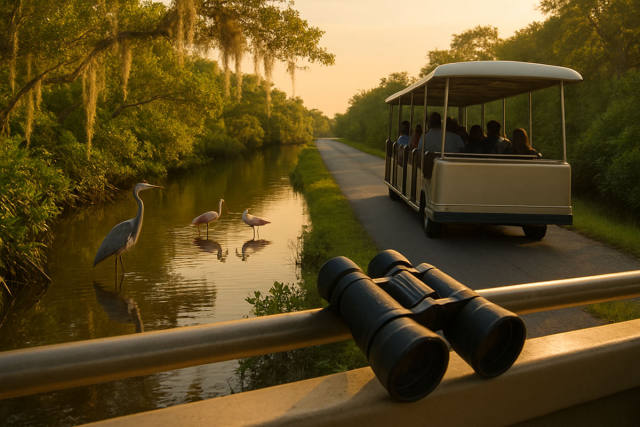
The north shore of Lake Apopka ranks among the top three birding destinations in Florida, sitting alongside Everglades National Park and Merritt Island National Wildlife Refuge in the estimation of serious birders. More than 360 bird species have been recorded on the property. Year-round residents include Great Blue Herons, Great Egrets, Snowy Egrets, Tricolored Herons, Little Blue Herons, White Ibis, Glossy Ibis, Anhingas, Ospreys, Red-shouldered Hawks, and Red-winged Blackbirds. Roseate Spoonbills, Sandhill Cranes, Limpkins, Purple Gallinules, Common Gallinules, and Wood Storks also make regular appearances. Specialty species that draw birders from across the country include the Snail Kite, Fulvous Whistling-Duck, and Mottled Duck. In winter, the species list expands dramatically with migratory waterfowl, Northern Harriers, Merlins, Peregrine Falcons, American Kestrels, and various warblers and sparrows moving through.
Beyond birds, alligators are essentially guaranteed — it's not unusual to count dozens in a single outing, and you may well find one ambling across the road in front of you. Turtles bask on every sunny bank, and patient observers may spot river otters, raccoons, snakes, and the occasionally spotted bobcat. Dogs are allowed on the drive but must be leashed at all times, and given the abundance of large gators at close range, it's wise to keep small pets and children close whenever you step out of the vehicle.
Best Time to Visit
Winter — roughly November through March — is peak season. Migratory birds swell the species count, temperatures are genuinely comfortable, and the mosquito pressure is far lower than in summer. Arriving right at the 7 a.m. opening gets you the best light for photography, the most active birds, and the thinnest crowds. Summer visits are perfectly worthwhile for resident species, but come prepared for heat, humidity, and insects; a good insect repellent is worth packing year-round. Weekend mornings, especially on holidays, can draw enough traffic that the narrow road backs up — if a slow-moving queue isn't your style, a Friday morning is often quieter. Note that the drive can close without much advance warning due to weather or road work, as happened during heavy rains in fall 2025. Check the SJRWMD website or the lakeapopkawildlife.us fan site for current conditions before making the trip.
Practical Details at a Glance
- Address (entrance): 2850 Lust Rd, Apopka, FL 32703
- Open days: Friday, Saturday, Sunday, and federal holidays
- Gate hours: Entry 7 a.m.–3 p.m.; all vehicles out by 5 p.m.
- Admission: Free
- Vehicle rules: Street-legal, under 25 feet, no trailers; 10 mph limit
- Amenities: Portable restrooms at select stops; picnic area; no drinking water
- Dogs: Allowed on leash
- Hiking/biking: Open 7 days a week to non-motorized visitors
One last tip: Pack a pair of binoculars even if you're not a dedicated birder — at 10 mph, you'll have plenty of time to use them, and the difference between "that's a big white bird" and "that's a Roseate Spoonbill" is entirely worth it.