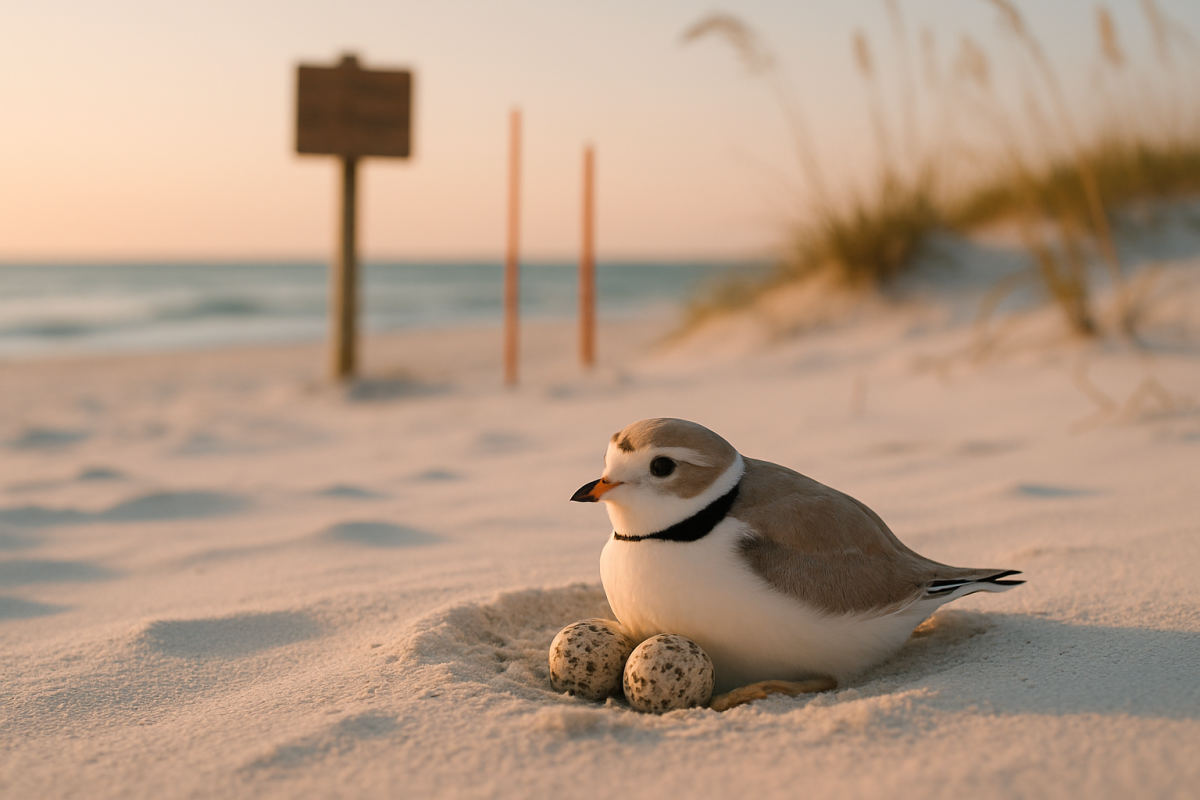
There's a bird on Florida's Gulf Coast beaches so perfectly the color of dry sand that you can walk within a few feet of its nest and never know it. The snowy plover — a sparrow-sized shorebird with a pale gray-brown back, white belly, and a distinctive broken dark collar — has been nesting on the same narrow strip of Gulf Coast shoreline for millennia. The challenge today is that the beach it needs is the same beach we all want in summer, and the conflict has pushed this species onto Florida's threatened list.
Where They Nest — and Why That Stretch of Gulf Matters
Florida holds the bulk of the Gulf of Mexico's snowy plover breeding population, and the birds are particular about where they'll set up. The breeding population divides into two distinct clusters: one in the northwest Panhandle from Franklin County westward, and a separate group running from Pasco County down through Collier County in Southwest Florida. You won't find them on the Atlantic side or in the Florida Keys — it's this narrow Gulf Coast fringe or nothing.
Within those ranges, some sites consistently draw the densest concentrations. In the Panhandle, T.H. Stone Memorial St. Joseph Peninsula State Park is among the most productive snowy plover nesting areas in northern Florida, with uninterrupted miles of dune-backed beach that remain largely free of development. Dog Island and Cape San Blas are other Panhandle strongholds. In the Tampa Bay area, Caladesi Island State Park — accessible only by ferry from Honeymoon Island — provides critical nesting habitat for snowy plovers alongside least terns, black skimmers, and Wilson's plovers. Further south, the Big Marco Pass Critical Wildlife Area near Marco Island is one of the more important nesting beaches on the Southwest Florida Gulf coast.
Nesting site selection follows a consistent pattern. The birds favor open sandy patches just in front of the first dune line, sometimes on tiny wind-sculpted dunelets. As the season progresses, pairs tend to shift to spots with a little sparse vegetation nearby for slight cover. What they never do is build anything resembling a traditional nest: a snowy plover nest is nothing more than a shallow scrape in the sand, sometimes ringed with a few bits of shell or pebble, with three eggs laid directly in the depression. Those eggs are speckled to match the surrounding sand almost exactly.
The Nesting Season Calendar
Nesting activity runs from February through August, though the earliest eggs tend to appear in early March at Panhandle sites, which historically claim the first confirmed nests in the state each season. Peak courtship, egg-laying, and chick-rearing activity falls in the spring and early summer months, coinciding almost perfectly with the season when beach traffic is heaviest. Chicks can leave the scrape within hours of hatching but still need parental care for roughly four to five weeks until they fledge. Interestingly, the female will sometimes hand off brooding duties to the male mid-season and start a second nest with a different partner — a strategy that stretches the breeding window and maximizes productivity in a good year. The birds themselves are year-round residents of Florida's Gulf Coast, so even outside nesting season you can encounter them foraging quietly along the waterline in fall and winter.
The FWC Protection System: Symbolic Fencing Explained
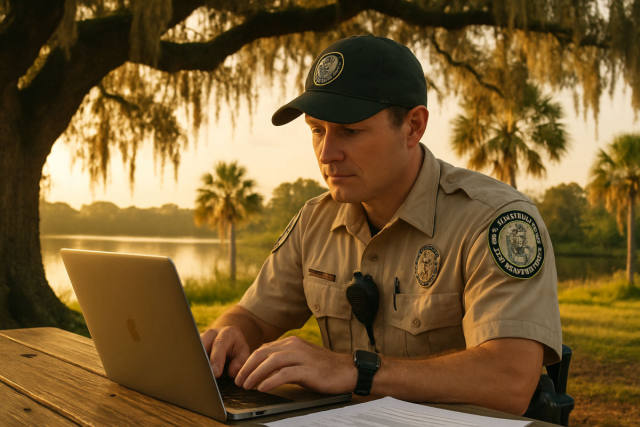
The Florida Fish and Wildlife Conservation Commission lists the snowy plover as a State-Threatened Species, and the birds also receive federal protection under the U.S. Migratory Bird Treaty Act. In practical terms, that means confirmed nest sites are protected using what the FWC calls symbolic fencing — a system of temporary posts and rope or ribbon cordoning off a buffer zone around known nests. The word "symbolic" is important: this isn't a solid barrier that physically stops entry, but a clearly marked boundary that signals to beachgoers that a protected nesting area lies within. Documented nests are monitored throughout the breeding season to track productivity. The Florida Shorebird Alliance, a statewide conservation partnership, coordinates much of the on-the-ground posting, monitoring, and volunteer stewardship at these sites.
In Lee County, sites including Fort Myers Beach and the Little Estero Critical Wildlife Area are formally posted each spring in coordination with FWC officers. Audubon Florida volunteers are frequently present at active sites as well, serving as a friendly, informed presence to explain the situation to beachgoers who may not understand why a stretch of otherwise open beach has been roped off.
Disturbance is the central threat the fencing addresses. When a parent bird is flushed from its nest — by a person, a dog, a kite overhead that mimics a hawk, or even a passing vehicle on beaches where driving is permitted — the exposed eggs or tiny chicks can overheat in Florida's summer sun in a matter of minutes. Predators like crows, raccoons, and gulls also move in quickly the moment a parent is forced to abandon the nest, even briefly. A dog doesn't need to chase a plover to cause harm; the mere sight of one approaching can trigger a full nest abandonment.
Viewing Rules: How to Watch Without Causing Harm
The most important rule is straightforward: treat any roped-off or posted section of beach as a hard boundary, regardless of whether you can see eggs or a bird inside it. Walking through a posted zone — even by accident — can crush a nest that was invisible from outside. Beyond the fenced areas, watch for behavioral cues. If an adult snowy plover begins limping dramatically, dragging a wing, or fluttering away from you along the sand as though injured, it is performing a distraction display to lure you away from a nest or chick nearby. The correct response is to back away quietly in the direction you came from, not to follow the bird. The display will stop once the bird judges you're far enough away.
- Keep dogs leashed and away from posted areas. Even a calm, well-trained dog can cause a nesting pair to abandon eggs.
- Leave food and trash behind properly. Food scraps on the beach attract raccoons, crows, and other opportunistic predators that prey on plover nests and chicks.
- Skip the kite near nesting areas. A hovering kite silhouette mimics a raptor and can trigger unnecessary nest abandonment.
- Observe from the wet sand. The foraging birds typically work the tideline; watching from the wet, packed sand keeps you well away from the drier nesting zones above.
- Use optics, not proximity. A good pair of compact birding binoculars will give you a far better look at the birds' plumage and behavior than any close approach ever could.
Best Times to Spot Snowy Plovers Year-Round
Snowy plovers are Florida Gulf Coast residents — they don't migrate — so there is no bad season to look for them, but the experience changes by time of year. Late February through May offers the richest behavioral theater: courtship chases, nest-scraping displays, incubating adults sitting patiently on the open sand, and — if you're patient and lucky — newly hatched chicks no bigger than a golf ball following a parent along the tideline. Arrive at the beach early in the morning before the crowds arrive and the heat builds; the birds are most active during cooler parts of the day. In fall and winter, nesting is over and the formal fencing comes down, but the plovers themselves remain, foraging along the waterline in small loose groups. Their distinctive run-stop-strike feeding pattern — sprinting a short distance, freezing, then darting at prey — is the fastest way to pick them out from the other pale shorebirds working the same stretch of beach. Low tide is always the best window for foraging activity, when the exposed wet sand puts the most invertebrates within reach.
Practical tip: Before any Panhandle or Southwest Florida beach trip during nesting season, check the FWC's beach-nesting birds page (myfwc.com) for any current closures or posted site updates at your destination — nesting locations and protected areas can shift from year to year as the birds select new scrapes. A quick check before you go keeps your visit stress-free for both you and the birds.