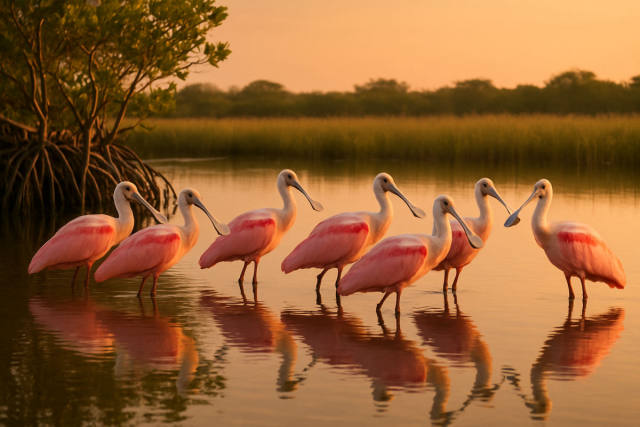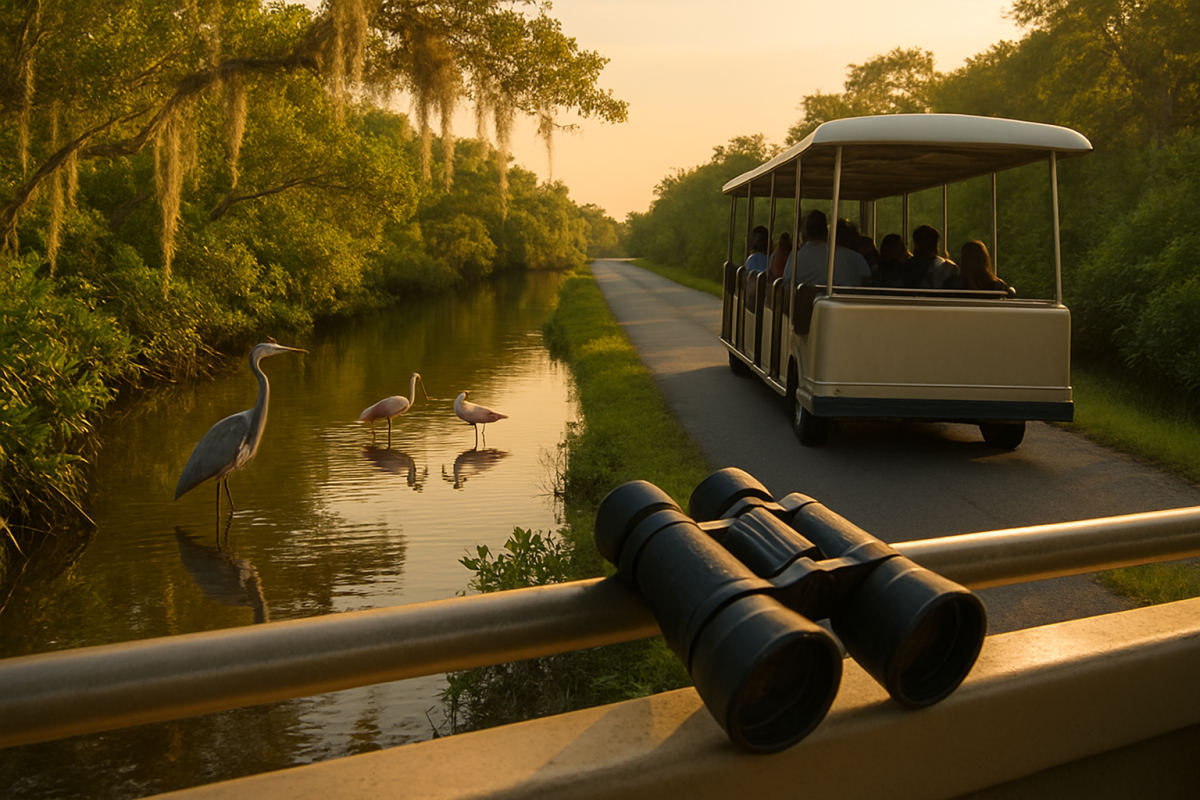
Pull up to the entrance of J.N. "Ding" Darling National Wildlife Refuge on Sanibel Island on any morning except Friday, and you're already somewhere special. The refuge sits at the heart of the largest undeveloped mangrove ecosystem in the United States, and it's world-famous for its migratory bird populations. Most visitors drive or bike the four-mile Wildlife Drive on their own — but the narrated tram tour run by Tarpon Bay Explorers, the refuge's official concessionaire, is genuinely worth considering before you default to going it alone.
What the Tram Tour Actually Is
The open-air tram rolls along the full length of the four-mile, one-way Wildlife Drive, making stops at key observation points along the way. The whole experience runs about 90 minutes. On board, an experienced naturalist guides you through the mangrove wetlands and subtropical hammock habitat, helping you spot wildlife that most visitors simply walk or drive past without noticing. Expect to scan for roseate spoonbills, herons, egrets, ibis, and American alligators, while also hearing about the refuge's ecology, the history of the Calusa people who once inhabited these islands, and the conservation story behind the refuge itself. Because your hands are free — no steering wheel, no phone for navigation — you can actually raise your binoculars or get your camera ready at a moment's notice. A good pair of compact binoculars makes a real difference out here.
Cost and How to Book
Tram tour pricing has historically been in the range of $18 per adult and $10 per child, though Tarpon Bay Explorers updates rates periodically — always confirm current pricing on their website or by calling (239) 472-8900 before your trip. Reservations are strongly recommended: tours tend to sell out quickly, especially on weekends and during peak season from roughly November through April. You can book online through the Tarpon Bay Explorers website or call ahead. Tram pickup takes place at 900 Tarpon Bay Road, which is the Tarpon Bay Explorers location near the Visitor and Education Center. Check the current tour calendar on their site for exact departure times, as the schedule varies by season.
The Friday Closure — Don't Get Caught Off Guard
This is the single most important scheduling detail to know: Wildlife Drive — along with the Visitor and Education Center, the Nature Store, and the Indigo Trail — is closed every single Friday, all year long, regardless of holidays or other calendar factors. This closure has been in place for well over two decades, intentionally timed to coincide with the lightest visitation day of the week so the wildlife can have a genuine break from human traffic. Plan your visit for any day Saturday through Thursday. All visitors, whether in a car or on the tram, must exit refuge lands no later than 30 minutes after legal sunset.
Tram Tour vs. Driving Yourself
Both options have real merit, and choosing between them mostly comes down to pace and depth. Here's a quick breakdown:
- The tram tour: A naturalist spots and identifies wildlife you'd likely miss on your own, narrates the ecology and history, and handles all the logistics. You're free to observe and photograph without distraction. The refuge itself notes that the tram reduces automobile traffic on the Drive, which benefits the animals directly by cutting down on exhaust and engine noise. The tradeoff is that you're on a group schedule and can't linger indefinitely at a single spot.
- Self-driving or biking: The DIY option costs just $10 per vehicle or $1 per pedestrian or cyclist (children 15 and under enter free). You move at your own pace, can pull over on the right side of the road wherever you like, stop at the Observation Tower, and explore the trails branching off the Drive. Volunteer Rovers are often stationed along the route to help point out wildlife and answer questions. During summer months (June through September), your entrance fee is valid for three consecutive days — a nice perk if you want to return. If you go this route, pick up the free bird checklist at the Visitor Center before you head in.
Many Sanibel regulars do both on separate visits: tram first to learn what's where and when, self-drive later to linger at favorite spots.
When to Go for the Best Wildlife Viewing
Timing your visit around the tide matters more than almost any other variable. Birding is always best at low tide, when receding water creates exposed sandbars and mudflats where large wading birds gather to feed — roseate spoonbills, egrets, and pelicans all become dramatically easier to spot. Early morning and late afternoon are also prime windows, since wildlife activity peaks at those hours and the light is far better for photography. For sheer species variety, the winter months of January and February tend to deliver the most birds, followed by the spring and fall migration windows. Summer visitors will still see resident species — herons, osprey, pelicans, spoonbills, cormorants — but the diversity thins out compared to cooler months. Check tide charts at the Visitor Center or online before you go, and if possible, time your tram departure to coincide with a low-tide window.
A Few Practical Notes Before You Go
The refuge is on subtropical Sanibel Island, which means sun and bugs are both real factors. Bring water, sunscreen, a hat, and insect repellent — especially in summer and shoulder months when no-see-ums can be relentless. A lightweight sun-protective neck gaiter is worth tossing in your bag. Dogs are welcome on the Wildlife Drive and Indigo Trail as long as they're on a leash no longer than six feet. The free Visitor and Education Center (open 9 a.m. to 4 p.m., closed Fridays and federal holidays) is a genuinely worthwhile stop before you head out — interactive exhibits, bird checklists, and knowledgeable staff who can brief you on what's been spotted that week. And remember: the tram tour schedule and pricing do change seasonally, so confirm the specifics at tarponbayexplorers.com or by phone before finalizing your plans.