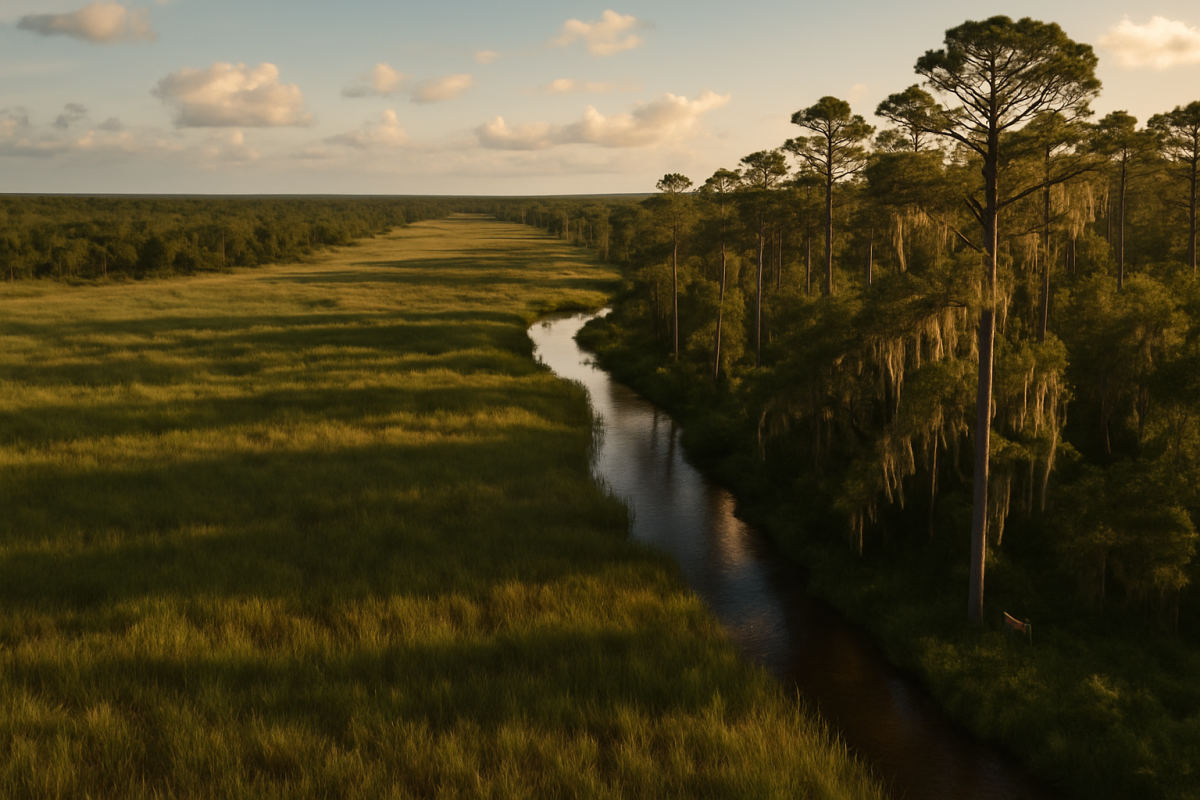
What if Florida ranchers, forest owners, and wetland stewards could earn money for the clean water, flood protection, and wildlife habitat their lands already provide? That's the central question behind a free virtual webinar set for Wednesday, September 2, from noon to 2:00 p.m. EDT, hosted by a coalition of Florida conservation organizations.
The session — titled Payment for Ecosystem Services: A Conservation Tool for Florida's Future — is the first in a three-part series called Planning to Protect the Florida Wildlife Corridor 3.0. Four speakers will examine how Payment for Ecosystem Services (PES) programs can channel new dollars to working lands. Dr. Laila Racevskis of The Balmoral Group will offer an overview of PES programs active in Florida, while fourth-generation rancher Parker Hall of Hall's Tiger Bay Ranch will speak from a landowner's point of view. Chad Ellis of the Texas Agricultural Land Trust will highlight national grassland carbon sequestration efforts and preview upcoming work at Archbold's Buck Island Ranch, and Dr. Thomas Eason of the Property and Environmental Research Center will share lessons from market-based conservation initiatives around the country.
Topics on the agenda range from water quality credits and flood mitigation to the Florida panther PES initiative, with an eye toward building partnerships between private landowners, government agencies, and the private sector. The webinar is free to attend, though registration is required at the Zoom link provided by the organizers. Continuing education credits are available to live attendees through several professional bodies, including two AICP CM credits for planners, 2.5 general CLE hours for Florida Bar members, and credits for certified floodplain managers and landscape architects, among others.
The series is a collaborative effort among the University of Florida Center for Landscape Conservation Planning, the Florida Wildlife Corridor Foundation, the Live Wildly Foundation, the Florida Conservation Group, Solutions from the Land, Florida Smart Agriculture, and 1000 Friends of Florida.
This story was reported by Lake Okeechobee News.