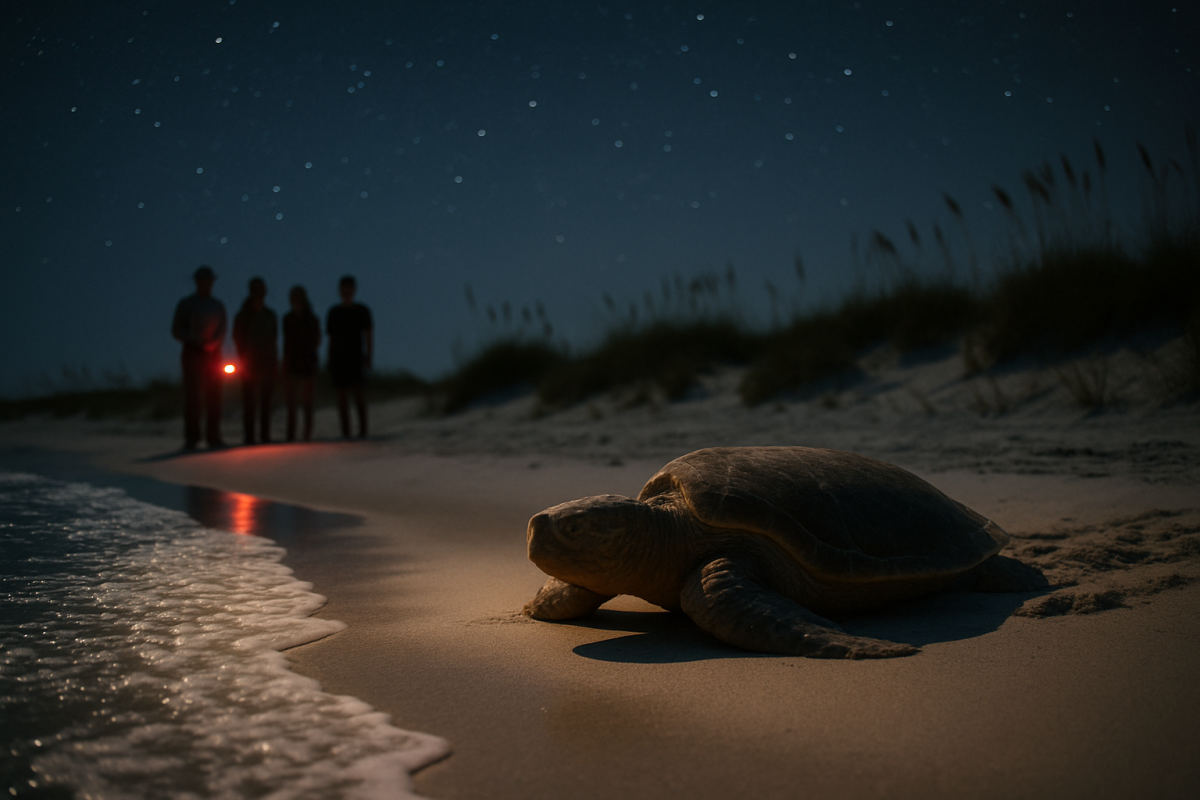
Few wildlife encounters in Florida match the quiet drama of watching a 300-pound loggerhead sea turtle haul herself up the beach, dig a nest, and lay her eggs under a moonlit sky. But here's the thing: you can't simply wander down to the water's edge on your own and hope for the best. Approaching or disturbing a nesting sea turtle is a federal and state offense. A permitted guided walk is the only legal way to experience this up close — and fortunately, a handful of excellent organizations run them every summer.
Why the Season Is So Special Right Now
Florida is, quite simply, the most important sea turtle nesting destination in the United States. Nearly 90% of all sea turtle nesting in the country takes place on Florida's beaches between March and October each year. The 2026 season has been particularly remarkable: as of the end of June, loggerheads were on track for a record year with nearly 95,000 nests documented statewide — the highest number recorded by that point in the past five years. The peak window for guided walks — and the best odds of a sighting — runs through June and July, when the major walk programs are in full swing.
Who Runs the Walks (and Where)
All legitimate turtle walks operate under a special Florida Marine Turtle Permit, which tightly controls group sizes, timing, and conduct on the beach. The organizations below are among the most established, spread across Florida's Atlantic coast:
- Loggerhead Marinelife Center (Juno Beach) — One of Florida's most visited nonprofit marine science facilities, situated on one of the world's most densely nested loggerhead beaches. Guided walks run Tuesday through Saturday, 9 p.m. to midnight in June and July, at $40 per person. Participants must be 10 or older. A single-family option (up to five guests, the full evening on the beach with an expert guide) is also available on select Monday and Wednesday nights — contact the center directly to arrange it. Check current ticket availability at the LMC website.
- Sea Turtle Preservation Society (Melbourne Beach & Satellite Beach) — Positioned near the Archie Carr National Wildlife Refuge, the second-largest loggerhead nesting area in the world. Walks run Monday, Tuesday, Thursday, and Friday nights between June 1 and July 27, with tickets at $20 per person. Registration opened May 1, 2026.
- Sea Turtle Conservancy (Brevard County) — Also based within the Archie Carr Refuge, which hosts more loggerhead nests than any other place in the Western Hemisphere, and more endangered green turtle nests than anywhere in North America. Walks take place Saturday, Sunday, and Wednesday evenings in June and July, with tickets at $20. Registration opened May 1.
- Merritt Island Wildlife Association / U.S. Fish & Wildlife Service (Canaveral National Seashore) — Walks are offered Wednesday and Thursday evenings throughout June and July, beginning at 8 p.m. Tickets are $25 for adults and $10 for ages 8–15; the minimum age is 8. Group size is capped at 30 by permit. Following an education session, participants caravan in their own vehicles to Playalinda Beach, where scouts search for nesting turtles.
- Gumbo Limbo Nature Center (Boca Raton) — A city-run program that begins with an indoor classroom presentation, followed by a caravan to a nearby beach. Walks are Tuesday through Thursday evenings; the cost is $15 for Boca Raton residents and $20 for non-residents. Children must be 8 or older and accompanied by a registered adult; walk-ins are not permitted.
- Florida Oceanographic Society (Stuart) — Walks start at 9 p.m. (arrive by 8:45 — the gate locks promptly). Ages 10 and up only; participants under 18 need an adult guardian. Participants must be able to walk up to a mile on soft or wet sand.
- Hobe Sound Nature Center (Hobe Sound) — Walks are Thursday and Friday evenings in June and July (excluding July 2 and 3), beginning at 8 p.m. with a presentation at the nature center, then moving to Hobe Sound Public Beach. A walk is suspended by midnight if no turtle has been spotted. Hobe Sound National Wildlife Refuge's 3.5-mile nesting beach hosts loggerheads, leatherbacks, and green sea turtles.
- Coastal Connections Inc. (Indian River County) — Walks on Monday, Wednesday, and Saturday nights at Ocean Breeze Inn, and Friday nights at Grand Harbor Beach Club. Technically free thanks to donor support, though a refundable $20-per-person reservation deposit is required; the deposit is returned when you check in or becomes a donation if you don't show.
Always verify current schedules, prices, and availability directly with each organization before booking — details shift from season to season.
How to Book (and Why You Need to Move Fast)
Spots sell out quickly — sometimes within hours of registration opening. For most programs, reservations open on May 1, either online or by phone depending on the organization. A few state park programs require phone reservations only and don't accept online bookings. Whatever you do, have a backup date in mind: permits limit most groups to between 20 and 30 people per night, and popular nights disappear fast.
What the Evening Actually Looks Like
The format is similar across programs. You gather indoors — usually in a classroom or visitor center — for a 20-to-30-minute presentation covering sea turtle biology, the nesting cycle, and beach behavior rules. While you're inside, trained scouts are already out on the beach searching for a female that has come ashore. If one is located, the group is quietly led out to observe from a respectful distance. You'll typically watch her dig her body pit and egg chamber, lay her clutch of roughly 100 eggs, cover the nest, and make her slow journey back to the sea. The whole nesting process can take well over an hour once she settles in. Programs generally run until midnight or until a turtle is found, whichever comes first — so bring patience alongside your bug spray.
A sighting is never guaranteed. Organizers are candid about this: sea turtles are wild animals on their own schedule. That said, odds are generally solid at sites along the Archie Carr Refuge corridor, where nest density is among the highest anywhere on the planet. In recent seasons, roughly half of all walks in some programs resulted in a confirmed sighting.
The Non-Negotiable Rules
These aren't just suggestions — they're conditions of the state permit. Breaking them can end the walk for everyone:
- No lights of any kind on the beach. That means flashlights, phone screens, red lights, and camera flashes are all strictly off-limits. Even a brief flash can cause a turtle to abandon her nesting attempt and return to the sea.
- No photography. Most programs prohibit cameras entirely while on the beach, including phone cameras with lit LCD screens.
- Respect distance limits. Guides will tell you exactly where to stand. Do not approach the turtle, touch her, or step closer without instruction.
- Stay quiet. Voices carry on a still beach at night.
- Minimum age requirements apply. Most programs require participants to be at least 8 years old; several set the cutoff at 10. Check before booking if you're bringing kids.
- Be ready to walk. Depending on where a turtle is spotted, you may cover a mile or more on soft sand in the dark. Closed-toe shoes are strongly recommended — flip-flops are a bad idea. Wear dark-colored, breathable clothing and long sleeves if you're mosquito-sensitive.
What to Pack
Keep it simple: a good insect repellent, a water bottle, closed-toe shoes that can get sandy or wet, dark clothing (long sleeves and pants offer excellent bug protection), and a light rain layer — programs run rain or shine, with lightning being the only weather condition that typically halts a beach visit. Leave your phone in your pocket once you're on the beach, and resist the urge to pull it out for a photo. The memory you take home will be real and lasting enough.
A practical tip: If you miss out on walk tickets this season, many of the same organizations offer daytime hatchling release programs in August and September — a different but equally moving experience, and often a little easier to book.