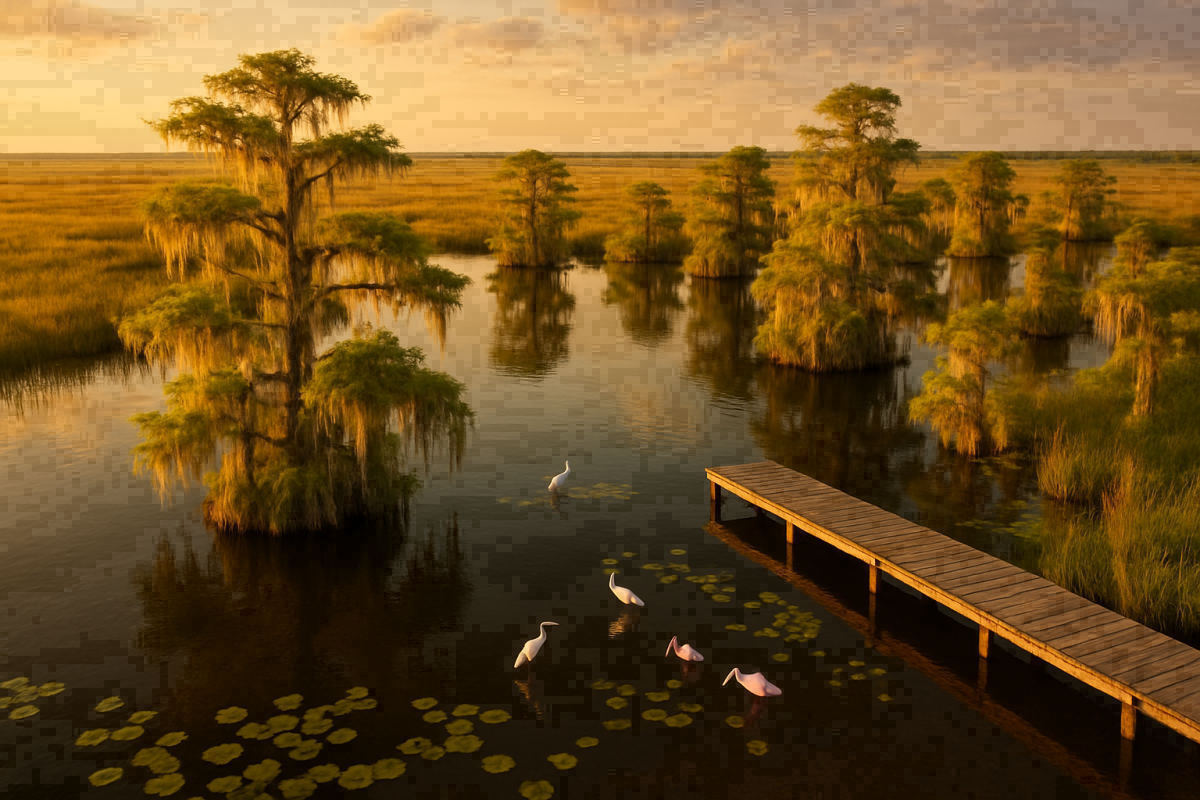
When a 45-acre cypress swamp adjoining their Tallahassee home looked at risk of being cleared, Jim Stevenson and Tara Tanaka did something most neighbors wouldn't: they bought it. The couple purchased the wetland in 2007 specifically to keep it out of development's reach, and what followed was more than 15 years of hands-on habitat stewardship that turned their private land into a thriving wildlife refuge.
The results have been striking. By 2022, the US Fish and Wildlife Service reported 275 nesting wood storks on the property — a species that depends heavily on healthy wetland conditions. The rookery also hosts great blue herons, great egrets, little blue herons, anhingas, wood ducks, black-bellied whistling ducks, roseate spoonbills, alligators, otters, beavers, bobcats, and foxes, making the 45 acres one of the more biodiverse patches of land near any Florida city.
The sanctuary didn't tend itself. Stevenson, a retired state park biologist, regularly paddled into the swamp to pull invasive Chinese tallow trees out of the water by hand, since thick vegetation disrupts the open-water feeding conditions wood storks require. He also uses prescribed fire to manage surrounding land and even built a small island for alligators to bask on — a move that indirectly protects nesting birds, because alligators help deter raccoons and other nest predators. Tanaka, an award-winning wildlife photographer, transformed her home office into a de facto observatory, using high-magnification equipment to document the animals without disturbing them.
To ensure the land stays protected after their lifetimes, the couple worked with the Apalachee Land Conservancy in 2016 to place a permanent conservation easement on the property, legally preventing future development while keeping it in private hands. Before the pandemic, Stevenson and Tanaka also held quarterly workshops for other private landowners — drawing 45 to 50 attendees per session — sharing what they'd learned about prescribed fire, native plantings, and habitat management. The wood stork's broader recovery has been equally encouraging: once listed as endangered in 1984, the species was officially removed from the federal threatened and endangered list in February 2026, with an estimated 10,000 to 14,000 nesting pairs now spread across roughly 100 colony sites nationwide. This story was reported by the Times of India.