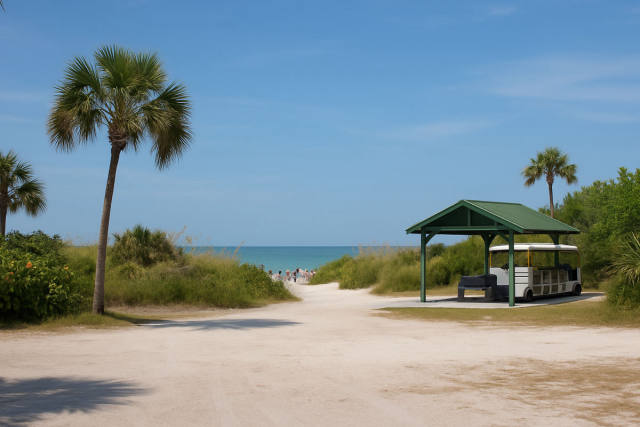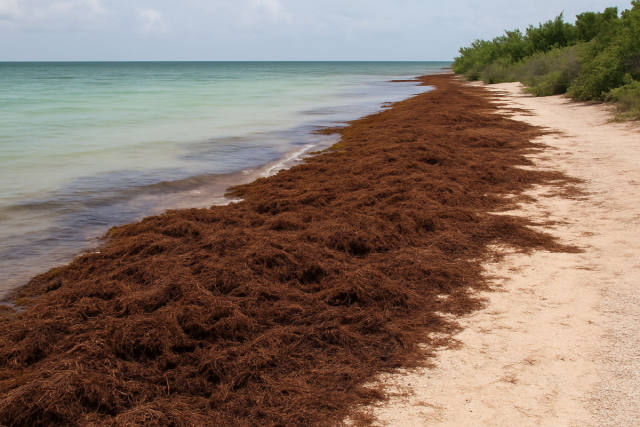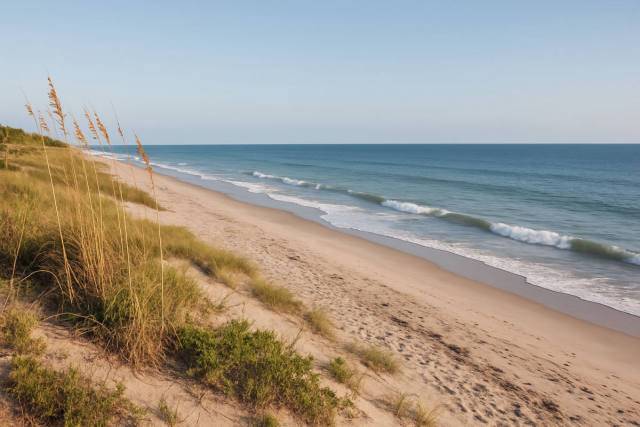
Spend any time researching Florida beach trips in 2026 and you'll likely come across the words "beach renourishment." From the Gulf Coast to the Atlantic shore, crews are actively pumping millions of cubic yards of sand back onto eroded shorelines — and while that's genuinely great news for Florida's coastline long-term, it does mean that some beach sections are temporarily off-limits when you arrive. Here's what to expect, how disruptive it actually is, and exactly how to check before you go.
What Is Beach Renourishment, and Why Is It Happening Now?
Renourishment is the process of dredging compatible sand from offshore and pumping it through a pipeline directly onto an eroded beach. The rebuilt shoreline offers wider recreational space and acts as a natural buffer against storm surge — which is why it gets top priority after hurricane seasons. A run of destructive storms in recent years, including Hurricanes Helene and Milton in 2024, triggered emergency federal funding for projects up and down the Florida coast. The U.S. Army Corps of Engineers (USACE) leads most of these efforts in partnership with state and local governments, and 2026 has seen an unusually high number of simultaneous active projects statewide.
Which Florida Beaches Have Active or Recent Projects in 2026?
The list is long and geographically spread out. On the Gulf side, Venice Beach has been undergoing a federally funded renourishment spanning from Humphris Park South Jetty all the way to South Brohard Park, with an expected completion in September 2026. Southwest Florida has seen major restoration activity across Lee and Collier counties, including dredging work at Wiggins and Doctor's Pass. On the Atlantic coast, Hutchinson Island (St. Lucie County) saw a nearly $15 million project get underway in early 2026, with roughly 400,000 cubic yards of sand placed along 3.3 miles of shoreline. Palm Beach completed its Mid-Town renourishment in May 2026 after placing close to 600,000 cubic yards of sand. Brevard County's shore protection project was active from late 2025 through spring 2026. This is not an exhaustive list — check your specific destination before you travel, as projects are added and completed on a rolling basis.
How Much of the Beach Actually Closes — and for How Long?
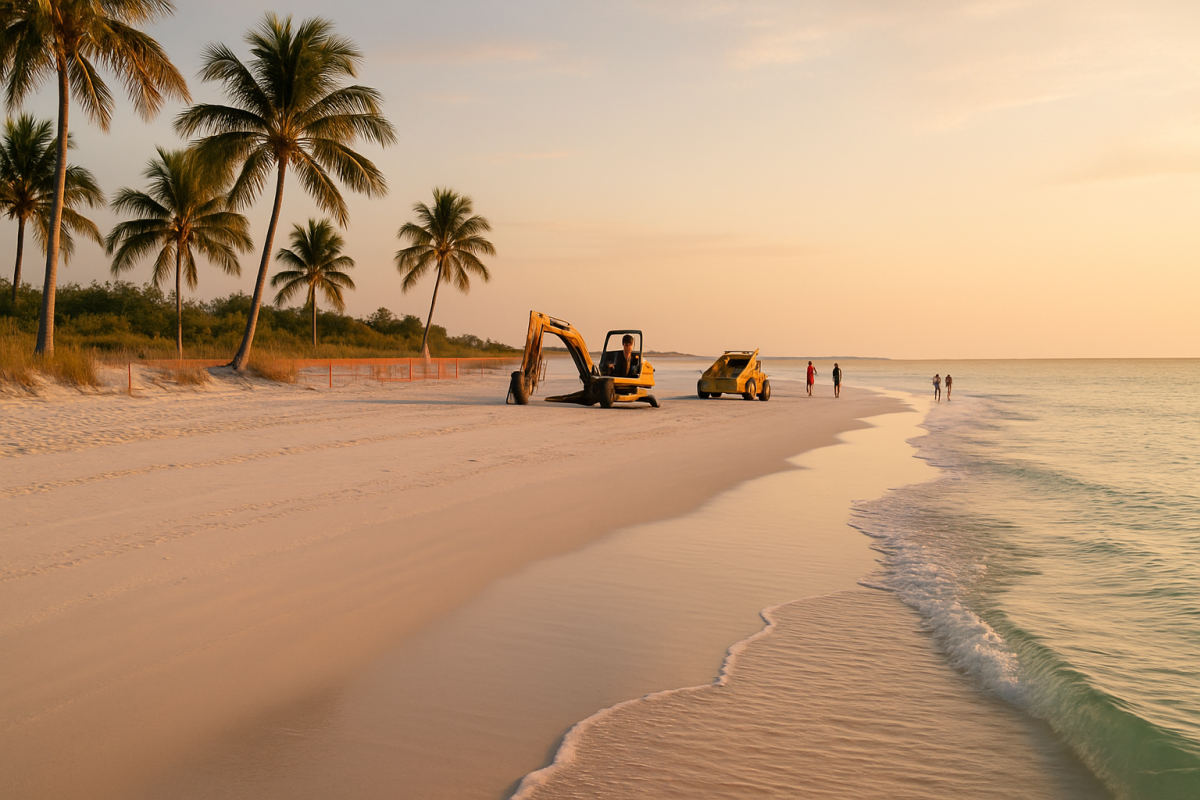
This is where most visitors are pleasantly surprised. Renourishment projects do not shut down an entire beach for months at a time. Instead, crews work in rolling sections, closing a manageable stretch of shoreline while they place sand, then moving on. At the Venice Beach project, for example, the active construction zone advances in successive 1,000- to 1,500-foot sections, with each section temporarily closed for about five to seven days at a time while new sand is placed. Beaches outside the active construction zone remain open to the public throughout. Where pipelines run along the sand, contractors are required to build sand ramps over the pipe at beach access points and at regular intervals, so you can still reach the water. Some access-point parking lots may serve as staging areas for heavy equipment and could be closed for longer stretches — in Naples, for instance, certain beach access points faced roughly 60-day closures as equipment staging areas — so it's worth confirming that your preferred parking and access point is open before you drive out.
Will You Hear It? Yes. Will It Ruin Your Trip? Probably Not.
One detail that catches visitors off guard: renourishment work runs 24 hours a day, seven days a week. Crews push through around the clock to finish as quickly as possible, which means noise from backup alarms, bulldozers, and pumping equipment is part of the experience near an active zone. If your resort or rental is immediately adjacent to the work area, light sleepers may want to bring earplugs. That said, the construction zone moves relatively quickly, and many visitors find the spectacle of a massive dredge pipeline pumping sand onto the beach genuinely fascinating. One upside worth knowing: freshly renourished sand often contains more shell fragments, sea glass, and even shark's teeth than the original beach, so shell hunters sometimes hit it lucky right after a project wraps.
Sea Turtles, Nesting Season, and Why Timing Matters
Florida's sea turtle nesting season runs from May 1 through October 31, and it significantly shapes when and how renourishment work can take place. State permits typically require beach construction work to be completed outside the main nesting window — outside of May 1 through October 31 in most of Florida — which is why you'll see many projects scheduled for fall through early spring. When emergency federal funding forces construction to overlap with nesting season, as happened with the Venice Beach project in 2026, marine biologists are stationed on-site to monitor activity and safely relocate any nests found within the construction zone. As a visitor during nesting season, you may notice staked-off nests appearing on the newly placed sand almost as soon as the equipment moves on — and you'll want to give those markers a wide berth. Getting within 50 feet of a nesting female can cause her to abandon the process, and disturbing nests or hatchlings is a federal offense.
How to Check Before You Go
The single most useful thing you can do is go straight to the source. Here's a simple pre-trip checklist:
- Florida DEP's JCP Projects Status page — The Florida Department of Environmental Protection maintains an active database of permitted coastal construction projects statewide, color-coded by status: upcoming, active, inactive, or complete. It's the best single resource for a statewide overview.
- Your destination city or county's official website — Most municipalities running a renourishment project post weekly or even daily construction updates, progress maps showing exactly which section is active, and which beach access points are open or closed. The Town of Palm Beach, Venice, St. Lucie County, and others all published real-time project pages during their 2026 projects.
- Your destination's tourism bureau — Visitor-focused sites like Visit St. Pete–Clearwater post plain-English beach condition updates specifically for travelers, often noting whether any renourishment closures are in effect.
- Local county social media and alert systems — Some counties offer text alert subscriptions (Pinellas County ran one during its 2025–2026 project) that push updates directly to your phone as conditions change on-site.
- The USACE Jacksonville District — For federally managed projects, the U.S. Army Corps of Engineers Jacksonville District posts project-specific updates and sometimes publishes live progress maps showing the active work zone.
The Bigger Picture
It's easy to feel frustrated when a renourishment project interrupts a carefully planned beach day. But a wider, higher beach is a meaningfully safer one — storm surge studies consistently show that renourished beaches absorb wave energy and reduce property damage. Florida's coastal tourism economy depends on those beaches existing at all. The temporary inconvenience is real, but so is the payoff. A little advance research, a flexible itinerary, and a waterproof beach bag packed and ready to go wherever the open sand is that day will carry you through just fine.
Bottom line: Check the official project page for your specific destination 48–72 hours before you head out. Closures move fast — the section that's fenced off today may be fully open by the time you arrive — and the vast majority of the beach will be accessible even during peak construction. When in doubt, call the local parks department directly; they'd rather answer your question than have you show up to a closed access point.