Florida has more coastline than any other contiguous state, and plenty of dedicated anglers make good use of all of it — including those who target sharks from the sand, jetties, and bridges that line both coasts. If that describes you, there's a specific set of rules you need to understand before your rod ever leaves the truck. The Florida Fish and Wildlife Conservation Commission (FWC) requires a separate permit for shore-based shark fishing, and earning it involves more than just filling out a form.
The Free Permit — and Who Needs It
Any angler aged 16 or older who plans to target sharks from the beach, shore, pier, jetty, bridge, or causeway must hold a Shore-Based Shark Fishing Permit. The permit costs nothing — it's completely free for both Florida residents and out-of-state visitors alike — but it is mandatory and must be renewed every year. Importantly, the age-based exemptions that apply to standard saltwater fishing licenses don't carry over here: even anglers 65 and older, who are normally license-exempt under Florida law, are required to hold this permit.
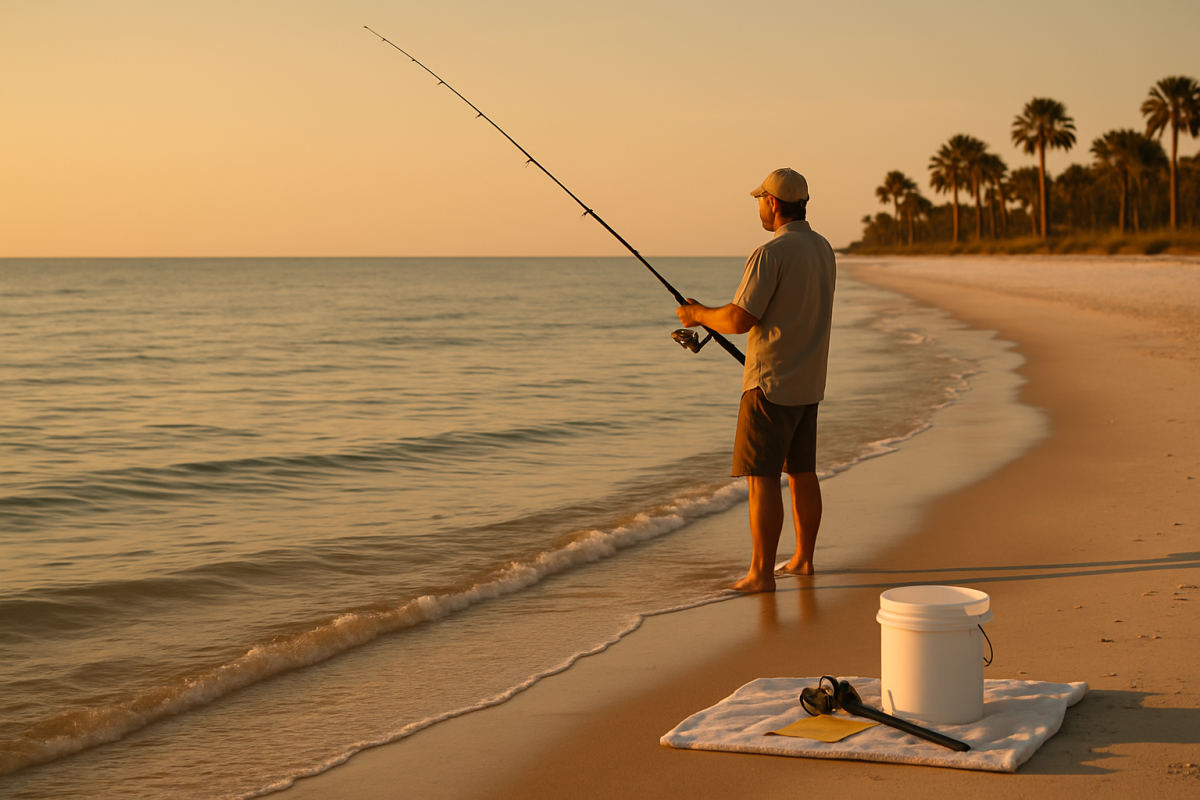
The permit also kicks in for any angler fishing from land for any species if they're using gear strongly associated with shark fishing — specifically, a metal leader longer than four feet, a fighting belt or harness, a hook with an inside gap wider than 1.5 inches, or a balloon or kite used to deploy bait offshore. Having a boat or kayak shuttle your bait out for you also triggers the requirement. Boat-based shark anglers are not subject to this permit, but all of the gear and species rules described below still apply to them.
The Shark-Smart Fishing Course: What to Expect
You cannot simply sign up for the permit online and move on. To receive it, you must first complete the FWC's Shore-based Shark-Smart Fishing educational course, available at MyFWC.com/SharkCourse. The course is built around four video modules covering shark biology, conservation principles, and the current regulations. You must watch all four modules in sequence on your first pass through — skipping ahead isn't an option — and each module ends with a review section before you continue.
After finishing the modules, you'll take a 10-question quiz. Here's the catch: a perfect score is required to pass. Miss even one question and you'll need to retake the entire test from the start, though you can attempt it as many times as necessary at no cost. The course itself runs roughly 30 minutes from start to finish, so budget a focused half-hour before your trip. Once you pass, you'll receive a certificate with a unique identification code, which you then use to claim your permit through FWC's online licensing portal. Keep a digital or printed copy of the permit on you whenever you're fishing — officers can and do check for it in the field.
The permit must be renewed each year, and FWC offers a shorter Shark-Smart Refresher course for returning permit holders. Always confirm renewal procedures directly at MyFWC.com, as the process may be updated.
Prohibited Species: Know Them Before You Cast
This is arguably the most critical section of the regulations to internalize. A long list of shark species — 29 in total — cannot be harvested, possessed, or landed in Florida waters under any circumstances. That list includes every hammerhead species (great, scalloped, smooth, and Carolina), tiger sharks, lemon sharks, sandbar sharks, dusky sharks, silky sharks, great white sharks, whale sharks, basking sharks, shortfin makos, oceanic whitetips, and several others. When in doubt, the FWC website has the full, current prohibited species list and identification resources — review it carefully, because misidentifying a shark at the water's edge is not a defense that holds up well with enforcement officers.
If you hook a prohibited species from shore, the rules are clear: it must remain in the water with its gills submerged, and you must release it without delay. If hook removal would slow that release, you're required to cut the leader or hook immediately. Do not beach or drag a prohibited shark — doing so can result in serious fines and, for certain endangered species, potential criminal charges.
Gear Rules That Apply to Everyone
Whether you're fishing from shore or a vessel, several gear requirements apply any time you're targeting sharks with live or dead natural bait. Non-offset, non-stainless-steel circle hooks are mandatory — J-hooks and treble hooks are not permitted. The non-stainless requirement matters for a practical reason: if a shark is released with a hook still embedded, a corrodible hook will eventually work its way out, while a stainless hook can remain indefinitely. You must also have in your possession at least one device capable of quickly cutting your leader or hook — bolt cutters and cable cutters both work. This isn't a suggestion; it's a requirement, because fast release of prohibited species depends on it.
One more shore-specific rule that surprises some first-timers: chumming is completely prohibited when fishing for any species from the beach. Dispersing cut bait, blood, or fish scraps to draw sharks toward the surf is illegal regardless of what you're targeting. The intent is straightforward — keeping sharks from being conditioned to congregate in areas where swimmers are present.
Bag Limits and Harvestable Species
For species that can legally be kept, the daily bag limit is one shark per person per day, with a cap of two sharks per vessel — even if three or more anglers are on board. Harvest is by hook and line only. The FWC groups harvestable species by size: Atlantic sharpnose, blacknose, bonnethead, finetooth, smooth dogfish, Florida smoothhound, and Gulf smoothhound have no minimum size limit, while species like bull, nurse, spinner, and blacktip sharks require a minimum fork length of 54 inches to keep. All retained sharks must remain whole — head, fins, and tail intact — until you reach shore, so that wildlife officers can positively identify the species and verify the measurement.
Shortfin mako sharks, worth a specific mention, currently carry a retention limit of zero in federal waters until further notice from NOAA Fisheries. Check both state and federal rules before targeting any open-water species, as regulations can change mid-season.
A Few Practical Notes Before You Go
FWC officers patrol Florida beaches regularly, and fines for violations — particularly for landing or possessing a prohibited species — can be substantial. Having the right gear makes compliance easier: a good hook-cutting tool on your belt is both required by law and genuinely useful for fast, safe releases. And because long beach sessions in the Florida sun are no joke, a cooling towel tucked into your tackle bag is always a smart call.
The regulations summarized here are current as of mid-2026, but FWC does update shark rules as population data and public safety considerations evolve. Before every trip, take five minutes to verify the latest rules at MyFWC.com/Sharks — and if you're new to shore-based shark fishing in Florida, completing the Shark-Smart course is your single best investment of time before you ever set foot on the beach.