SpaceX's Falcon 9 booster B1067 is now two flights away from matching one of the most storied benchmarks in spaceflight history. The booster completed its 37th mission — designated Starlink 10-49 — lifting off from Space Launch Complex 40 at Cape Canaveral at 5:33 a.m. ET on Tuesday and landing safely on the drone ship A Shortfall of Gravitas at 5:41 a.m. The mission deployed 29 Starlink V2 Mini satellites and marked the 654th successful Falcon 9 booster landing in program history. Space Shuttle Discovery holds the all-time record for a reusable spacecraft at 39 missions, a mark certified by Guinness World Records across a career spanning 1984 to 2011.
B1067's résumé is a kind of highlight reel of the modern launch era. The booster first flew in June 2021 on the CRS-22 cargo run to the International Space Station, and within its first dozen flights carried the Inspiration4 all-civilian crew, multiple astronaut missions, and commercial satellites for Turksat, Eutelsat, SES, and the European Commission. Of its 37 total flights, 26 have been Starlink constellation-building runs. The turnaround between its 36th and 37th flights — just 47 days — is faster than the Space Shuttle's best pre-Challenger refurbishment time of roughly 55 days, and was accomplished by a far smaller team than the 9,000-plus workers who serviced each orbiter.
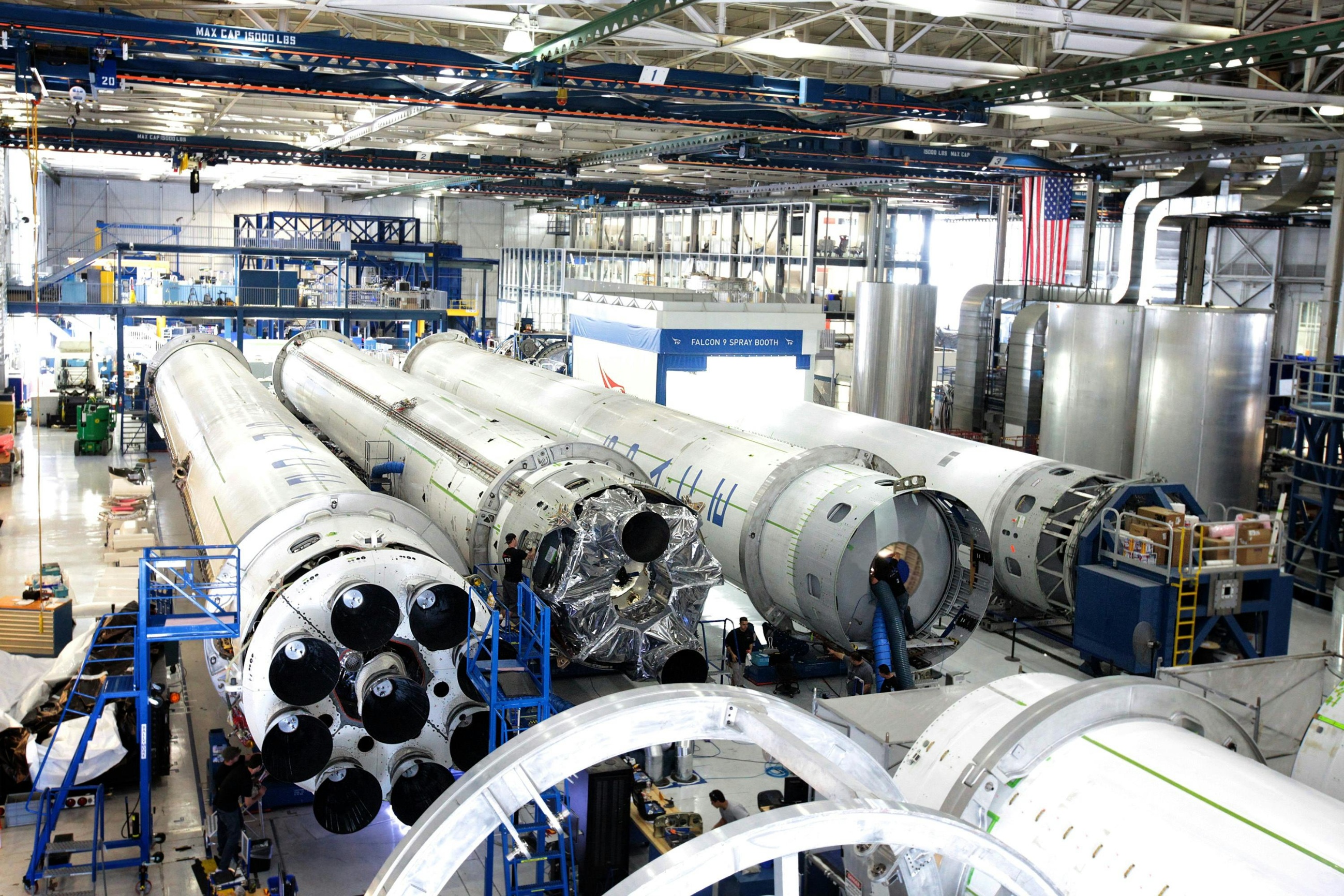
The engineering that makes rapid reuse possible is baked into the Falcon 9 Block 5 design: titanium grid fins that survive reentry heat above 1,000°C without replacement, a bolted engine mount that allows individual engine inspection, and a hydrophobic interstage coating that needs no repainting between flights. After every landing, engineers conduct ultrasonic and X-ray inspection of propellant tank welds and a mandatory nine-engine static fire before clearing the booster for its next flight. SpaceX has brought average booster turnaround to roughly 40 days, with some missions completing in under three weeks.
Tuesday's launch also carries significance for Cape Canaveral's near-term manifest. No additional Starlink missions currently appear on SpaceX's Florida schedule following Starlink 10-49, as the company's workforce there shifts increasingly toward Starship infrastructure preparations. Of the 76 Starlink missions launched this year, 44 departed from Vandenberg Space Force Base in California, with Florida accounting for the rest. SpaceX separately stopped accepting new commercial Falcon 9 bookings beyond 2028 in July 2026, and has begun winding down production of some expendable Falcon hardware. The practical takeaway for Florida launch-watchers: Falcon 9 Starlink missions from the Space Coast are likely to grow less frequent, not more, as Starship work claims more of the complex's attention.
Tuesday's flight was also the 101st Falcon 9 mission of 2026; the century mark had fallen just three days earlier on August 22 with a Vandenberg launch. At the current pace, SpaceX is on track for roughly 155 Falcon 9 missions this year — below the 165-mission record set in 2025, consistent with what SpaceX President Gwynne Shotwell has described as a gradual taper as Starship comes online. This story was first reported by TechTimes.