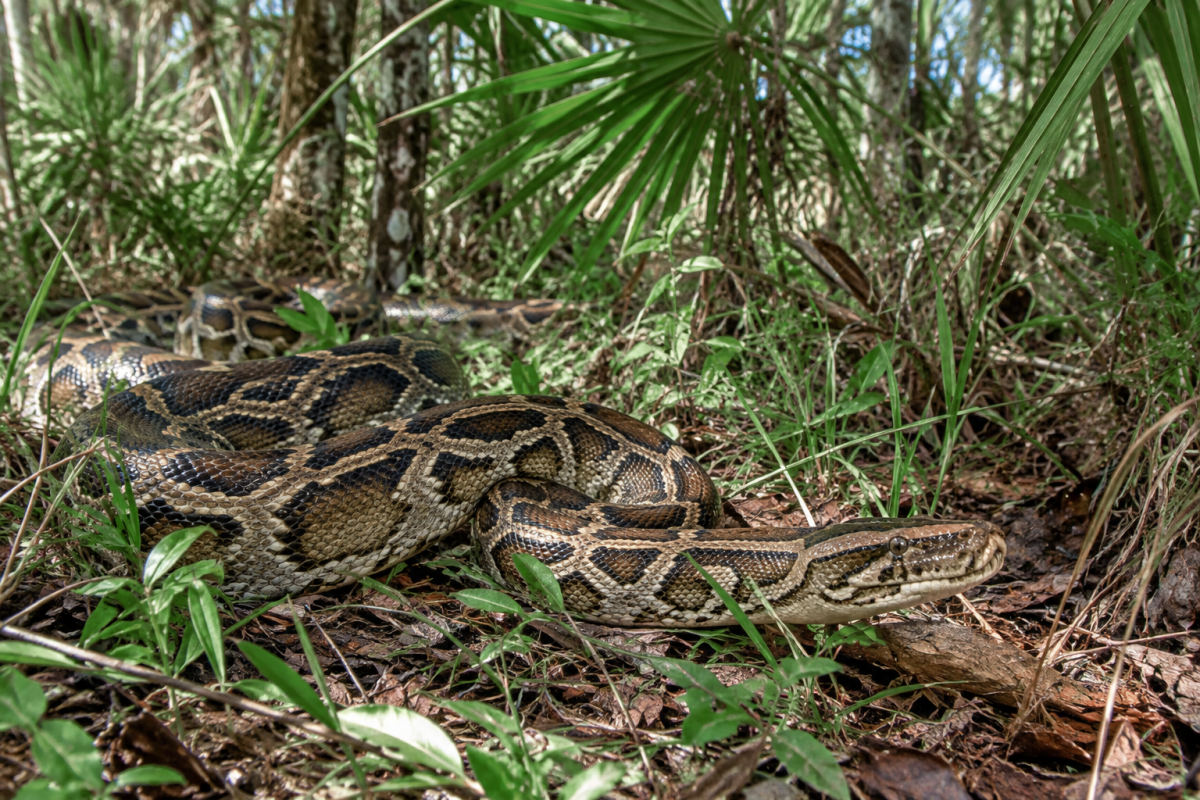
Burmese pythons are now considered established in part of western Charlotte County, marking a new Gulf Coast population outside the invasive snakes’ historically established core range in South Florida.
The Florida Fish and Wildlife Conservation Commission has received increasing reports of pythons in the county since 2020, particularly around residential communities. The area includes Rotonda West, Placida, Englewood East and South Gulf Cove, north of Naples and Fort Myers.
Officials do not yet know how many snakes are in the area. But the designation of an established population means the reports are more than isolated encounters, according to the information reported by the Times of India.
An FWC spokesperson told ABC News there is no indication the animals reached Charlotte County by naturally migrating from the Everglades. Wildlife biologist Ian Bartoszek of the Conservancy of Southwest Florida said the evidence is consistent with a satellite population created through human introduction, such as captive snakes that escaped or were released. The precise origin remains unknown.
Burmese pythons are nonvenomous constrictors native to parts of South and Southeast Asia. In Florida, they have been documented eating mammals, birds and reptiles, including raccoons, opossums, rabbits, deer, birds and American alligators. Research in the Everglades has linked the established invasion there to major declines in several native mammal populations, though the ecological effects of the Charlotte County population have not been measured.
Finding the snakes is a major challenge because they can blend into vegetation and occupy dense habitat. The FWC and partner agencies are surveying Charlotte and neighboring Lee counties, evaluating sightings and removing pythons where possible.
Residents who spot a suspected Burmese python are advised to photograph it from a safe distance, note the location and report it through Florida’s invasive-species reporting system rather than trying to handle the snake. Burmese pythons are on Florida’s prohibited species list, and the state’s Exotic Pet Amnesty Program allows people who can no longer care for nonnative animals to surrender them without penalties.