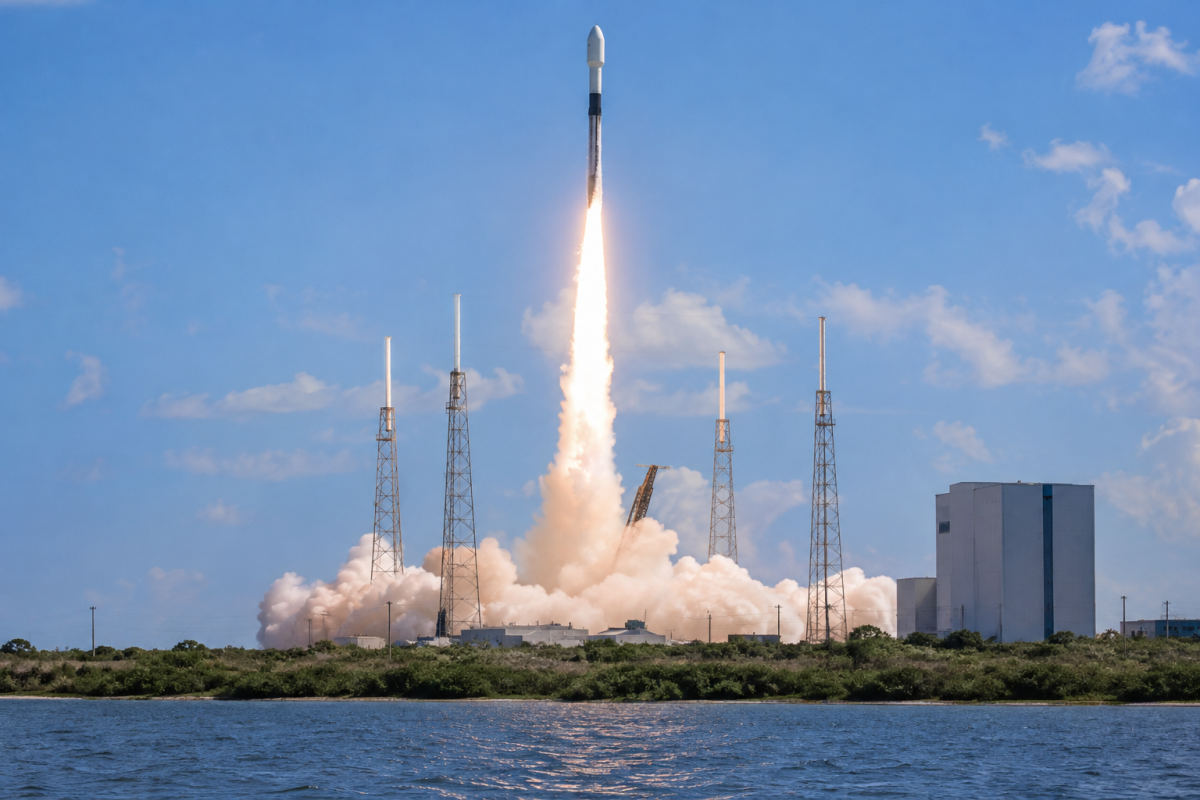
The Air Force Research Laboratory says it successfully tested cargo delivery technology during an Oct. 20 SpaceX launch from Cape Canaveral Space Force Station.
A SpaceX reentry capsule carried cargo pods containing mission equipment and environmental sensors. The sensors tracked temperature, shock and vibration during launch and reentry, according to an Air Force news release cited by Stars and Stripes.
Researchers also examined how electronic cargo performed in flight. The test payload included a satellite communication-enabled tracker, batteries, a reverse-osmosis desalinator, survival gear and emergency medical equipment. The laboratory said a future test could include a life raft.
The test is part of the Air Force's Rocket Cargo program, which is exploring whether commercial rockets could move supplies around the world in roughly an hour. The laboratory did not disclose the payload's weight, but said the program is intended to examine delivery of tens of tons of cargo.
The Air Force has identified potential uses including disaster relief, rescue missions, contested logistics and responses to chemical, biological, radiological and nuclear hazards. It has also said the capability could help supply remote locations that do not have roads or runways.
Plans for a proposed rocket-cargo landing demonstration at Johnston Atoll were put on hold in July while the Department of the Air Force considered other locations, the report said. The Air Force had also considered Kwajalein Atoll, Midway Island and Wake Island.