Most cruisers never give much thought to who's actually at the helm while they're at the buffet or catching a show — but the answer is more nuanced than you might expect. Captain Marek Slaby, who has sailed with Royal Caribbean since 2004 and is currently aboard Odyssey of the Seas, explains that no single person steers a cruise ship from port to port. Instead, a dedicated crew member called "The Man Behind the Wheel" handles day-to-day steering in rotating four-hour shifts, while autopilot takes over for routine stretches of open, straight water.
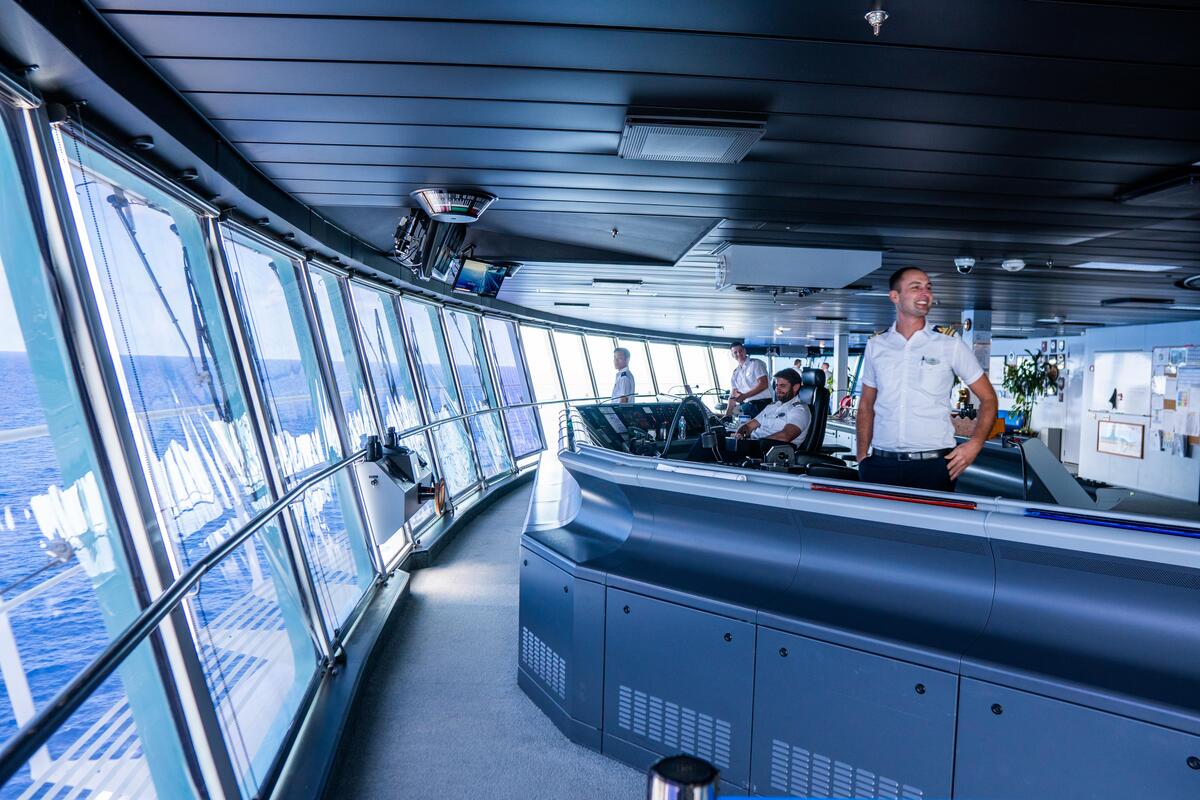
Even on autopilot, a trained Officer of the Watch stays on the bridge to monitor radar, track other vessels, and manage speed adjustments. Former Celebrity Cruises Captain Kate McCue adds that Celebrity keeps at least three licensed officers on the bridge at all times — an Officer of the Watch, an Assistant Officer of the Watch, and a Quartermaster or lookout — with teams rotating four hours on and eight hours off.
When it comes to the ship's helm itself, Captain Kate notes it's surprisingly compact — actually smaller than the wheel in your average car. That's because the entire system is electronically linked, so a large spoked wheel simply isn't necessary. The helm is primarily used when a harbor pilot boards until the ship is close to the pier, and again after departure until the pilot disembarks. There's also a smaller secondary control, which Captain Kate calls a "mini-wheel," used for additional navigational commands.
Navigation planning relies heavily on ECDIS, a digitized chart system that has replaced traditional paper charts. It can plot and verify a route to ensure the ship won't cross over land, then keep the vessel on that track to within five meters. However, because ECDIS is so precise it's not the most fuel-efficient option, Captain Kate says she tends to favor autopilot for open-water passages. Docking is an entirely hands-on affair — no autopilot involved — with bow thrusters helping nudge the vessel into port. Odyssey of the Seas has four bow thrusters and two propellers, and the front of the ship can noticeably shake when those thrusters engage.
Captain Kate also shares that bridge officers take turns on docking maneuvers so that even junior members build real experience; she personally handles 40 to 50 percent of maneuvers and delegates the rest to the Staff Captain and Third Officer. This behind-the-scenes look at cruise ship navigation was originally reported by Royal Caribbean Blog.