"Best Florida beach" isn't really one question — a beach that's perfect for a toddler splashing in ankle-deep water is a bad fit for someone who wants to snorkel a reef, and neither is right for someone chasing a lively boardwalk scene. Here's how to actually pick, based on what you're going for.
If you want calm water for little kids
Siesta Key Beach (Sarasota) is the one that keeps winning "best beach in America" rankings, and it's not hype — the sand is almost pure quartz, which means it stays cool underfoot even at midday, and the water is shallow and calm close to shore. Lifeguards, a large free parking lot, restrooms, and a playground round it out. It's genuinely built for a family day, not just pretty in photos.
Clearwater Beach is the other classic pick — soft white sand, calm Gulf water, and unlike Siesta Key it comes with a real town attached: restaurants, shops, and the nightly Pier 60 sunset celebration if you want more than a beach day.
For something quieter and less developed, Matheson Hammock Park Beach in Coral Gables has a sheltered, artificial atoll that keeps the water almost lagoon-still — a good pick if you have a toddler who isn't a confident swimmer yet.
If you want snorkeling or clear water
The Florida Keys are the real answer here — John Pennekamp Coral Reef State Park in Key Largo gives you access to the only living coral reef in the continental U.S., and Bahia Honda State Park further down the Keys is consistently ranked among the clearest water in the state.
Closer to Orlando, Panama City Beach on the Panhandle has warm, clear water and good snorkeling without needing a boat, plus a decent chance of spotting sea turtles.
If you want a boardwalk / more to do than just sand
Cocoa Beach earns its reputation twice over — a real surf beach with an iconic pier, and it's the beach that pairs naturally with a Kennedy Space Center visit or a Port Canaveral cruise, since they're minutes apart. Hollywood Beach, near Fort Lauderdale, has a 2.5-mile paved Broadwalk lined with restaurants and shops, so evenings don't require driving anywhere.
If you want quiet and undeveloped
Sanibel Island and Captiva Island on the Gulf Coast are the go-to for a slower trip — Sanibel in particular is one of the best shelling beaches in the country, and both islands are flat and easy to bike around rather than drive. Anna Maria Island and St. George Island are similar in spirit if you're on the Panhandle instead.
Gulf Coast vs. Atlantic Coast, in one line
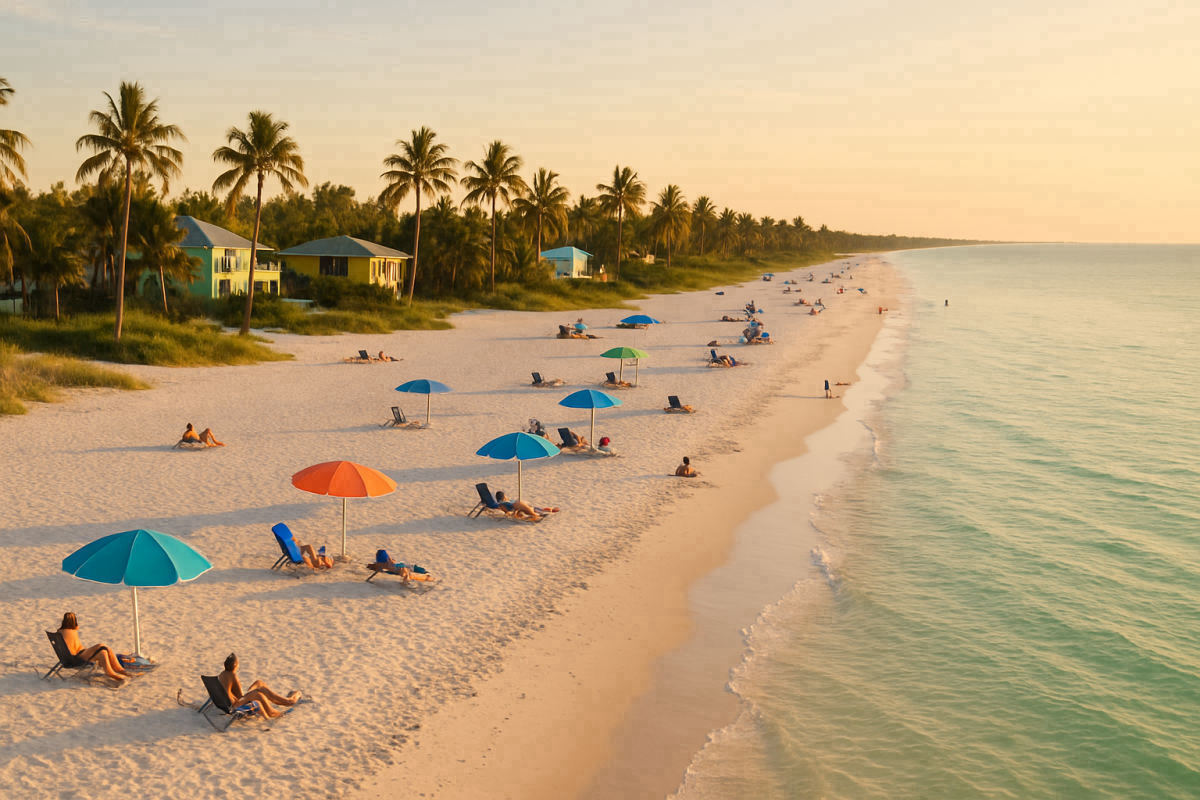
As a rule of thumb: the Gulf Coast (Siesta Key, Clearwater, Naples, Sanibel) has calmer, warmer water and whiter sand — better for young kids and easy swimming. The Atlantic Coast (Cocoa Beach, Daytona, Fort Lauderdale) has more wave action and energy — better if you want surfing, a livelier scene, or easy access to Central Florida's theme parks and the Space Coast.
Timing
Spring break and summer are the busiest and priciest stretches by far. If your schedule allows any flexibility, the shoulder seasons — April/May before school lets out, or October/November after summer crowds thin — get you the same beaches with a fraction of the people and often noticeably better hotel rates.
Worth packing
A good beach umbrella with UV protection makes a bigger difference in Florida than almost anywhere else — the sun is stronger than most visitors expect, even on a cloudy-looking day. If snorkeling is part of the plan, it's worth bringing your own snorkel mask set rather than renting — Florida's reef and grass-flat visibility rewards a mask that actually fits your face.