Florida's Space Coast — the stretch of Brevard County around Cape Canaveral and Kennedy Space Center — sees rocket launches year-round, and most of them are visible from public land for free. Here's where to actually go, and what to expect once you're there.
The free public viewing spots
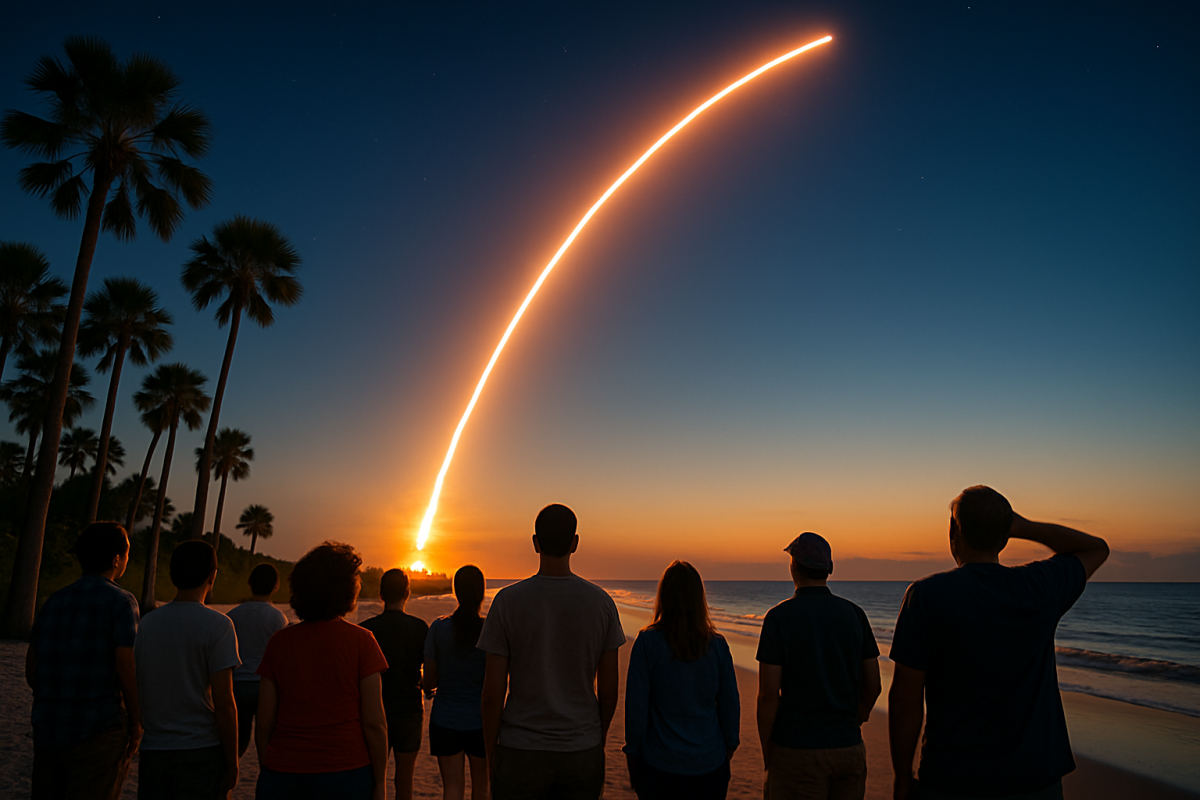
Playalinda Beach, inside Canaveral National Seashore, is the closest free public viewing spot to the launch pads — as close as 3.6 miles for some pads. It's open shoreline with nothing blocking the view, which makes it the top pick if photos are the priority. It normally opens at 6am and closes between 6-8pm depending on the season, and access roads can close entirely on launch days for safety, so it's worth having a backup plan.
Titusville, directly across the Indian River Lagoon from Kennedy Space Center, is the other major free option. Space View Park and the Max Brewer Bridge both give wide, unobstructed views straight across the water, and Space View Park sometimes broadcasts live mission audio, which adds a lot to the experience if you're not close enough to feel it.
The paid/amenity options
Jetty Park in Cape Canaveral is one of the most popular spots precisely because it has real amenities — a fishing pier, beach access, and a campground, plus a real shot at seeing a Falcon 9 booster landing back on a drone ship offshore after a launch. It fills up fast on big launch days.
Cocoa Beach Pier combines a launch view with an actual beach day — restaurants, bars, and oceanfront seating, so waiting for a launch (which can slip by minutes or hours) doesn't feel like just standing around.
Kennedy Space Center Visitor Complex sells dedicated launch viewing packages for select launches, getting you within a few miles of the pad with expert commentary included — the closest a member of the public can legally get without a NASA credential.
What actually matters for a good experience
- Arrive 2-3 hours early for any well-known launch (a crewed mission, a first-of-its-kind rocket). Popular free spots fill up and access roads can close at capacity.
- Have a backup plan. Launches scrub (get delayed or cancelled) often, sometimes in the final seconds of the countdown. Weather, technical issues, and even boats in the safety zone can all push a launch by hours or days.
- Night launches are the most dramatic — the engine glow can light up the sky for miles and is often visible well beyond the Space Coast itself, even from parts of Central Florida.
- The sound arrives late. Because sound travels slower than light, spectators watching from across the river in Titusville typically see the rocket lift off several seconds before the rumble actually reaches them — expect a delay, not a malfunction in your expectations.
Checking the schedule
Launch times shift constantly, sometimes within hours of liftoff. Before heading out, check current launch schedules directly — Space Coast tourism sites and NASA's own site both track it, and it's worth confirming the same day you plan to go rather than trusting a date you saw a week earlier.
Worth bringing
A decent pair of binoculars makes a real difference from the free viewing spots, which are still a few miles out even at the closest points. If you're hoping for photos, a travel tripod is worth it — handheld shots of a fast-moving, brilliantly lit rocket rarely turn out sharp.