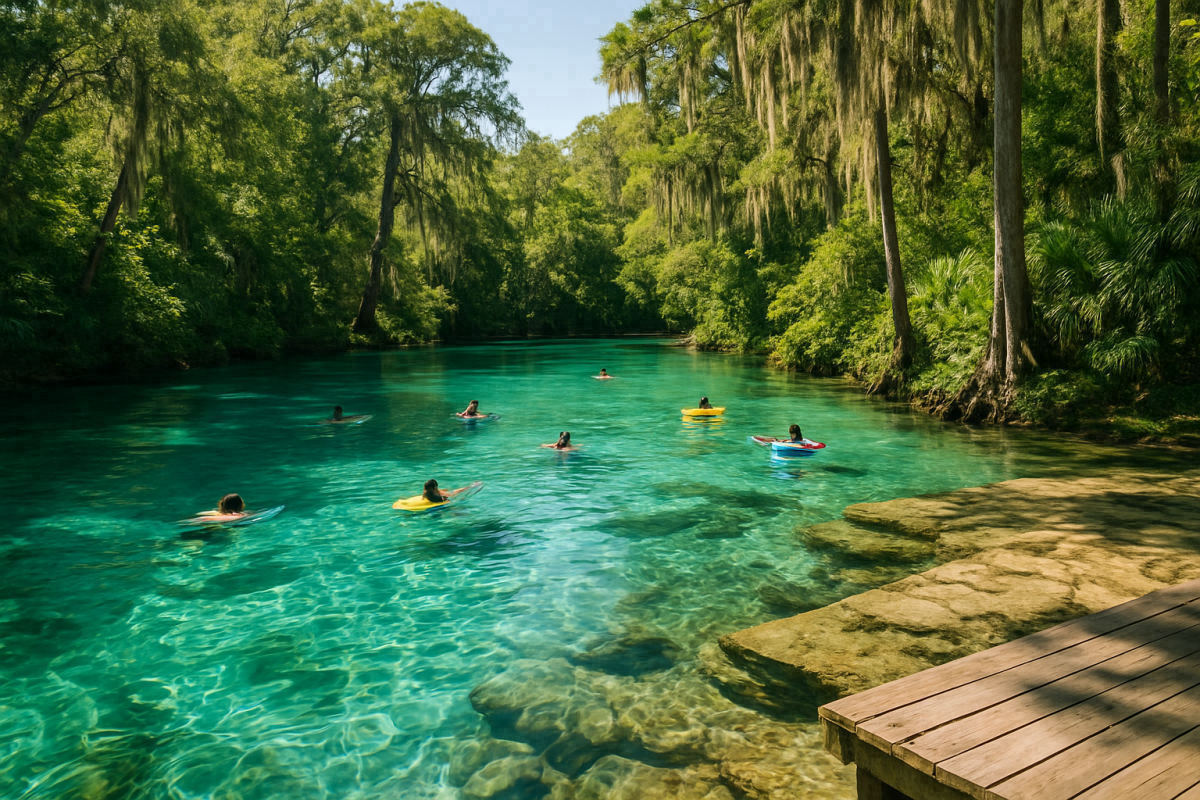
Florida hides nearly 700 natural springs beneath its flat, sandy surface — more first-magnitude springs than any other state in the country. They stay a constant 72°F year-round, which makes them a genuine relief valve in July and a surprisingly pleasant swim even in January. Here's where to go, what each one is actually good for, and what to know before you show up.
Ichetucknee Springs State Park (Fort White)
The classic Florida tubing trip. Eight major springs feed a six-mile spring run, and most visitors either do the 45-minute short float or the full two-hour float down to the South Entrance. The Blue Hole Spring near the North Entrance is a separate, deeper draw for snorkelers and divers who want more than a lazy float.
Know before you go: this park can and does hit capacity on summer weekends and holidays, at which point it closes to everyone — including people who already booked tubes — until space opens back up. Arrive early, and don't plan on parking on the roadside to wait; rangers actively ticket for it. The Midpoint Tube Launch has been closed for repairs since March 2026, so tubers currently launch from Dampier's Landing at the South Entrance.
Rainbow Springs State Park (Dunnellon)
Florida's fourth-largest spring, and a National Natural Landmark. The headspring area ($2/vehicle at the main gate) is more of a swim-and-picnic spot, with old botanical gardens and man-made waterfalls left over from its roadside-attraction days in the mid-1900s. Tubing the Rainbow River itself happens at a separate entrance about six to nine miles from the main gate, with tube rental and shuttle service running $24–$30 per person.
Know before you go: the two entrances don't connect — decide which experience you actually want (swimming vs. tubing) before you drive there, since showing up at the wrong gate means backtracking.
Silver Springs State Park (Ocala)
One of the oldest tourist attractions in Florida, drawing visitors since the 1870s. The main draw is still the glass-bottom boat tour, gliding over some of the clearest water in the state with a good chance of spotting turtles, gar, and the occasional gator keeping a respectful distance.
Wakulla Springs (near Tallahassee)
One of the deepest and largest freshwater springs in the world, with its own glass-bottom boat tours and a historic 1937 lodge on-site. This is less about swimming and more about the wildlife — it's a reliable spot to see alligators, herons, and (seasonally) manatees from the boat.
Weeki Wachee Springs (Gulf Coast)
Famous for one thing: live mermaid shows that have been running, in some form, since 1947. There's also a water park, manatee viewing, and river boat tours, which makes it the most kid-built itinerary on this list. Admission runs about $13.50 for adults and $8.50 for kids, though water park access and special events can add to that.
Ginnie Springs (High Springs)
Privately owned, which means an admission fee ($20–$30/person depending on the day) but also fewer crowds than the state parks. Known for exceptionally clear water, underwater caves that draw serious cave divers, and on-site camping if you want to make a weekend of it.
Devil's Den (Williston)
Not a spring in the traditional sense — it's an underground cavern with a spring-fed pool at the bottom, lit by a natural skylight. It's a working dive site more than a casual swim stop, and it's become a genuine photography destination because of that light.
The Ocala National Forest cluster
If you're already headed to Silver Springs, three more first-magnitude springs sit inside the surrounding national forest and are easy to combine into a longer day: Silver Glen Springs (aquamarine water, popular swim spot), Alexander Springs (good for snorkeling), and Juniper Springs (better for kayaking than swimming, with a well-known canoe run).
A few things that apply everywhere
- 72°F sounds cold until you're in Florida heat — it feels closer to refreshing than shocking most of the year.
- Weekend mornings fill up fast at the popular parks. Arriving at opening isn't just a nice-to-have in summer, it's often the difference between getting in and getting turned away.
- These are genuinely fragile ecosystems — Florida's springs have measurable water quality issues from decades of development and agricultural runoff, so stick to marked swim areas and don't feed the wildlife.
Worth packing
Water shoes make a real difference on limestone and shell bottoms — bare feet are a rough time. A dry bag keeps your phone and keys safe on a tubing float, and a small cooler with reef-safe sunscreen covers the rest. Water shoes on Amazon and a waterproof dry bag are the two things worth actually buying ahead of time rather than figuring out at the park.